After a slow start, Utah is upgrading its system to track Great Salt Lake dust
Aug 10, 2026 | 7:04 am ET
Description
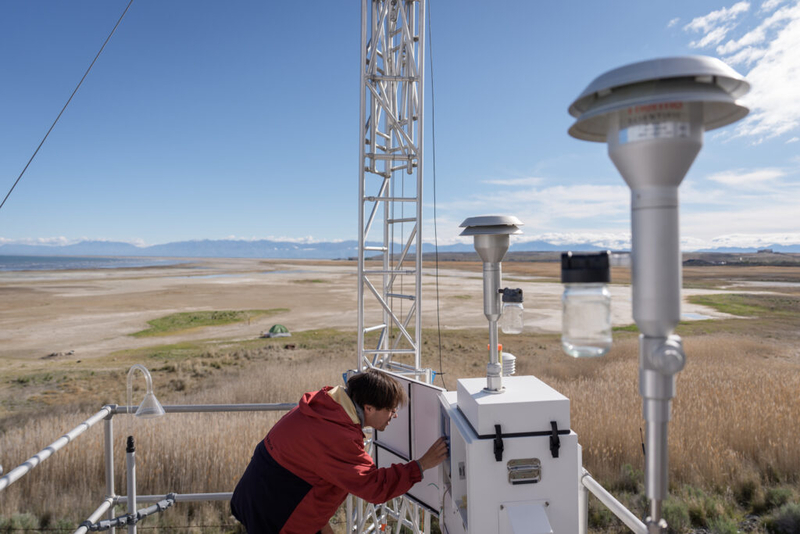
Pierce Wratten, an environmental scientist with the Utah Department of Air Quality, swaps out the filters on an air quality monitoring station at Great Salt Lake State Park in Magna on Tuesday, April 14, 2026. Although not a part of
the Utah Dust Observation and Research Network, the station is similar to those that are. (Photo by Spenser Heaps for Utah News Dispatch)
When the Great Salt Lake dropped to a historic low in 2022, Utahns wanted answers about the dust on its exposed lakebed: Was it bad for their health? Were fine particles of cancer-causing metals drifting from the dried clay and into their neighborhoods?
The state couldn’t answer that very well, said dust scientist Kevin Perry. Although Utah has long monitored air quality, it needed to enhance its system to find out how much dust is reaching communities and exactly what’s in it.
Four years later, as the lake’s water level is threatening to plunge to a new low and storms are whipping up brown plumes above the lake bed, the new monitoring network is taking shape, though it isn’t fully in place yet.
“It’s incredibly frustrating,” Perry said of the wait. “But I’m grateful for the fact that the state has now stepped up.”
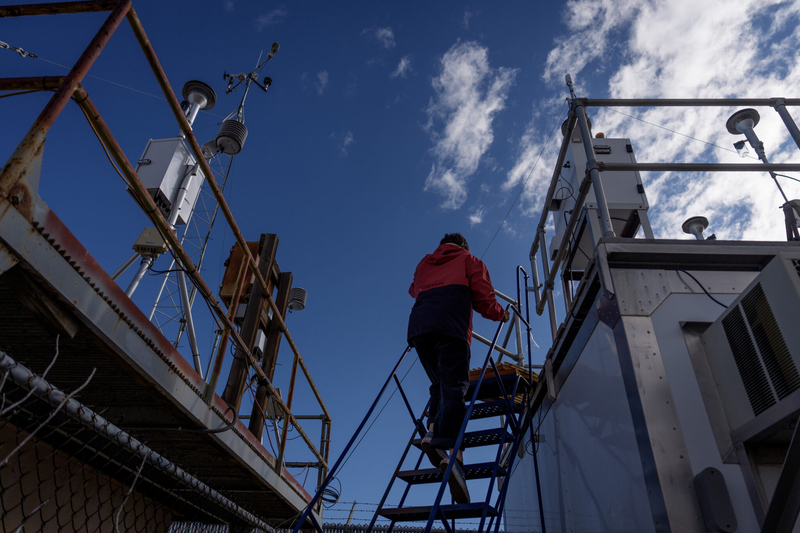
After a slow start to the rollout three years ago, the Division of Air Quality has picked up speed, outfitting eight locations with new equipment as part of the Utah Dust Observation and Research Network. The stations span more than 100 miles to the east of the lake, from Smithfield to Lindon, and also extend to Erda near the southern shore.
Key to making that happen was $1 million in 2025 state funding, said Tim Davis, who joined the governor’s cabinet as head of the Utah Department of Environmental Quality the same year.
“I was frustrated by how slow things were moving, both after I took over and what we hadn’t done before, but I think we’re moving at a pace now,” Davis, commissioner of the department, told Utah News Dispatch.
Why has it taken so long?
Davis said he didn’t want to talk about factors that may have stretched out the timeline before he took on his current role heading the department, and he wants to look forward instead.
“I’ve made it very clear that this is a priority for me, as well as the governor, to get people the information they need about Great Salt Lake Lake dust, because there are concerns and we need to get them good data.”
It could be some time before the numbers paint a full picture. Researchers want multiple years-worth of data to account for variability in the weather. A rainy spring may keep dust at bay, for example, but a dry winter could do the opposite.
“So it could be that we have a bad dust year in the first year and we immediately recognize we have a problem, or it could take several years before a problem manifests,” said Perry, a professor of atmospheric sciences at the University of Utah. Alternatively, he added, “maybe we don’t have a dust problem. I don’t think that’s what the data will show, but I want to see the data.”
Some early snapshots are already coming in.
What some monitors are showing so far
During a dust storm on July 8, a monitor at the division’s headquarters on Salt Lake City’s northwest side registered a concentration of coarse particulate that pushed the air quality deep into the hazardous zone.
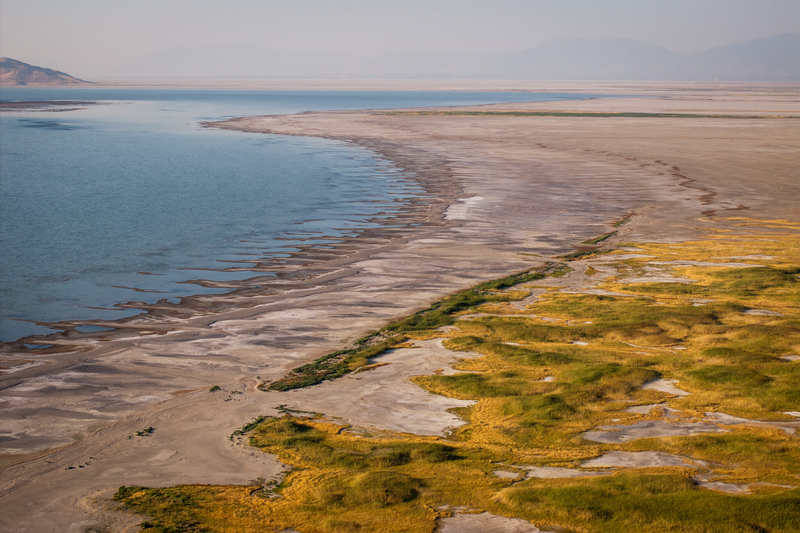
The Great Salt Lake has receded enough to expose 800 square miles of its lake bed, but most of the surface is crusted with salt-studded clay. Perry has identified 70 square miles of dust “hot spots” covered in finer sediment much more likely to rise into the air.
A Utah researcher rings up the costs of keeping Great Salt Lake dust at bay
The dry lakebed contains arsenic, a carcinogen, and other metals that can lead to heart disease and asthma. Researchers believe they occur naturally and as a result of pollution.
Decades of drought, climate change and redirection of water, mostly for farming but also to supply cities and other uses, have combined to dry the lake. It reached a record low in 2022, made some recovery, then dropped back down to end last year at its third-lowest level since 1903.
Other analysis from the division is shedding light on how often that’s happening. Dust storms that limit visibility to a quarter mile are occurring three to eight times per year, and smaller dust events — limiting visibility to less than 7 miles – are happening up to 30 times, Perry said.
Among those eager for more information is Senate Minority Leader Luz Escamilla, a Democrat from Salt Lake City and a past sponsor of legislation aiming to better track air pollution. She said many families on the city’s west side are stretching to make ends meet and do not have the resources to move further away from the lake to protect themselves from breathing in the dust, on top of other sources of pollution such as industrial activity within the Inland Port Authority’s jurisdiction and nearby freeways.
“Now I’m like ‘Oh, and by the way, let me add to your entire level of concerns and stress that you may be, like, slowly getting so sick because of the air that we’re breathing because we’re so close to the Great Salt Lake that we haven’t taken care of, and now we’re facing this massive crisis of public health,” Escamilla said.
She said she’s searching for ways to empower her constituents with more information, even if it helps people take small steps to limit their exposure.
How will the dust monitors work?
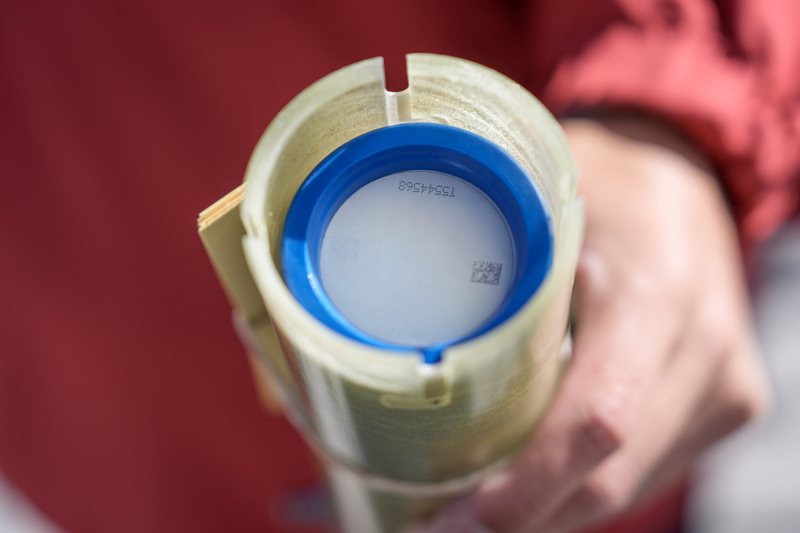
As of May, all eight new devices are pulling air through thin, white teflon filters slightly bigger than a bottle cap for 48 hours at a time in order to obtain enough particles for analysis in a lab.
Coming next: 12 additional monitors sensing in real time when a dust storm kicks up.
One challenge the state faces is figuring out how much is coming from another culprit — the Sevier Lake in Millard County, which can be a main source of airborne dust. To help track that, they’re planning to add a monitoring site in Delta, though it’s not set to come online for another three years.
The division also plans to add five satellite stations it can move intermittently to take measurements in different locations, but the path there isn’t easy. Leasing the land and finding the right power source can take time.
In the meantime, more researchers hope to get to work so they can provide answers. The Huntsman Cancer Institute at the University of Utah intends to study in coming months whether lake dust raises the risk of blood cancers, blood clots and other blood disorders.
“Our goal is straightforward: Help Utahns understand their risk and protect this remarkable lake,” Ramiro Garzon, a physician-scientist at the institute, wrote in the Deseret News in July.
When it comes to the enhanced monitoring network, Davis said the idea is to stay flexible and add or change sites later on if need be. He said the department is considering creating a new alert system for dust storms, and he plans to talk to the governor, state lawmakers and Utah’s congressional delegation about securing the funding.
“We’re trying to figure out how to get that information out to people who need it,” Davis said.
Salt Lake City, UT