‘I want to own a grocery store & café with my friends’: Food co-op initiative launches in downtown Newport
Aug 09, 2026 | 8:41 am ET
Description
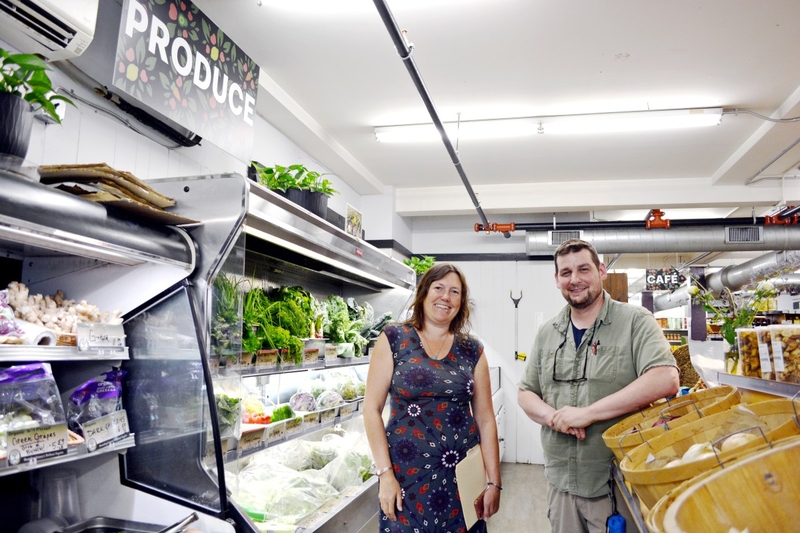
Erica Wilson, founding president of the Kingdom Co-op, and Thomas Goodwin, general manager of Green Mountain Natural Foods and a member of the Kingdom Co-op board, in the store in Newport on July 1, 2026. Photo by K. Fiegenbaum/VTDigger
Newport-area residents have launched an effort to transform their Main Street grocery store and cafe into a member-owned food cooperative in hopes of ensuring its sustainability.
“What we want to do is bring a business to the community that is going to support the local producers and serve the community members that are here,” Erica Wilson, founding board president of the Kingdom Co-op, said in early July. A food co-op is run by a board of directors elected by its members, each of whom owns a small portion of the business.
The effort began when local businessman Rick Woodward stepped in to purchase Green Mountain Natural Foods in early 2024. Woodward has owned the three-story historic building in which the store is located for nearly a quarter-century and has stepped in as owner or co-owner several times when the natural food business has been put up for sale.
While owning the store was “never part of his career plan,” Woodward wants to ensure that it remains a natural foods store and a downtown staple, he said in an interview last week. After purchasing the business a year and a half ago, he immediately started talking to community members and other local food businesses about the possibility of a co-op model.
Wilson heard about the idea through her position as general manager of a local dairy, Butterworks Farm. She was excited to get involved, she said, to connect with another piece of the local food economy.
In the time since, some of the community members Woodward connected with, including two store employees, have stepped up to form a five-member founding board. The group has surveyed residents, held events to educate locals about the co-op model and, last month, began selling memberships.
The change would be a return to roots for the store, which was initially founded as a co-op in West Glover in 1971. It later moved to Barton, Orleans and then finally to Newport in 1977. In the early 1980s, however, a member of the co-op purchased it and converted it into a private business.
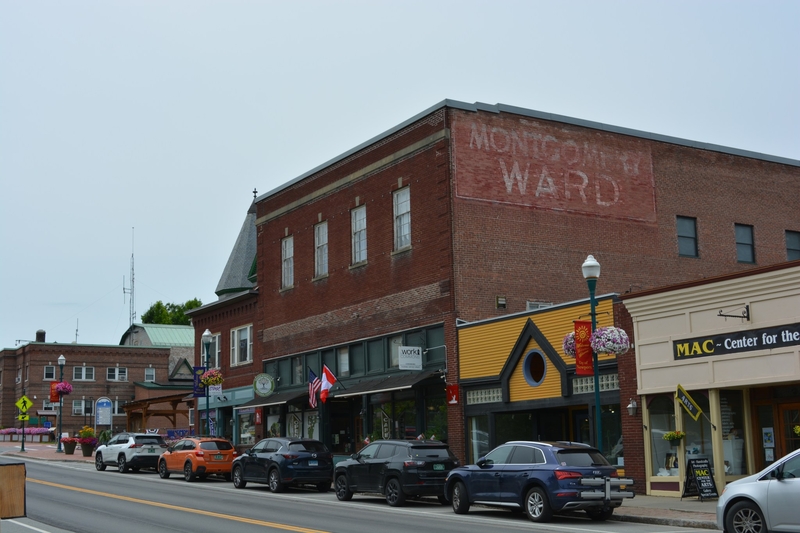
Green Mountain Natural Foods currently occupies the first floor and basement of the Montgomery Ward building downtown, located directly across the street from ‘the pit,’ the vacant, fenced-off block of land in the center of town abandoned over a decade ago during a failed redevelopment project as part of the EB-5 investor fraud scandal.
The natural foods store is filled with local produce, breads, cheeses, bulk foods, health supplements and wine. A cafe making smoothies, coffee, sandwiches and soups occupies a little less than half the space, with airy indoor seating.
Woodward, who owns multiple properties in town, said that his vision for the Montgomery Ward building since purchasing it in 2002 has always included shared spaces of some kind with a wellness component. The second floor has long been occupied by small offices with shared amenities, and in 2018, Woodward and his daughter opened a co-working space called The Work Commons on the third floor.
“It’s a really great ecosystem here and a model in a town that isn’t doing super great economically,” he said. According to recent U.S. Census Bureau data, an estimated 23% of Newport residents are below the poverty line, well above the state’s overall poverty rate of 9%.
Woodward noted that visitors and tenants can find everything in the building from yoga classes to massages to an accountant for hire and, of course, groceries and coffee.
While Green Mountain Natural Foods already sources much of its produce locally as many co-ops aim to, Woodward said he wants the community to feel — and be — a part of the store: “I want to own a grocery store & café with my friends,” reads the effort’s motto. Woodward plans to continue to own the building itself.
Vermont’s co-op tradition
Vermont has a long history of food co-ops: the Adamant Co-op north of Montpelier opened in 1935 and is the longest continuously operating food co-op in the country. There were 15 food co-ops in the state as of 2025 with 58,000 member-owners, according to Erbin Crowell, executive director of the Neighboring Food Co-op Association. These co-ops employ around 950 people, which, together, makes them among the top employers in the state.
The state’s newest food co-op, the Caledonia Food Co-op in St. Johnsbury, opened its doors July 8 after approximately eight years of organizing and fundraising.
“Once they are established, food co-ops tend to be anchors of their communities and the local economy, with an average of 30% of sales being local products, compared to 2-5% in supermarkets,” Crowell said in an email. “They are also more sustainable and resilient … in Vermont alone, 8 food co-ops have served their communities for 50 or more years.”
Woodward said that while many residents currently shop at Green Mountain Natural Foods, he believes that people will be more likely to shop there more often if it is run as a co-op: if they are a member and have a real stake in the business.
In addition to cooperatively-owned grocery stores, there is also a parallel movement of “community supported enterprises” in the state, which are owned by a town or local nonprofit, Jake Claro, Farm to Plate director at the Vermont Sustainable Jobs Fund, said in an email. These include enterprises such as the Peacham Cafe, which is rented by a subsidiary of a local nonprofit housing provider to a cafe manager for the benefit of the community, and the Main Street Market in Richford, which was purchased by a local primary care practice in 2020 after its announced closure would have left residents without a nearby grocery store.
Prepared meals have been a particularly fast-growing portion of grocery store sales nationally and in Vermont, such as at the Hunger Mountain Co-op in Montpelier, Claro said. This is something Wilson also envisions being a potential growth area for the Kingdom Co-op — offering prepared meals and meal kits, and also making sure much of those offerings and what is served in the store’s cafe is sourced locally.

“Local food is not just more expensive, it’s harder to source from smaller producers,” she said. “But if we make it our initiative as a community, it’s totally doable.”
So far, Wilson said, many community members she has spoken with support the idea of Newport having its very own food co-op.
Along with beginning to sell memberships, the Kingdom Co-op board is working through the myriad of steps needed to make the co-op a reality, including vetting financial projections and creating a business plan. Early technical and advisory support has come from the Center for an Agricultural Economy in Hardwick, which works to build a more interconnected local food system, and Newport’s downtown development group.
“Whatever plan comes together, it needs to support the community as a whole,” Wilson said.
Read the story on VTDigger here: ‘I want to own a grocery store & café with my friends’: Food co-op initiative launches in downtown Newport.
Montpelier, VT