Kansas wheat harvest projected to be lowest in decades, adding to agriculture stress
Aug 07, 2026 | 11:00 am ET
Description
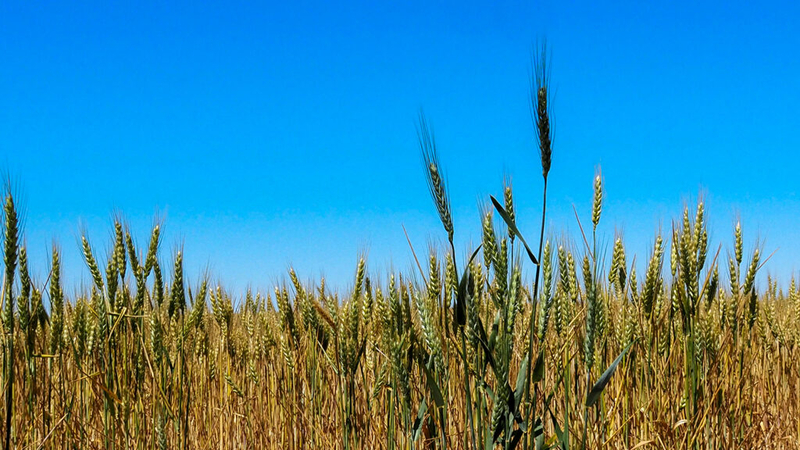
Kansas farmers are expected to see their smallest winter wheat harvest in decades, the result of drought and freezes throughout the growing season. (Photo by Kevin Hardy/Stateline)
TOPEKA — Kansas is on course for its smallest winter wheat harvest since the 1950s, with a July report showing the state’s farmers are expected to produce almost half the number of bushels they did at the same time last year, an expert said.
A July 10 report from the U.S. Department of Agriculture projected 196 million bushels for the Kansas winter wheat harvest, down from nearly 347 million last year, said Dan O’Brien, agricultural economist and Kansas State University professor.
Nationally, winter wheat production is expected to be 471 million bushels, O’Brien said, compared with last year’s 804 million.
“Hard Red Winter (HRW) wheat, usually the largest class of U.S. production, is forecast to have its smallest crop since 1957/58,” the USDA report said of national expectations.
Kansas farmers were affected primarily by drought, and there were also freezes early in the season that damaged crops, a weather pattern that Nick Levendofsky, executive director of the Kansas Farmers Union, said he expects to see for a long time.
The harvest shortfall this year adds to the challenges farmers and ranchers have been facing. Kansas Farm Bureau reported that Chapter 12 bankruptcies filed nationally by farmers increased to 315 filings in 2025, a 46% increase from 2024. The Midwest and Southeast accounted for 121 of those, the farm agency said, noting “deep crop losses across commodities” in those two regions. Kansas is included among the Midwest states.
Levendofsky said bad years like this one, with weather challenges and input price increases, as well as geopolitical difficulties, are likely to affect whether farmers continue to farm or how they choose to do so.
“I think at the end of the day, it’s going to come down to their bottom line and what’s going to pay the most and what’s going to cost them the least to produce,” he said. “If that’s wheat, then that’s one thing. If it’s another crop, it’s another thing. It’s important for farmers to be diversified. But it’s proving to be more and more of a challenge to do that all the time.”
Some farmers may decide to park their tractors permanently.
“I think you’re probably going to see more older farmers make that decision, which is sad,” Levendofsky said.
Many farmers who lived through previous farm crises “don’t want to deal with it anymore,” he said.
“It takes a toll on you mentally. It takes a toll on you physically, financially. You name it,” he said.
It’s difficult to track all the factors currently pushing at farmers and ranchers.
A key driver in the market includes attacks in the Black Sea that are part of Russia’s war with Ukraine, O’Brien said. Ukraine is expected to transport grain by rail shipments to Europe, rather than by sea, because of those attacks, he said.
The European Union also is suffering after dry weather, frost, storms and hail and has made “soft wheat forecasts,” O’Brien said.
The future remains uncertain for Kansas wheat farmers, O’Brien said.
“I think it’s challenging to see six months down the road when we’re uncertain of what’s happening today or tomorrow,” he said. “Within the last three months, we’ve had a lot of market volatilities — at first a run up that had to do some with geopolitical issues, but then weather was entering into that.”
The market has gone up and down, and the resulting decreased crop forecasts have given wheat farmers stronger prices than they’ve had in recent years, O’Brien said.
“But again, we don’t have as much quantity to sell at those rates,” he said. “The next major decision to be made by farmers will be a barometer of what we think about the wheat market and its prospects, and that will be how many acres farmers plant coming up in September/October.”

Topeka, KS