US employers shed 23K jobs in July
Aug 07, 2026 | 12:26 pm ET
Description
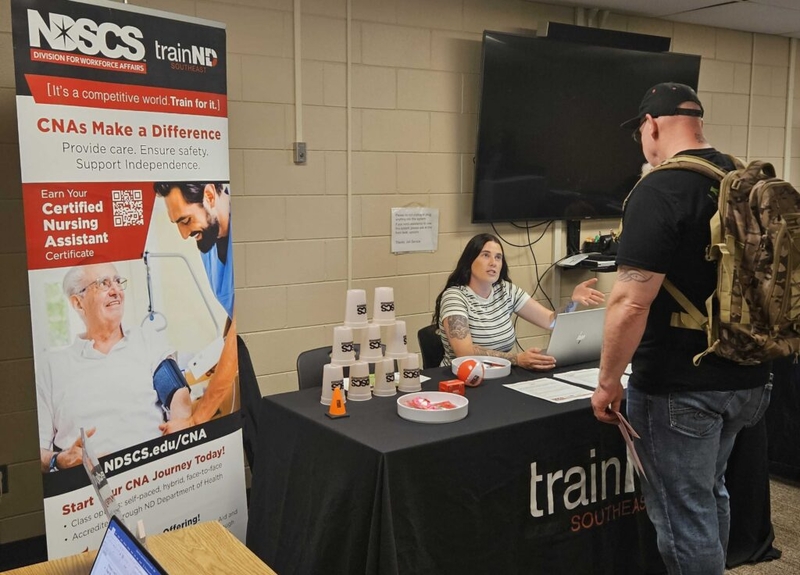
McKenna Melby of the North Dakota State College of Science speaks with a job fair attendee in Fargo, North Dakota, on July 28, 2026. Melby was recruiting potential students for the certified nursing assistant program.(Photo by Jeff Beach/North Dakota Monitor)
U.S. employers shed 23,000 jobs in July, and the employment count for earlier months was revised downward by 103,000 jobs as labor shortages begin to weigh on hiring, according to new statistics released Friday by the federal Bureau of Labor Statistics.
“There’s no sugarcoating the overarching message in the July jobs report,” Mark Zandi, the chief economist at Moody’s Analytics, wrote in a social media post. “The economy is struggling. Job growth is at a virtual standstill.”
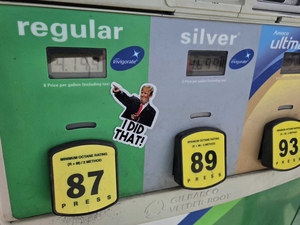
Inflation could be taking a toll as employment in general merchandise retailing declined by 21,000 jobs and gas stations cut 5,000 jobs. Employment in finance also dropped by 14,000, continuing a slide of 121,000 jobs since a recent peak in May 2025.
The number of health care jobs grew by 22,000 in July, but that was lower than the monthly average gain of 36,000 in the past year.
The federal government also revised the job numbers for May and June, subtracting 66,000 from the May total and 37,000 from June, even though the World Cup boosted employment during those months. The adjusted job growth numbers for May and June are 63,000 and 20,000, respectively.
Today’s children could prosper in tomorrow’s shortage of young workers
Small businesses saw “a surprising and substantial tightening of the labor market” in July, according to a report from the National Federation of Independent Business (NFIB), which represents 300,000 small and independent business owners. In a survey, 27% of members cited labor supply and quality as their single most important problem, up from 19% in June and the 12% historical average.
The cost of health insurance also stood out as a top concern in a separate NFIB report. That was especially true in Texas, one of 10 states that has not expanded Medicaid under the Affordable Care Act to provide coverage for a broader population of lower-income people. In Texas, almost 15% of NFIB members said health insurance costs were their single most important problem, the highest of any state, compared to about 10% nationally.
“I have yet to have a conversation with anyone who doesn’t think this is a problem and in most cases it’s their biggest problem,” NFIB State Director Jeff Burdett said.
State jobless rates remain stable in June as men’s World Cup helps in some areas
Nationally, most small businesses can’t afford to provide health insurance at all, according to NFIB surveys, he said.
“They want to provide health insurance, they need to provide it to be competitive, it’s just cost prohibitive,” Burdett said. “What that means is that talented workers are bypassing small businesses entirely in favor of large employers.”
Another recent employment report from ADP, a payroll processor, also pointed to a sudden tightening of the labor market: The pay for job changers rose at the fastest pace in a year.
“Job changers are highly sensitive to real-time economic conditions, and their rapid pay growth implies supply constraints in parts of the labor market,” Nela Richardson, ADP’s chief economist, said in a statement.
This story has been updated to clarify the source of a survey about health insurance costs from the National Federation of Independent Business. Stateline reporter Tim Henderson can be reached at [email protected].