Just after statehood in 1876, two gamblers’ deaths evoked Colorado’s Wild West history
Aug 07, 2026 | 6:15 am ET
Description
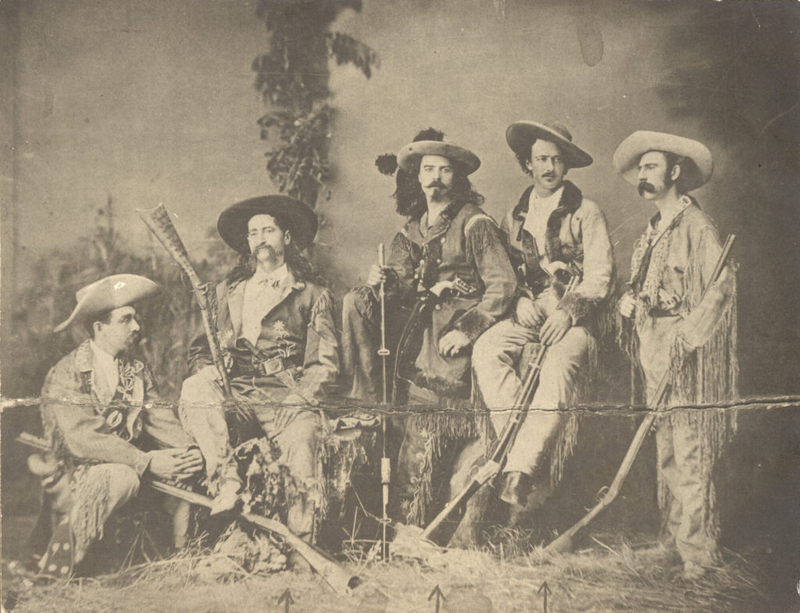
An 1874 photograph shows J.B. "Wild Bill" Hickok, second from left, alongside other famous frontier figures, including William "Buffalo Bill" Cody, center. (Courtesy of Denver Public Library Special Collections, Z-6084)
The shooting deaths of two different gamblers made headlines in the brand-new state of Colorado in early August 1876, though only one would still be the stuff of legend 150 years later.
James Butler “Wild Bill” Hickok was killed in the boomtown of Deadwood in the Dakota Territory on Aug. 2, though it was more than a week before the first reports of his death were published in the Rocky Mountain News.
“Everybody in this country has heard of ‘Wild Bill,’ a noted scout, buffalo-hunter, and plainsman, and who on account of his reckless bravery was made marshal at different times of several frontier towns when it was necessary, because of the lawlessness that prevailed in their early settlement, to have peace officers who would kill in order to uphold their authority,” wrote the News.
Earlier in 1876, Hickok, then living in Cheyenne, had joined up with his friend Charles “Colorado Charlie” Utter, as he led a wagon train from Georgetown, Colorado, to the Black Hills. They were among the thousands of residents of Colorado and neighboring territories who flocked to the Dakota Territory during the gold rush there.
The Wild Bill legend had its origins in an 1867 Harper’s magazine article, which wildly exaggerated his history as a frontier gunslinger, claiming that Hickock “with his own hands has killed hundreds of men.” (At the time of his death, newspapers reported the figure at 36.) A more grounded portrayal of Hickok, and dramatization of his death, would come nearly 130 years later in HBO’s “Deadwood” TV series.
The News lumped Hickok in with other larger-than-life characters already famous throughout the West, like John “Texas Jack” Omohundro and William Frederick “Buffalo Bill” Cody, who would remain a popular local figure until his death in Denver in 1917.
Days after Hickok’s murder in Deadwood, another gambler met his end in southern Colorado after a dispute involving a poker game. Like Hickok, Tim Shay had made a living in storied Wild West cattle towns like Dodge City, Kansas, which recorded some of the highest homicide rates in U.S. history during the 1870s. Both men, in the expression of the day, “died with their boots on.”
Colorado in 1876 wasn’t immune from the Wild West’s plague of deadly gun violence
In contrast to the mythic figure of Wild Bill, however, Shay “bore an exceedingly bad reputation,” reported the Pueblo Chieftain on Aug. 8, the day after he was shot by Rufus Edwards, proprietor of a dance hall in the newly founded town of La Junta.
“When sober he was known as a peaceable and generous-hearted comrade, willing to give his last meal ticket to a hungry man, but intoxicated, his first impulse was war with his fellows,” said the Las Animas Leader.
A coroner dispatched from Las Animas empaneled a jury of six men, who collected testimony from Edwards and a handful of witnesses, who said they’d heard Shay threaten Edwards’ life over a dispute involving a $20 sum Shay was alleged to have stolen during a poker game. The jurors signed a verdict declaring that Edwards had acted “in defense of his own life.”
“He said that he was going to kill me,” Edwards told the jury. “He had his pistol half drawn when I shot. He killed one man in Dodge.”
With Colorado having achieved statehood at last, the Pueblo Chieftain expressed hope that this frontier violence would soon become a thing of the past.
“Shay was about the last of a crowd of roughs who have infested southern Colorado and western Kansas for several years,” the Chieftain said. “Most of these men have died with their boots on, after killing several men each, and Shay has been no exception to the rule.”
Denver, CO