Fifty for 150: Local boosters and ‘party trickery’ secured statehood for Colorado in 1876
Aug 01, 2026 | 6:00 am ET
Description
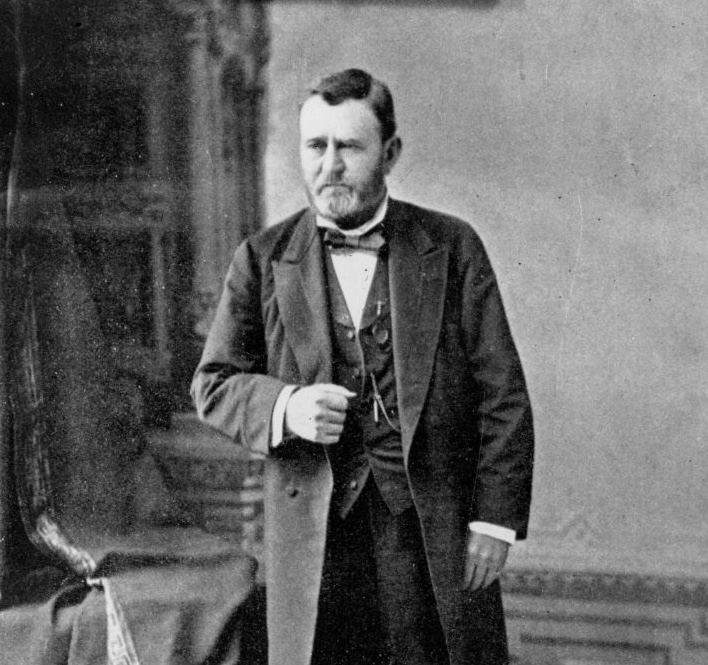
President Ulysses S. Grant is seen in this photo from about 1875, the year before he proclaimed Colorado a state. (Photo by Spencer Arnold Collection/Hulton Archive/Getty Images)
Colorado may have always been destined to attain statehood, but it owes its identity as the Centennial State to the partisan political interests of the Reconstruction-era Republican Party.
The timing of Colorado’s admission into the union in 1876, weeks after the celebration of the nation’s centenary and just ahead of that year’s pivotal presidential election, was an overtly partisan maneuver by the GOP, which felt assured of the new state’s three electoral votes. In March 1875, the GOP-controlled Congress had passed a Colorado statehood act even as it defeated a similar measure for Democratic-leaning New Mexico, which wouldn’t be admitted as a state until 1912.
The move was widely denounced by Democratic-leaning newspapers at the time as a “scheme of party trickery” to create a “rotten borough,” a term borrowed from an election-rigging practice in the British parliamentary system. Opponents cited 1870 census figures showing the territory was home to fewer than 40,000 people. Local boosters like William N. Byers, publisher of the Rocky Mountain News, claimed the territory’s population had since grown rapidly to 150,000, but an early Colorado historian would later call that an “extravagant” estimate.
Multiple previous attempts at Colorado statehood had failed in the 1860s. The first “enabling act” allowing Colorado’s admission had been passed by Congress and signed by President Abraham Lincoln in 1864, but voters in the territory — largely the residents of frontier mining camps who feared the imposition of new taxes — voted overwhelmingly against ratifying a constitution drafted by delegates in Denver.
A second attempt was narrowly approved by voters in 1865, but President Andrew Johnson, a Democrat, maintained that it didn’t conform to the enabling act and declined to issue a statehood proclamation. Johnson vetoed two further congressional attempts to authorize statehood, and then the issue stalled for several years before President Ulysses S. Grant and Republicans revived it.
Elections for delegates to the constitutional convention, held in October 1875, gave the Colorado Territory’s Republican Party a comfortable 25-14 majority over Democrats. Over the next five months, the convention’s 39 delegates hashed out their disagreements — sometimes, but not always, along party lines — on matters including women’s suffrage, public education, taxation of church property, the means of selecting the state judiciary and much more.
The convention adjourned in March 1876. In a special address to Coloradans, published alongside the drafted constitution, convention delegates from both parties urged citizens of the territory to set aside their disagreements and work together toward the shared goal of statehood.
Delegates had “labored assiduously,” they wrote, “to frame a fundamental law, wise and wholesome in itself, and which would be adapted to the general wants of the people.”
Reviewing each of the major issues raised during the convention in turn, delegates defended the document’s many compromises, including its approach to the “troublesome and vexed questions pertaining to corporations,” which it said had caused “more anxiety and concern” than any other topic. Within the convention, a handful of progressive populists sympathetic to the Granger movement had attempted to enshrine strict limits on the power of railroad corporations, but most of their proposals had been defeated.
“We are aware that these provisions do not cover the whole ground, but it must be remembered that, while some of our sister states have not gone far enough in placing restrictions on the legislative power, others have gone too far, and have had to recede,” explained the delegates. “We have endeavored to take a middle ground, believing it to be more safe, and in the end that it will give more general satisfaction.”
The constitution granted women a limited right to vote in school board elections, but deferred the broader question of women’s suffrage to the new state’s Legislature and the results of a future voter referendum. After several unsuccessful attempts, Colorado finally became the second state in the nation to adopt women’s suffrage in 1893.
On July 1, 1876, just days before the Centennial Fourth of July, Colorado voters resoundingly approved the document, with 15,443 votes for and 4,062 against.
Territorial Gov. John Routt’s private secretary was dispatched to Washington, D.C., with a copy of the official canvass of the vote, and telegram on Aug. 1 delivered the news that many in Denver and beyond had been looking forward to for years.
“The President, in accordance with the provisions of an act of Congress, approved March 3, 1875, has issued his proclamation declaring and proclaiming the fact that the fundamental conditions imposed by Congress on the state of Colorado to entitle that state to admission to the Union have been ratified and accepted,” the message said, “and the admission of said state into the Union is now complete.”
Denver, CO