After months of GOP criticism, Maine shares details of Medicaid fraud enforcement
Aug 06, 2026 | 3:56 pm ET
Description
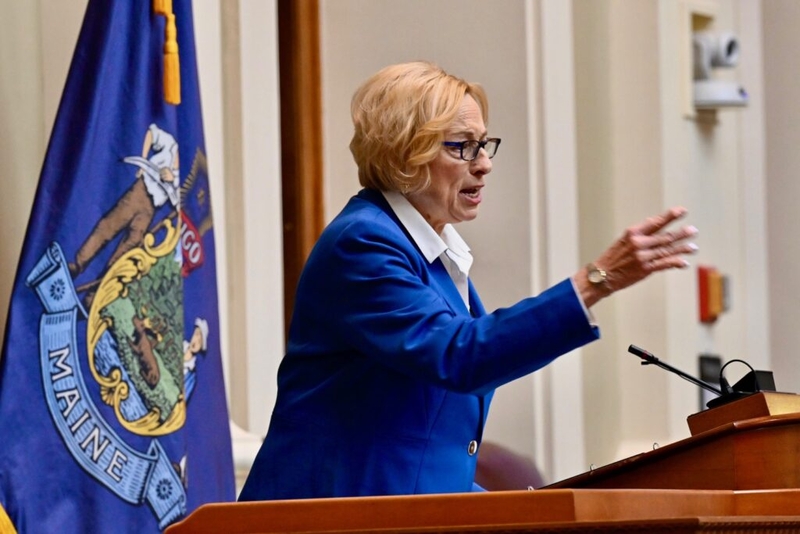
Gov. Janet Mills gives her final State of the State address on Jan. 27, 2026. (Photo by Jim Neuger/ Maine Morning Star)
Following months of accusations from national and state Republicans that Gov. Janet Mills’ administration had not done enough to combat fraud in the Medicaid program, the state on Wednesday announced it had suspended payments to five providers based on allegations of fraud.
The providers include Portland-based Gateway Community Services, whose MaineCare payments were suspended in December 2025, as well as four others whose payments were halted between January and June 2026: Portland-based Maine Connect Care LLC, Trident Medical International in Carmel, Decent Health Care LLC in Augusta and Community Home Health Care in South Portland.
All five providers billed MaineCare for services they did not provide, according to letters obtained by Maine Morning Star. The Department of Health and Human Services’ Program Integrity Unit, which issued the suspension letters, is not required to disclose the specific allegations underlying the suspended payments but included some details in each notice.
For example, the department alleged that Maine Connect Care billed for services provided by someone excluded from the MaineCare program and submitted claims while unlicensed. Trident Medical International’s payments were suspended after the department alleged the agency improperly used another person’s provider identification number to prescribe drugs and failed to conduct required background checks on employees.
The department also said it terminated two providers’ contracts due to credible complaints of serious health and safety risks and disenrolled 28 providers that did not submit a claim within one year of enrollment.
The announcement came two days after Mehmet Oz, administrator of the U.S. Centers of Medicare and Medicaid Services, visited Maine. During the visit, he did not meet with state officials to discuss fraud, which he has repeatedly said is an issue for the state, but instead appeared in a video alongside Republican U.S. House nominee and former Gov. Paul LePage.
“We think there might be $100 million owed back to us,” Oz said in the video with LePage. “That is the tip of the iceberg.”
Oz also said that, based on a federal review, 90% of the home care services for adults with disabilities billed under the state’s Medicaid program, MaineCare, had “no justifiable backup” — a claim that was challenged by the state health department.
“Although the Department’s review is ongoing, our preliminary findings do not support the claim that 90% of services were inappropriately paid,” spokesperson Lindsay Hammes told the Portland Press Herald.
The state’s oversight of MaineCare has been heavily scrutinized by state lawmakers and the federal government in recent months. After the state suspended payments to a Portland-based health provider for alleged fraud, Republican lawmakers questioned health department leaders about anti-fraud protocols. They also referenced a federal audit by the Office of the Inspector General that found $46 million in potentially improper payments to dozens of providers, which they said underscored a lack of adequate oversight, despite the health department stressing that the audit did not indicate fraud.
When Vice President JD Vance visited Bangor in May, he listed Maine among a few larger, Democratic-led states that “are just impossible to work with, because it’s clear they don’t want to go after the fraud,” he said.
The outline released by the health department Wednesday emphasized the updated licensing standards and enforcement tools Maine has used since Mills took office in 2019.
“Protecting MaineCare from fraud and abuse is essential to making sure that healthcare remains available for the people and families who rely on it and that taxpayer dollars are invested responsibly,” the release said, noting the the department utilizes “audits, licensing requirements, a health provider registration process, compliance checks, and other safeguards.”
The health department is also independently reviewing and validating the findings of the federal audit. “Through this review … the Department is finding significantly reduced violations compared to those identified in the OIG report,” Hammes said. “For some providers there have been no significant findings. For others, where there have been violations, they are significantly lower than identified by the federal auditing office.”
In some cases, the findings of improper payments are similar to what the audit found, or in some limited cases, higher. “Where violations are found, appropriate next steps will be taken to recover any overpayments,” Hammes added. “Again, these violations have not been identified as fraudulent claims at this time, a point also made by the OIG.”
Wednesday’s release also highlighted licensing enforcement action being taken against 15 personal care agencies, with some subject to more than one enforcement action.The health department has issued six conditional licenses, decided not to renew six licenses, assessed financial penalties against 12 agencies and referred one agency to law enforcement, the release said.
- 5:05 pmThis story was updated to include provider information and health department statements.
Augusta, ME