U.S. Rep. Scanlon makes unannounced visit to ICE’s Moshannon Valley Processing Center
Jul 30, 2026 | 5:56 pm ET
Description
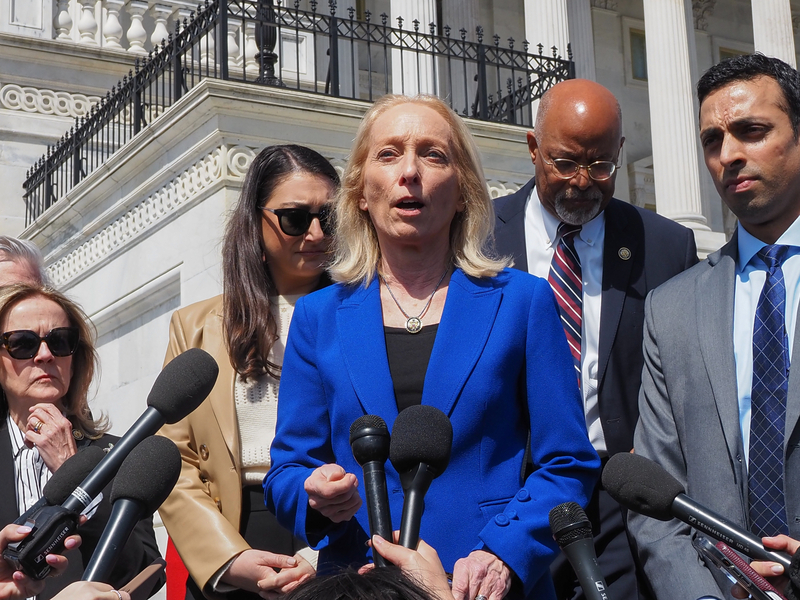
Rep. Mary Gay Scanlon, D-Pa., on the steps of the U.S. House of Representatives on Thursday, April 9, 2026. (Photo by Ashley Murray/States Newsroom)
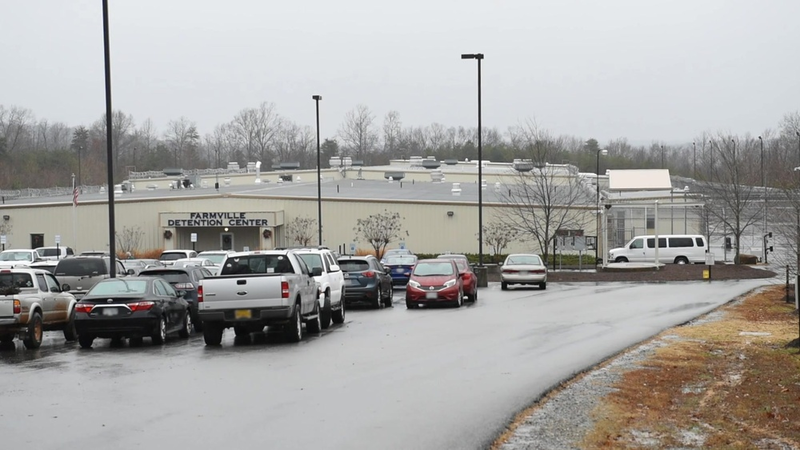
Nearly one year after she and other members of Pennsylvania’s congressional delegation were turned away, U.S. Rep. Mary Gay Scanlon said she was allowed Wednesday to inspect the largest U.S. Immigration and Customs Enforcement detention center on the east coast.
Scanlon (D-5th District) told the Capital-Star she spent about four hours inside the Moshannon Valley Processing Center, a former federal prison with nearly 1,900 beds, near Philipsburg, Clearfield County.
The center has been the subject of criticism by immigrant rights advocates and lawmakers who say detainees are subjected to inhumane conditions, lack adequate access to health care and face retaliation for complaints. It was also the site of two deaths last year.
Scanlon said she came away from the visit frustrated that she was not generally permitted to speak to detainees, although she was able to meet with a constituent. She said she’s also concerned that the central Pennsylvania facility appears to function largely using the labor of people involuntarily held there. Detainees can earn $1 a day for working, she said.
“Why are we jailing, essentially, people who are not a danger to our communities, who are in many cases contributing members to our economy and our communities, folks who are employed and are paying taxes? Why are these folks being put in a prison setting?” Scanlon asked in an interview Thursday.
During her visit, officials told her the center housed 1,634 detainees, of whom 1,311 are “low security.” The detainees wear color-coded uniforms and lack liberty to move freely around the facility, she added.
“This is not supposed to be punitive, but it’s pretty hard to say that this is anything but,” Scanlon said.
The Moshannon Valley center is operated on behalf of ICE by a private company under a contract with Clearfield County. That allows ICE to skirt a Biden-era ban on new federal contracts with private prison companies. The county pays for-profit prison operator The GEO Group to run the center.
ICE did not respond to an email seeking comment.
The GEO Group is an international provider of correctional services that runs about 100 facilities globally, with a capacity of more than 80,000 beds. According to the American Civil Liberties Union, more than a quarter of GEO Group’s capacity is used by ICE.
Under a 2019 federal law, members of Congress are authorized to inspect ICE facilities without prior notice. At the start of President Donald Trump’s second term, the agency began turning away lawmakers at facilities across the country. Scanlon and U.S. Rep. Summer Lee (D-12th District) were prevented from inspecting the facility last August.
Since then, a group of lawmakers sued ICE over the policy, asking the U.S. District Court for the District of Columbia to order the Trump administration to explain how it did not violate federal law. The court issued an order in December, affirming the authority of Congress members to conduct oversight of ICE facilities.
Lee and U.S. Rep. Chris Deluzio (D-17th District) were first to visit Moshannon Valley in May.
Scanlon said Thursday that she was permitted to enter the women’s pods in the center but not the men’s, which she was able to see through glass. Scanlon said she was able to speak to a person from her suburban and south Philadelphia district but declined to discuss details to protect the person from retaliation. Other inmates were not permitted to speak to her, she said.
“It makes it difficult to … follow up on issues about food and medical care if you can’t talk to people who are impacted,” Scanlon said.
It was clear, she said, that the detainees are responsible for cleaning toilets, showers and living spaces.
“There are two janitors for the entire facility of 1,600 people, and then they showed me that they have like just a row of like five spray bottles of cleaning spray in each pod, and oh, it’s there for the detainees to use, and they like doing it,” Scanlon said. “I guess the alternative is squalor.”
She said an administrator at the center conceded that they could not run the food service or laundry without using detainee labor.
“So we have the situation where people are being jailed and then forced to work essentially for free to maintain basic sanitation, food, etc,” Scanlon said, adding “It’s inhumane. It’s traumatizing, and it’s particularly grotesque because this is then being done so private prison companies can make more profit.”
Under the contract, ICE pays Clearfield County more than $4 million a month plus additional considerations for transportation, on-call staff and $1 a day per detainee for the employee work program.
Scanlon said the oversight by Congress is important because she believes “we’re not getting straight scoop” from the Trump administration.
“The administration said they were going after the worst of the worst, and the people they are scooping up, and we’re seeing this increasingly are people on the way to work, or to school, or their court appointments to pursue their legal path,” she said.
With appropriations of $145 billion in the last two years, Scanlon said ICE is spending “outrageous amounts” detaining people who are not a threat to public safety.
“We would be much better off if we were actually spending money to create a functioning immigration system,” Scanlon said, adding, “We don’t have that now, and it’s a misdirection of money just to put out these quotas and scoop up people, many of whom have legal status.”
Harrisburg, PA