Beard talks priorities, pivot from Nebraska primary election to Nov. 3 faceoff
Jul 27, 2026 | 6:00 am ET

Description
Rick Beard of Omaha, the Legal Marijuana NOW nominee for Nebraska governor, meets with voters at a developmental disabilities community listening event on April 30, 2026, in Lincoln a couple weeks before the May 12 primary election. (Zach Wendling/Nebraska Examiner)
Editor’s note: This is the third in a three-part series with Nebraska gubernatorial candidates about their pivot from the May 12 primary election to the Nov. 3 general election.
LINCOLN — Rick Beard knows the uphill climb he faces to be elected Nebraska’s next governor but feels his third-party status and ideas for a state-run medical cannabis program to generate new tax revenue could appeal to voters.
In a one-on-one interview with the Nebraska Examiner a few weeks after the May primary, Beard, the gubernatorial nominee for the Legal Marijuana NOW party, outlined his top priorities if elected: legalizing strong medical cannabis and industrial hemp programs, getting corporate and political action committee money out of the state and taking a more serious, in-depth look at data centers, including a pause on development and mandated closed-loop cooling systems.
Beard, a wine professional and private chef, will face Republican Gov. Jim Pillen of Columbus and former Democratic State Sen. Lynne Walz of Fremont.

The trio could also face former State Sen. Brett Lindstrom of Omaha, an ex-Republican and now registered nonpartisan who announced a signature campaign to appear on the Nov. 3 ballot. His deadline is Aug. 3, in one week.
Of why Beard is the right choice, he said he understands working-class issues and has the “most realistic, solid, viable plan” to help Nebraska. Still, he recognizes the hard path for third-party candidates and sees 2026 as his shot to share his ideas and make a difference.
“If there’s any year that a third party is going to stand out and shine,” Beard said, “I think that this is the year more than any other year that we’ve had in the past.”
State-run medical cannabis program
Beard said he woke up a couple of days after the May primary with his “big idea” to mitigate and avoid the fears of politicians worried about “big cannabis,” “bad players” or cartels. He proposed that the state runs “everything” around medical cannabis, such as hiring farmers, buying facilities and overseeing land.
“All along the way, we make the money, we make all the profit and we make the taxes,” Beard said.

The idea stems from a current regulatory system he says is set up to fail with onerous regulations and “astronomical” or “unrealistic” fees more stringent than in the liquor industry.
“I feel that the intention of the [Medical] Cannabis Commission is to prevent this whole thing from happening, which they’ve been doing a very good job of so far,” Beard said.
The voter-created Medical Cannabis Commission consists of three governor-appointed members of the Liquor Control Commission and up to two more at-large appointees.
Pillen has appointed all current members and solicited applications for one vacancy. He has praised the commission for enacting strict guidelines at his request to further his goal to provide narrow access to the medicine and prevent it from spilling into recreational use.

Beard said it’s an “election-year tactic” for the commission to appear as if it’s moving forward when regulations would actually make it “impossible” for the program to succeed.
Pursuing a state-run program might require more legislation or a constitutional amendment, Beard noted, but he estimates doing so could generate $100 million in new tax revenue each year, up to $500 million when everything is up and running.
‘Changes the game’
Asked whether he would pursue recreational marijuana, Beard said he would like to keep it medical because that’s what Congress, and now the U.S. Department of Justice, offers protections for. However, he said Nebraska’s program needs to be “compassionate.”
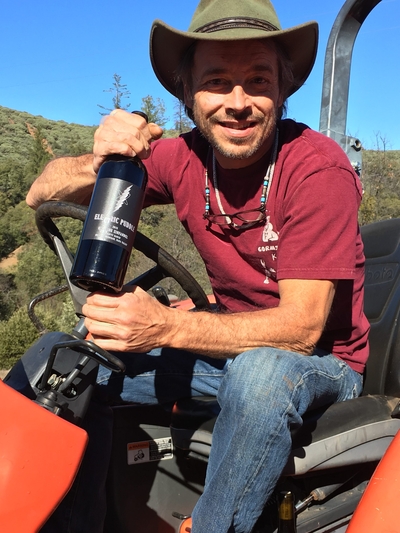
Beard said Nebraska would not get the upward of $500 million in annual revenue without a “compassionate” program that gives “nearly full access to everybody” with a doctor’s note, “not to where you have to be dying.”
“As long as an adult doctor gives you a recommendation, from this state or any other state, I feel that our citizens should be allowed to use it compassionately,” Beard said.
He said smoking cannabis is also necessary for some people to get needed relief. Current state regulations prohibit the sale of smokeable or vapor products.
The state could face a deficit as high as $1 billion, combining a $200-million-plus deficit through the current fiscal year, ending June 30, and initial projections for the following two years. Lawmakers will need to tackle that shortfall in the 2027 legislative session that begins in January.
Beard said the state must eliminate tax breaks for corporations and Nebraska’s “ultra-rich” and must not turn away federal dollars.
“We can continue to be preyed on for our natural resources, underpaid labor and billionaire tax breaks, or we can join together and put an end to this absurdity,” Beard said.
Beard said Nebraska could also double its biofuel production using hemp while doing so in a cleaner way that uses less fertilizer and water and also helps clean the soil and reduce nitrates. He said the new industry could generate millions more and help keep young people in the state.
He said hemp-grown products could also help housing by being cheaper to make.
“We’re just pissing away so much money, and we’re falling behind while other states move forward with money and progress and reform,” Beard said.
Beard said the increased revenue would also be critical in addressing property taxes.
“It really changes the game as to what cannabis can do for our state financially to where we’re really talking about fixing roads … and the actual ability to reduce property taxes,” Beard said.
He continued: “I don’t honestly believe that the other candidates have a powerful plan for Nebraska finances like this.”
Working with the Legislature
One potential 2026 ballot measure could complicate Beard’s ideas around medical cannabis. The proposal, from the Respect Nebraska Voters campaign, would increase the threshold to change voter-approved laws — including laws around the legalization and regulation of medical cannabis — from 33 of 49 state lawmakers to 40 of 49 state senators. Supporters turned in signatures by the July 3 deadline and await verification to be placed on the Nov. 3 ballot.
Some advocates of the successful 2024 campaign around medical cannabis have urged caution and warned that doing so could lock in “gridlock” should any legislative changes be needed. In 2025, for instance, an advocate-backed bill failed to garner a simple majority, let alone 33 votes.
Pillen talks priorities, pivot from Nebraska primary election to Nov. 3 faceoff
Beard said he is “all for” the Respect Nebraska Voters proposal that “protects the will and vote of the people.” Whether it’s a state-grown, state-sold and state-operated system or a regulatory licensing, testing and oversight system, he said he wants to ensure access to medical cannabis.
However, Beard said, the question is whether people can “save” the voter-approved laws from “damage” inflicted by legislative inaction and guidelines from the Nebraska Medical Cannabis Commission, or whether another petition or constitutional amendment would be needed.
“When we have fewer than 100 people dismantling the vote of 2 million people, we need this to protect us,” Beard said.
Should Beard continue to face executive branch or legislative pushback, he said he could go back to his original idea to pursue a 2028 ballot measure or constitutional amendment.
In the meantime, Beard said he would deploy a lesson he says he learned from Pillen: lead with executive orders and executive action.
“I don’t know why, when I’m governor, why I can’t do that,” Beard said. “I think that if they want to oppose it with these kinds of powers and these kinds of techniques, I think that we can make it happen with these same kinds of powers and techniques.”
Beyond working around hemp and cannabis, Beard said he doesn’t foresee needing to drive action in the Legislature from the Governor’s Office. Pillen has been among governors who have taken a more active role in pushing their legislative priorities.
‘Committed to rising above’
Beard has not yet filed a finance disclosure committee with the Nebraska Accountability and Disclosure Commission, which is required if he raises or spends more than $5,000.
That’s by design, Beard said, as he has refused to take corporate or PAC money and doesn’t want to take money from voters.
“It’s a difficult uphill push without money, but at the same point, what am I going to do?” Beard said.
Walz talks priorities, pivot from Nebraska primary election to Nov. 3 faceoff
Even if he had funds, he said it would likely lead to negative campaigning and an expectation that he uphold the interests of his donors. He said that’s holding back his opponents.
“It just kind of really takes the honesty out of politics and out of deciding who we elect,” Beard said. “I’m hoping through our campaign that by not taking the money, people realize our purity and our intent to represent the people more than represent corporations or the interests of PACs.”
Since taking office in 2023, Pillen has raised more than $12 million and had more than $9.5 million in his campaign account by mid-June. In the last year, Walz raised nearly $1.5 million, with almost $675,000 in her campaign account by mid-June.
By Sept. 1, Beard will need to select a running mate, and he said he’s on the search for someone who will “have some brilliant ideas” and perhaps bring qualities he doesn’t, such as a little more political experience, a legal background or a more agricultural, rural-based view.
Beard said that if given the chance, he “absolutely” would debate his opponents. He said that’s important for Nebraskans to see candidates interact and speak and assess them accordingly.
“I am truly not Democrat. I am truly not Republican,” Beard said. “I find heavy faults with both of those parties, and I’m committed to rising above that.”
Lincoln, NE