Attorneys for Florida death row inmates seek stays of execution from U.S. Supreme Court
Jul 27, 2026 | 11:21 am ET
Description
James Aren Duckett, 68, is scheduled to be executed at noon Tuesday. He has spent more than three decades on death row after being convicted of murdering 11-year-old Teresa McAbee in 1987.
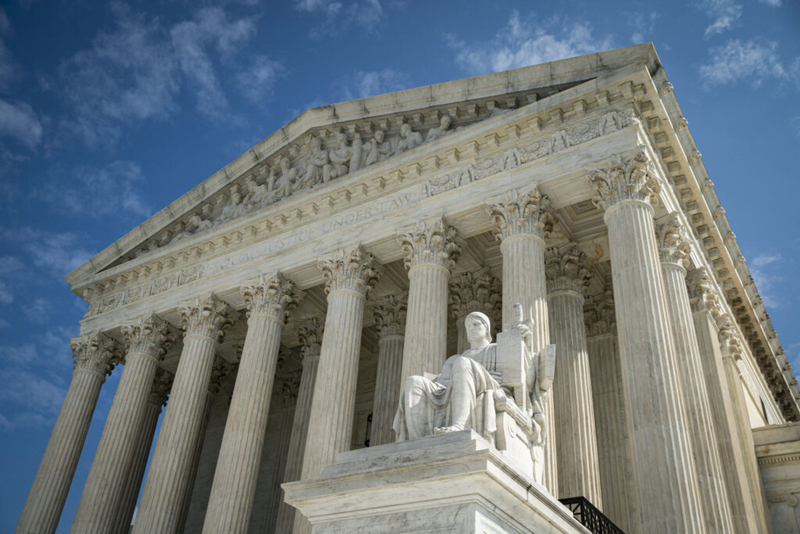
Six hours later, Dominick Occhicone, 80, is scheduled to be executed after being convicted of a double murder in 1987 of his girlfriend’s parents, Martha and Raymond Artzner. Their attorneys have asked the U.S. Supreme Court to intervene. (Photo by Al Drago/Getty Images)
Barring a last-hour intervention by the U.S. Supreme Court, two Florida death row inmates will be executed within hours of each other Tuesday at Florida State Prison near Starke.
James Aren Duckett, 68, is scheduled to be executed at noon. He has spent more than three decades on death row after being convicted of murdering 11-year-old Teresa McAbee in 1987.
Six hours later, Dominick Occhicone is scheduled to be executed after being convicted of a double murder in 1987 of his girlfriend’s parents, Martha and Raymond Artzner. At 80, Occhicone would be the second-oldest man executed since the death penalty was reinstated in 1976.
Attorneys for both inmates filed for stays of execution Saturday with the U.S. Supreme Court.
The state of Florida has already executed 10 death row inmates this year and 29 over the past 19 months. That’s more than half of all executions in the United States since January 2025.
Duckett ‘s attorneys have also filed for writ of certiorari to review the Florida Supreme Court’s decision issued last week denying his request for additional DNA testing. They contend that the denial of DNA testing has violated his right under Florida law to evidence “that would demonstrate his innocence or warrant a reduction of his sentence,” and thus deprive him of due process.
In their legal filing calling for a stay of execution to the U.S. Supreme Court, Duckett’s attorneys argue no eyewitnesses linked Duckett to the killing of the victim and “no direct evidence has ever linked Mr. Duckett to the crime.”
“Absent immediate intervention from this Court, a wrongful execution will occur on July 28,” they write.
Duckett’s attorneys insist that at the time of the crime in 1987, several pieces of evidence were collected, including the victim’s underwear, her jeans, vaginal swabs, and fingernail clippings from each hand. Those items were assessed, but forensic DNA analysis was limited at that time.
After Gov. Ron DeSantis signed a death warrant in February for Duckett to be originally executed on March 31, a lower court granted his request for DNA testing to take place.
However, a DNA slide of the victim’s underwear was sent to an agency that lacked capacity to produce a definitive result. The results were declared inconclusive and the evidence was destroyed in the process.
The state replied that Duckett’s later motion for DNA testing is procedurally barred because the items he sought to have tested could have been included in his request in March and that the record “conclusively establishes no biological material” exists on any additional items. A circuit court and the Florida Supreme agreed with the state.
In their request for a stay of execution to the U.S. Supreme Court, Duckett’s attorneys compare his case with that of Richard Glossip, an Oklahoma death row inmate who was on the brink of being executed multiple times during the three decades he spent in prison for the 1997 killing of his former boss. But the U.S. Supreme Court overturned Glossip’s conviction in 2025, and a state judge released him on bond last year. He faces a new murder trial.
“Mr. Duckett does not ask to be declared innocent,” his lawyers write. “Nor does he ask to be released from prison. All he asks is for this Court to stay his execution so that this Court can review his meritorious claims, in which he seeks fair access to Florida’s statutory procedures for testing available DNA evidence.”
Meanwhile, attorneys for Occhicone contend that his execution, scheduled to take place six hours after Duckett, would be “detrimental” to Occhicone’s constitutional rights and “psychologically and emotionally damaging for the staff on death-watch, as two executions in one day is unprecedented in modern Florida history.”
His attorneys have also made an issue of a documented nationwide shortage of Etomidate, the first of the three drugs administrated under Florida’s execution protocol. They say Florida has continued scheduling executions despite the shortage while refusing to provide transparency about how the drug is being obtained, stored, and used.
Occhicone’s attorneys say that their client’s advanced age and health problems, including heart and renal trouble, an enlarged prostate, arthritis, and degenerative disc disease are grounds for the U.S. Supreme Court to grant a stay and remand the case to Florida for an evidentiary hearing.
“The Court needs the benefit of a more established factual record, to address the specific factors related to Petitioner’s advanced age, to better determine his right to individualized sentencing pursuant to the Eighth Amendment,” Occhicone’s attorneys write.
Tallahassee, FL