A Q&A with Alaska Democratic U.S. House candidate Matt Schultz about the end of his campaign
Jul 27, 2026 | 9:37 am ET
Description
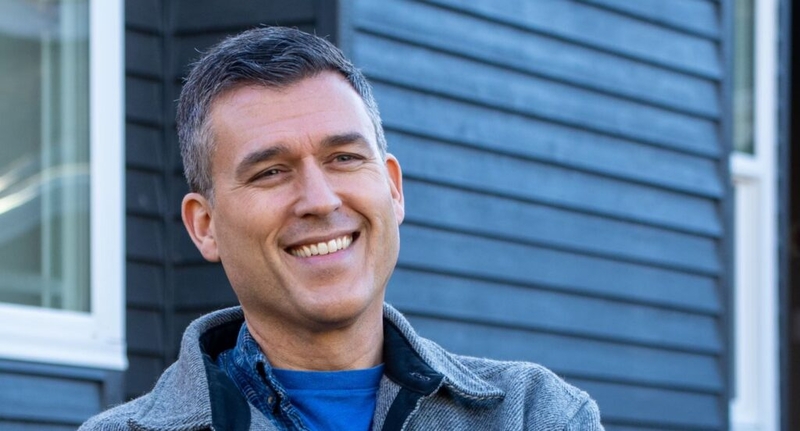
Democratic U.S. House candidate Matt Schultz is seen in an undated photo published on his campaign website. (Screenshot)
Alaska Beacon government and politics reporter James Brooks spoke with Matt Schultz for 15 minutes about the end of his campaign for Alaska’s sole U.S. House seat. Their conversation has been lightly edited for clarity.
Q: Well, how are you feeling?
A: For the first time in months, I’m feeling well rested. … There’s an upside to what was a difficult decision, but there’s definitely an upside in terms of that I could take a moment for myself once in a blue moon.
Q: Doing that kind of thing (suspending your campaign) seems like an impossible choice. I mean, I can’t imagine how difficult that is when you’ve spent all this time and effort on something.
A: Thanks for saying so. And it’s — I agree — it’s a difficult decision to make. But a lot of things like this are really — the proof is in retrospect. And looking back on it now, even though it’s just a few days old, I feel confident that it was the correct decision because the priority is to make sure that we prevent the Republican Party from having a House majority. And once I recognized that I didn’t have a viable path forward, then it didn’t really matter what I’m being asked to sacrifice. I had to sacrifice that to make sure that we prevent that majority.
Q: Why before the primary, though? I mean, there’s still a chance you’re the guy.
A: There’s lots of reasons, but honestly, one of the most disturbing things about the election process is how much … is determined by money, and I did not have a viable financial path forward. If I had made it through the primary, which — I think there’s a real good chance I would have been the the frontrunner — but I would not have had the the financial war chest required to take on Nick Begich, and the priority here is to make sure that Nick Begich does not get back into office.
Q: How long have you been thinking about this? This is not something you do on the spur of the moment.
A: Oh, good golly! I honestly don’t know. You’re right. It was not at all in the moment. Even before you jump into the race, you start to put together the financial plan going ahead, and as that slowly weakens, you start to look at different factors. But I wouldn’t even want to venture a guess, other than to say it was a long process with a lot of good guidance from people who know the political world closely.
In the end, though, it was the decision made by my wife and I to really look at it carefully and make sure that we were serving the purposes we got into this for. You know, we got into the race to serve the people of Alaska with love and do our best to create for them the best possible environment, beginning with the next round of people getting into office in Congress, and if it wasn’t going to be us, we had to make sure it was at least not Nick Begich.
And so again, looking back now, that’s why I feel confident that we did the right thing and that I made the right decision, because I want to make sure that I honor the people who gave me this beautiful opportunity to attempt a run by not turning the run into something that causes the wrong outcome by accident.
And while I’m on that topic, while I’m mentioning the people that supported me doing this, I am just so extraordinarily grateful to have had this opportunity to try. It was such an honor and such a joy. I mentioned I was tired, and that’s true. But what a great gift it is to be allowed to tire yourself out doing something that matters on behalf of people that you love.
Q: What do you think you learned about all this? What did we learn?
A: That sounds like the question they ask at the end of an episode of a sitcom.
Q: Exactly — a very special episode.
A: Well, I’ll reiterate what I just said — that it’s a joy. I didn’t necessarily anticipate that it would be as joyful — and that doesn’t mean (it was) fun always. It’s hard work, and it’s challenging, and you get hate mail and all those things. But joy is a deeper sense of a worthwhile purpose toward something that matters. And to have that in a different field — I have that in my ministry life every day. To get to experience it also in the political realm was such a gift: Tons of support from so many corners of the state was just a beautiful thing that’s all on the upside.
On the negative side — I’ll just keep on singing this song till my final days — it was deeply disappointing how much money plays a role. It is so essential that we overturn Citizens United, or else our country will never be repaired.
Q: Why do you think you didn’t raise as much money as other folks?
A: I’m not sure. I think there are very powerful and wealthy people that are connected that work behind the scenes to choose who’s going to get to move forward and who doesn’t. I think if our system were different and there were a more level playing field financially, I think I would have had a much better shot.
Q: Is there any advice you’d give someone running for office?
A: Oh man, let me think for a sec.
Choose an awesome team. I feel like I was privileged to work with the people I worked with.
Be sure you have your family’s support throughout, because it’s going to be a stressor on your entire family. And I never would have done this unless they were with me 100% along the way.
Recognize that win or lose, the campaign is an opportunity to speak an important message. So make sure that you’re in it for the right reasons: not for ego, not for power, not for money, but that you’re in there to communicate something that matters to people. Because if the campaign ends and you can look back on it and say, ‘I was honest and I used my brief time with that megaphone to build the common good and serve the people,’ then you can do so with pride, and I feel pretty proud.
Q: When I read your statement, you had said suspending this campaign does not mean stepping away from the fight. What do you intend to do going forward?
A: I’m going to first and foremost continue what I’ve been doing for more than a decade here in Alaska, which is standing and speaking and marching and writing, and always advocating for the people who need it most.
Generally, that means people who are poor or ostracized by our society. The work of social justice is always ongoing, and I will be continuing to work in those ways via nonprofits and public demonstrations, and preaching from the pulpit, and serving my neighbor with every ounce of my ability.
In terms of what that might mean politically, I’m afraid the best answer I can give you is I’m not sure. Things like this open doors, and I would be foolish to try to predict exactly what that means.
Q: Your statement also said, ‘I am deeply disappointed that the GOP chose to meddle in this race, and that too many institutions within the Democratic Party ecosystem declined to meaningfully support a campaign rooted in service, integrity, and the needs of working Alaskans.’
I understand the first half of that sentence to refer to the National Republican Campaign Committee’s activities, but I didn’t quite understand what the second half of that sentence was referring to. What was that in reference to?
A: I think that nationwide, people on the left of the aisle — and whatever categories and titles you want to put on that — I think there’s too much willingness to pander to the other side instead of trying to persuade them that what we’re saying is correct.
I think that shifting to the middle is not inherently virtuous. When we think about history, there are issues like slavery or in World War II when the Nazi Party was on the rise — there’s no value in saying ‘let’s be a moderate and meet them in the middle and compromise.’
I think this is a time in history right now.
The reason I was so motivated to flip the House of Representatives is because the Republican Party is pulling us into fascism. They’re attacking our democracy and handing over our freedom to billionaires and trillionaires. The stakes are so very high, and yet the folks on our side of the playing field here seem to be willing to kneel and beg for our rights instead of standing and demanding them, and I think that happened in my race as well.
Various people and institutions have decided that they weren’t ready to proclaim some truths that might be less popular initially, but if we all pull together and keep on pushing these messages, I believe they’re going to win out in the end.
Q: Did you talk with Bill (Hill) before making your decision?
A: No. I spoke to him before I announced it, but not before making it. It was a decision that, as I say, the buck stops here. I consulted a lot of people I truly know and truly trust, and called Bill to inform him.
Q: What did you tell him in that call?
A: Oh boy, I’m not — I’m going to say to you what I said to my wife. I’m not good at relaying exactly how a conversation went. So I just told him the decision. I told him I hope that he beats Nick Begich in November, that I will be casting my vote for him.
Q: So that it wasn’t a situation where you said, ‘I will drop out if you do X, Y, and Z?’
A: No. I didn’t feel that that moment was the time for that. He knows what I’m asking of him. I’ve asked him many times, and he was gracious in this phone call. But you know that wasn’t the nature of the call. I did say to him, ‘Here’s what I expect of you.’
Q: What was that?
A: To stand for the oppressed, to be a voice for the unheard, to represent those who are poor and impoverished and outcast. … Bear in mind, please, that these are all paraphrases. I don’t recall them exactly.
Q: One thing I’ve heard from your supporters is a desire to have somebody who definitively says, ‘I will not caucus with Republicans. I will caucus with Democrats.’ Do you have an assurance? Do you have a feeling? Do you feel that Bill Hill, if elected, will not caucus with Republicans?
A: I don’t know the answer to that yet.
Q: Is there anything that I haven’t asked you that you think is important for me to know?
A: That’s a really good question. Hang on, let me give it some thought.
I think that I’ve been spending a lot of time on this campaign trail, listening to younger generations seeking out their opinion, trying to learn from what their priorities are, and understand why they do or don’t join certain movements.
This has been true in my work in the church too, as I’ve been engaged deeply in the work of fighting against Christian nationalism and wondering why young people join that.
And one of the common factors is young people will join a movement that stands up for what it believes in, whether that’s right or whether that’s wrong.
If they feel that someone is going to have a certain level of commitment and conviction, it’s more likely to bring younger generations along to at least give it some time and effort. But if a given institution signals, time and time and time again, that all they’re going to do is compromise before they’ve even reached the bargaining table, they’re going to walk away from that — because why would you stand with a group that doesn’t even stand for itself? And I think that’s a message that we all need to remember heading into this election.
Q: What do you think it says if, when this primary is said and done, you have more votes than Bill Hill, even after suspending your campaign?
A: I don’t know. You know, sometimes I just follow my conscience, do what I think is best, and tell the truth as best as I possibly can, and then I’ll let other people interpret those results. So I apologize — I’m saying again to you, I don’t know, but I don’t know what that would say.

Juneau