Ernie Chambers library unveiled as longest tenured lawmaker turns 89: ‘I’ll never give up’
Jul 14, 2026 | 6:00 am ET
Description
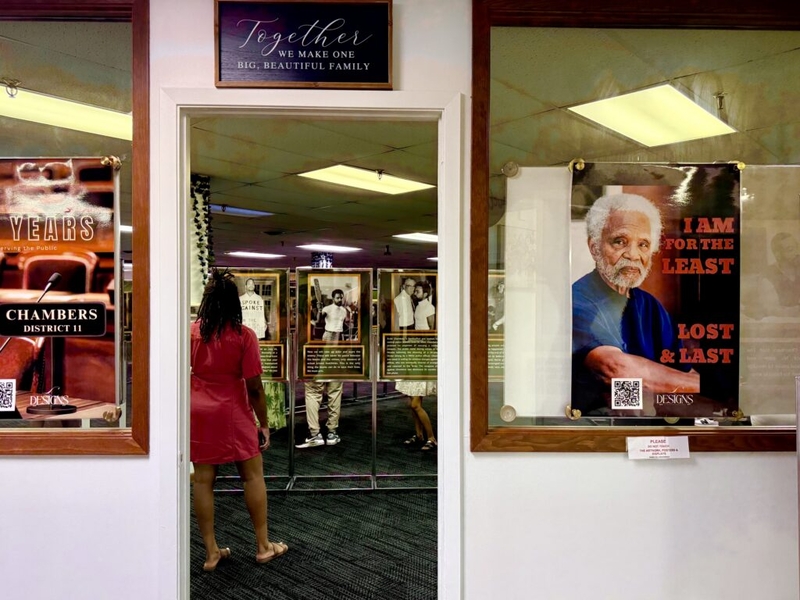
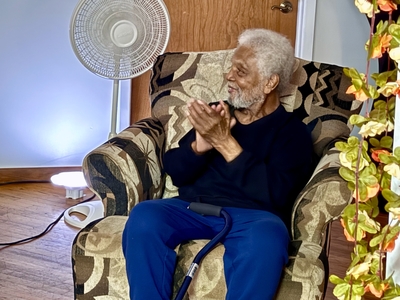
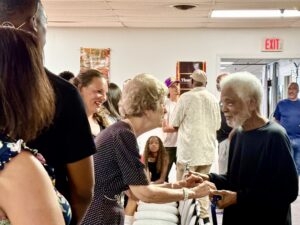
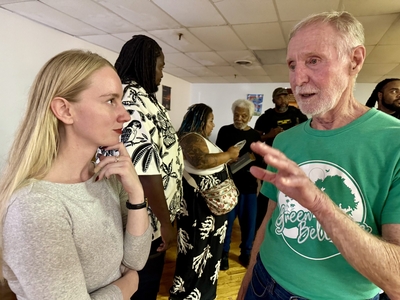
Ernie Chambers, whose years in the Nebraska Legislature spanned nearly 50 years turned 89 years old July 10. He gave no speech at a Saturday celebration, but greeted well wishers individually during the three-hour event that also marked the pre-opening, public reveal of his legacy library and an exhibit at 4401 N. 21st St. in Omaha. (Cindy Gonzalez/Nebraska Examiner)
OMAHA — Nebraska’s longest serving lawmaker, former state Sen. Ernie Chambers, celebrated his 89th birthday surrounded by scores of faces: political figures, family, friends — and portraits of more than 70 Black local legends whose candles burned out before his.
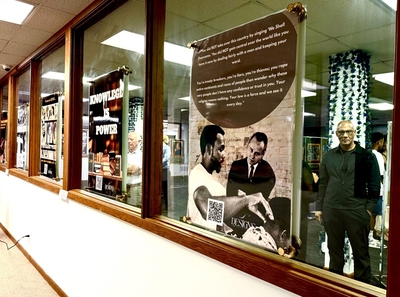
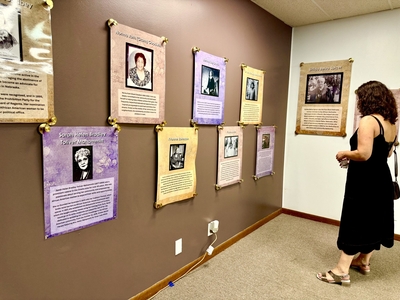
The nostalgia-filled party organized by Chambers’ daughter, Gayla Lee-Chambers, had a multifold purpose. The Saturday evening event also marked the public reveal of the Ernie Chambers Legacy Library and an exhibit, “Walk Through Memory Lane with African American Activists of Nebraska.”
Featured on Memory Lane are roughly 75 photos of Black women and men who, prior to their deaths, made local history in areas including civil rights, education, sports, media and business. The collection is expected to grow.
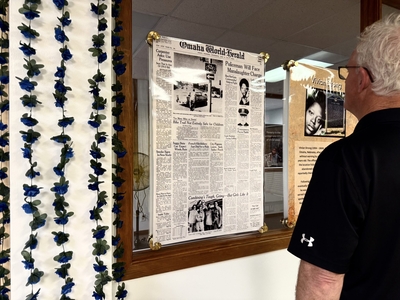
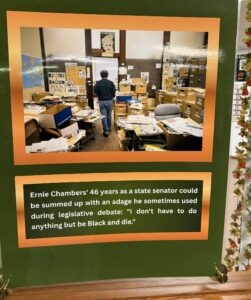
A nearby space spotlighted the library’s widely-known namesake, who represented North Omaha in the Legislature for 46 years. The Chambers gallery currently contains about 100 photos capturing key moments in a legislative career that wrapped up in 2021 and in a lifetime of public service Lee-Chambers seeks to document and preserve.
Her dad’s writing was on display, including a piece on the death of “best and truest friend,” poodle Mollie Rae, which offered insight into Chambers’ love for animals.
There was a time in Omaha, Nebraska, not too long ago, where those freedoms were not allowed and available to Black people.
One wall was covered with notable and colorful quotes from the Omaha-born civil rights icon known also for unconventional and theatrical acts to make a point, like in 2007 when he sued God. He employed paddles in a quest to end corporal punishment in Nebraska public schools, he fought the death penalty, pushed policy changes that ensured equal state pensions to women and eliminated sales tax on groceries and led a national movement to divest from South Africa, an action credited with helping to end that nation’s apartheid government.
Sneak Peek
Chambers got a sneak peek before the event and told the Examiner that he’s never seen anything that pleased him more. He said he even learned some things.
“Much of what was in that exhibit I’d never seen,” he said, adding that he lived through many moments but often didn’t see the photographic proof.
Images gathered from archives of the Omaha World-Herald and Durham Museum reached back to when he was a young postal worker, barber, law student, protester, in the throes of debate and in lighter casual moments.
Sheritha Jones, a researcher who helped curate the exhibits by assembling photos and writing captions, gave Chambers the personal tour and recalled him stepping back to soak it all in: “He said, ‘I have really lived a life, huh.’ ”
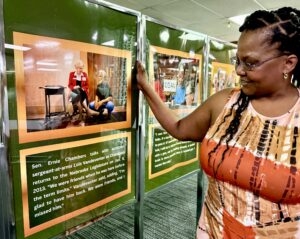
She said he was amused by photos he saw for the first time. Caught on film, for example, was Chambers kneeling near assistant sergeant-at-arms Lois Vandeventer just after he returned to the Legislature in 2013 for his final two terms. He had been term-limited as a result of Nebraska voters in 2000 implementing limits of two four-year terms for state lawmakers. Senators are allowed to sit out a term and run again, which is what Chambers did. He then was term-limited out of office for the second time in 2021.
The caption quotes Vandeventer: “I’m glad to have him back. We were friends and I missed him.” Chambers said the two still exchange holiday cards.
In the interview Saturday, Chambers said he doesn’t have a favorite “single moment” or legislative feat and likened accomplishments to a current that ebbs and flows.
But he mentioned a few highlights: “Getting rid of the death penalty — even though the governor (then Pete Ricketts) spent money and got it reinstated. I did get two people off death row.” Still in effect, he noted, is a prohibition on executing people with developmental disabilities or who were minors at the time of the crime.
“So there are a few vestiges of what I did,” Chambers said. He said he remains vigilant and ready to respond to injustice: “I’ll never give up.”
Chambers hears tributes, passes on speech
Lee-Chambers said it was fortuitous that the library reveal coincided with her dad’s birthday, July 10. Ernie’s sons Mark, Ernie Jr. and David were at the event.
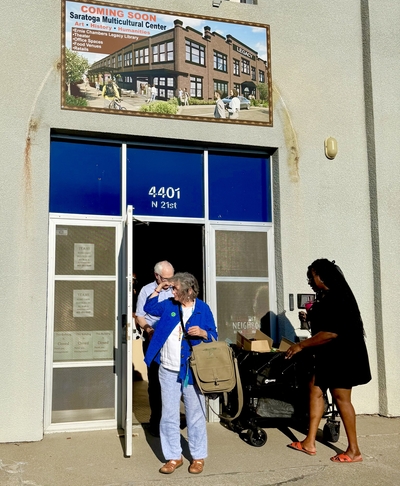
The library is a featured part of the Saratoga Multicultural Center at 4401 N. 21st St., a nearly 60,000-square-foot structure Lee-Chambers bought privately in 2018 at an auction. The nonprofit she leads, Together We Achieve Miracles Inc., says on its website that future plans at the center include dining, a theater and incubator office spaces.
Lee-Chambers said public hours for the library and exhibits are still being established, as the nonprofit seeks feedback from the community.
Chambers, escorted by security guards Saturday, used a cane while maneuvering but was nonstop in greeting guests that included former state lawmakers like DiAnna Schimek and Don Preister and current Nebraska legislators such as Danielle Conrad and Megan Hunt.
Though a line of people stepped up to share stories of Chambers’ impact, the guest of honor passed on giving a public address. He sat on a cushioned chair and listened.
Many well wishers struck a personal chord.
Former Omaha Councilman and university professor Franklin Thompson, for example, played his Ernie-inspired rendition of “To Sir with Love.” His wife, Beverly, belted out words from a ballad: “Did you ever know that you’re my hero…”
Franklin said he’ll never forget Chambers telling his Omaha high school Class of 1971 that he didn’t blame young people for being angry but that there was a better response than rioting: “Use your academics, your mind, to outwit and outthink them.”
Criminal defense attorney Timothy Ashford spoke fondly about how Chambers “made me go to law school.” Among the criminal defense attorney’s clients was David Rice, also known as Mondo we Langa, one of the men convicted in the 1970 suitcase-bombing death of an Omaha police officer. Supporters described Rice as a political prisoner framed by the FBI to get rid of the Black Panthers.
‘I stand on your shoulders’
As noted by several speakers, Chambers’ efforts over the decades reflected experiences, struggles and triumphs of an entire community and culture. For most of his career, he was the only non-white state senator. He’s the only African-American to have run for governor. He also took a shot at a U.S. Senate race in largely white Nebraska.
“I stand on your shoulders,” said Omaha City Councilwoman LaVonya Goodwin, in a nod to Chambers’ successful push for replacing at-large local elections with district elections that led to Black representation for her council district. “Thank you for the way you’ve paved, in so many ways.”
Her husband, Dan Goodwin Jr., was master of ceremonies. The two recalled how Dan Goodwin’s dad — a well-known North Omaha barber represented in the African-American activists exhibit — was an ally who often presented a united front with Chambers. One of those times was in 1969, the year before Chambers was elected to the Legislature, when 14-year-old Vivian Strong was shot in the back of the head by a white Omaha police officer.
The unarmed youth was one of many running from a dance party in a vacant housing unit after someone said police had arrived. The officer, later acquitted by an all-white jury, said he mistakenly thought Vivian was involved in a robbery.
The girl’s death sparked rioting in North Omaha. Both Chambers and Goodwin were arrested outside a radio station after appealing for justice. Goodwin said the handcuffs on his dad, whose shop was a community fixture, were so tight he was unsure he’d be able to cut hair again.
The weapons charge used to book Chambers was dismissed. Chambers, whose outspoken views on race discrimination led to an FBI investigation throughout the 1960s, went on to build his law-making legacy.
“Those were the things that Sen. Chambers did as an average, everyday citizen, for us to be able to really be free to say almost whatever the heck we want,” LaVonya Goodwin told the gathering. “There was a time in Omaha, Nebraska, not too long ago, where those freedoms were not allowed and available to Black people.”
Chambers was quoted as saying that the 157-page FBI file on him showed “a pathological fear of any Black man who can put together 10 words and make sense.”
Sherman Wells, whose grandfather is the brother of Strong’s father, was among those at the event who thanked Chambers for his commitment to racial justice.
T-shirt, blue jeans
Dan Goodwin in tribute wore what he called the Chambers tuxedo — the dark T-shirt and blue jeans Chambers typically wore on and off the legislative floor. He spoke of Chambers’ penchant for lifting weights, sketching and writing poems.
Thompson called Chambers a champion of prison reform, advocate of gun control, an independent voice that understands “both political parties play games.”
“He’s one who inspires others to think critically about the tougher questions in life,” Thompson said.
Johnny Rodgers, a star wide receiver and first Husker football player to win the Heisman Trophy in 1972, was among several who noted that Chambers was among the first in the nation to argue in the early 1980s that college athletes should be paid.
Chambers back then sported a football helmet and jersey in the Legislature to dramatize his push for what today is known as NIL, allowing college athletes to profit from their name, image and likeness.
Hunt, who like Chambers is a registered nonpartisan, recalled a time when her mentor’s years were waning in the Legislature. She was leading opposition to an abortion ban bill and said Chambers, known as the master filibusterer, didn’t show up to help with strategy or amendments.
“I felt so abandoned,” Hunt recalled, despite recognizing that a win was out of reach.
After the final vote tally, Hunt said Chambers emerged and told her his absence was deliberate. He asked his colleague if she had done everything she could — and Hunt said that has been her mantra ever since.
“Success has to be defined by what’s available for you to do,” Hunt said. “If you did everything you can, that has to be enough.”
Preister, who served 16 years in the Legislature with Chambers, told the gathering that he was surprised Lee-Chambers got her dad to the event.
“He is not a man who wants to be the center of attention, even though his whole life he’s been the center of attention,” said Preister, now on the Bellevue City Council.
Preister imagined that Chambers’ rationale was more to provide an example to young people — “to bring attention to a life well lived.”



Lincoln, NE