Cori Bush targets Wesley Bell’s Israel stance in St. Louis congressional rematch
Jul 14, 2026 | 6:55 am ET
Description
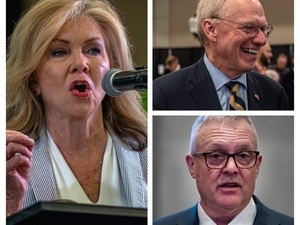
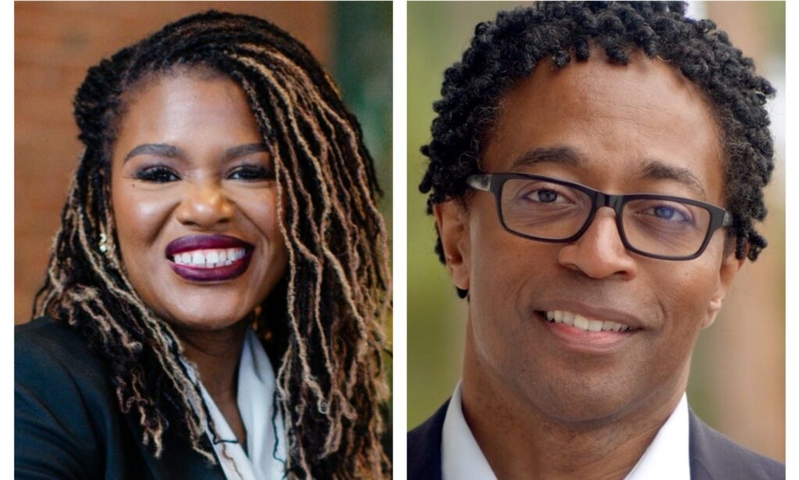
Former Congresswoman Cori Bush and current Congressman Wesley Bell will again face off in the Democratic primary for Missouri's 1st Congressional District (provided photos).
Wesley Bell and Cori Bush’s political careers were shaped by the protest movement that erupted in Ferguson in 2014 and grew into a national reckoning over race and policing.
As a Ferguson City Councilman, Bell witnessed nightly protests in the streets and volatile council meetings following the killing of Michael Brown Jr., an unarmed Black 18-year-old, by Darren Wilson, a white Ferguson police officer.
Bush was among the organizers demanding reform to the police and court systems.
When Bell helped lead the city through the federally-mandated reforms, he earned the respect of activists who campaigned for him to unseat the longstanding St. Louis County Prosecutor Bob McCulloch in 2018. Bush supported his win.
But for the past several years, one main issue is putting them at odds — Bell’s support for Israel and Bush’s advocacy for Palestinian liberation.
In 2024, in one of the most expensive U.S. House primary races in history, spending by pro-Israel PACs helped push Bell to victory over then U.S. Rep. Bush.
This time, as public sentiment towards conflict in the Middle East has shifted, Bush is betting that Bell’s support of Israel, and the money that follows it, could be his downfall.
The two face off again Aug. 4 in the Democratic primary for Missouri’s 1st Congressional District. Bush, a nurse first elected in 2020 won the 2022 primary over state Sen. Steve Roberts with 70% of the vote. Two years later, she lost to Bell, the former St. Louis County prosecutor, by 5 points.
There are three other candidates in the Democratic primary — Alissa Murphy of Clayton, Carl E. Harris Sr. of St. Peters and Carl Ernest Henderson of Hazelwood. None have formed committees to raise money for their campaign.
Two Republicans have filed — Paul Berry III and Andrew Jones, neither of whom has formed fundraising committee for their campaigns in the heavily Democratic district. A Libertarian, Tom Schmitz, will also be on the November ballot.
AIPAC influence
In 2024, the American Israel Public Affairs Committee and other pro-Israel PACS spent more than $8 million backing Bell as part of a broader strategy by AIPAC to unseat Israel’s sharpest critics in Congress, including the “Squad,” which included Bush.
Bell was among the largest beneficiaries of AIPAC-related spending in 2024. The group, founded in the 1950s, has been criticized by progressive Democrats and some Middle East scholars for reflexively backing military escalation and indefinite occupation.
AIPAC is again working on Bell’s behalf, spending $770,485 so far on television ads in the St. Louis area through an organization called the United Democracy Project. Federal Election Commission records show the group has spent $1.1 million overall in the primary through Friday to influence the election.
Bell said he disagrees with that criticism and characterization of AIPAC.
“What they focus on is a strong U.S.-Israeli relationship,” Bell said. “I’ll be honest, I’m not a fan of the current (Israeli) Prime Minister Benjamin Netanyahu, not a fan at all, but what I know about that group is that no matter who’s in charge, they’re going to support a strong US-Israeli relationship.”
When the latest war between Israel and Hamas broke out in October 2023, Bush quickly condemned the Israeli military response and called for a cease-fire. She continues to do so, criticizing Bell for his support of Israel, while also drawing harsh criticism from Israel supporters over her portrayal of the war as “Israel’s ethnic cleansing campaign.”
Days after coming into office in January 2025, Bell applauded the announcement of a cease-fire between Israel and Hamas as a “critical step toward ending the violence, providing immediate relief to those impacted, and ensuring the safe return of the hostages.”
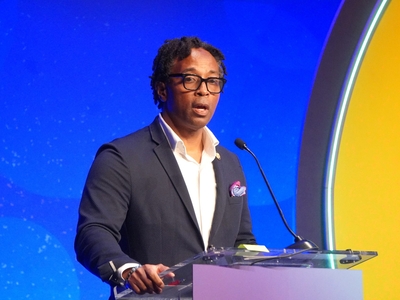
The stakes are heightened by Bell’s committee assignments.
Bell sits on the U.S. House Armed Services Committee, which oversees the Department of Defense, and was recently placed on the House Foreign Affairs Committee, which oversees national security developments affecting foreign policy.
“We can sort of guess from where his money comes from what he might do with that seat on that committee,” said Dan Hellinger, professor emeritus in international relations at Webster University in St. Louis. “But we really don’t know.”
Bell’s voting record offers some indication, Hellinger said. He pointed to Bell’s vote for legislation that would sanction the International Criminal Court for seeking arrest warrants against U.S. allies, including Israeli officials accused of war crimes in Gaza. When the House legislation didn’t pass, Trump issued an executive order.
He also co-sponsored the United States-Israel Defense Partnership Act of 2025, which would authorize expanded defense-related cooperation between the two countries.
In response to supporting the two pieces of legislation, Bell said, “Hamas, Iran, Hezbollah, the Houthis, they don’t just say death to Israel, period. They say death to Israel, comma, death to America. These are our sworn enemies, and we have allies in Israel, in Ukraine, in Taiwan that are on the front line fighting our sworn enemies. So, why would we not support them with everything that we have now?”
Bell also pointed to his co-sponsorship of a House resolution to condemning violence in the West Bank. And he noted that AIPAC did not support the letter.
“What I’m going to continue to do is what is in the best interest of our national security and what’s the right thing to do,” Bell said.
And while he understands Iran to be the leading sponsor of terrorism, Bell said, “at the same time we have an administration that is going into a very volatile place, which is an understatement, without a plan.”
His committee assignments allow him to be in classified briefings and question high-ranking officials on the war, and many of his questions have been left unanswered.
“If the administration refuses or cannot make their case to not only the Congress but to the American people, then we shouldn’t be there now,” he said. “What we’ve seen with this administration is that not only have they not been transparent, but they’ve lied to us about the objectives of the war.”
Bush is counting on public opinion of AIPAC continuing to sour.
“Even for some who are supporters of (Bell) and still would like to support him, some of them can’t get past the AIPAC money,” Bush said. “They can’t get past feeling like their congressman is being bought.”
Jennings Councilman Terry Wilson, who has voted for both candidates and hasn’t endorsed yet, said PACs and campaign financing can get confusing for voters. Voting records are more important.
“I don’t think (Bell has) voted on much that would raise an eyebrow,” Wilson said. “Everybody’s looking at those sound bites and stuff like that, but when you look at what he’s voted on and money that he’s brought back to his district, I think he’s done what a Congressperson should do.”
Congressional goals
While Bell said he takes his role on the foreign affairs and armed services committees seriously, he said his priority is St. Louis.
“We have to focus on regional growth and development,” he said, “because I believe this region is a sleeping giant.”
He pointed to winning approval of $46 million in 2026 community project funding for transportation, housing and infrastructure projects.
“What folks know that they’re going to get from me is that in the good times, but also in the tough times, I’m going to show up,” Bell said. “When Ferguson happened, you didn’t have to wonder where I was. I was there, front and center, working to help not only calm tensions, but move that region forward.”
Bell said he was part of the coalition that reformed the St. Louis municipal court system and got rid of “debtors’ prisons.” As county prosecutor, he touts creating a diversion advisory committee to expand treatment programs to help people address underlying root causes of crime, which he said reduced the St. Louis County jail population for low-level nonviolent offenders by 30% .
“I’ve expanded that work in Congress with our Justice Forward legislation,” he said, “to create more grants that cities can use to address those addiction and mental health issues and also address our public safety.”
Leading up to her loss two years ago, Bush said it felt “like the weight of the world was coming down” as she watched former allies question her intentions after seeing Bell’s attack ads against her.
Bush said she decided to run again after people started coming up to her at the grocery store and gas station asking her to run again. Some, she said, even apologized for either voting for Bell last time, or for sitting the election out.
Bush anticipates another fundraising gap this year.
As of March, Bush had raised more than $831,000, according to the Federal Election Commission and had about $120,000 cash on hand. Bell, as of March, had raised about $1.9 million and had about $1.2 million cash on hand.
“Will there be a lot of spending? Yes. Do I believe we’ll be outspent? Yes,” she said. “But I do not believe that we’ll be out-organized.”
If elected, Bush said she hopes to continue focusing on efforts she started laying the groundwork for in 2022. This includes the repeal of the Comstock Act, which some Republicans, including U.S. Sen. Josh Hawley of Missouri, have asked the Trump administration to enforce in order to end the mailing of medication abortion. She also hopes to again take up the mantle on Equal Rights Amendment work — in 2023 she co-chaired the first-ever Congressional Caucus for the Equal Rights Amendment.
She also plans to keep fighting Project 2025 and work toward a plan for more affordable childcare, health insurance, college and housing.
And, she added, “we’ve got to get a free Gaza. We’ve got to get a free Lebanon. … Cuba, Sudan, Congo, just looking not only at the United States and how we build here, but saving lives abroad as well.”
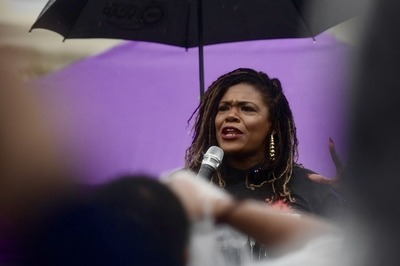
St. Louis Alderman Rasheen Aldridge, who knows Bush from their days as activist leaders in the Ferguson movement, endorsed her this year.
“I’ve always supported Cori because of the way that she goes about advocating and truly wearing St. Louis on her sleeve,” he said, noting her sleeping on the Capitol steps in 2021 in a move of protest credited with helping extend the eviction moratorium. “I appreciate her style going beyond the norm to get stuff done … respectable politics haven’t got us very far.”
Tornado recovery
The May 2025 tornado that devastated parts of north and central St. Louis has become a major flashpoint in the primary. About a month after the tornado, President Donald Trump announced he wanted to dismantle the Federal Emergency Management Agency.
It took 24 days for the May 16 tornado to receive a federal disaster declaration, compared to one day after the Joplin tornado in 2011 and 14 days for the 2022 floods in St. Louis got a declaration, according to a St. Louis Public Radio report.
Bush still directs some blame at Bell, saying he failed to drum up more support for St. Louis. The city has not yet filed for Community Development Block Grant Recovery Funds, but last month St. Louis Mayor Cara Spencer said city and state leaders planned to request $1 billion to $1.5 billion.
After the tornado, Bush said, she was on the ground for months helping to assess needs and deliver help where she could. She founded Politivist Action PAC which carried out relief work after the tornado. She is no longer affiliated with the organization.
“We need a congressperson who is ready, a congressperson who can pull levers,” Bush said. “Not one that is trying to do on the job training.”
Bell said getting things done under the Trump administration is much different than being a Democratic congressman under former President Joe Biden.
“Tragically, this is the first administration that picks and chooses who they’re going to give resources to after natural disasters,” Bell said. “The fact that we were even able to get FEMA authorized in the minority was a win in its own right.”
Bell said he organized a letter signed by every member of the state’s delegation to pressure the administration to authorize FEMA funding, which has been an estimated $200 million so far. Although the need is much higher, Missouri is in a better shape than other states, he said.
A Politico investigation found that Trump approved 23% of disaster funding requests from states with a Democratic governor and two Democratic senators since returning to office compared to 89% for states with a Republican governor and two Republican senators.
The tornado is a prime example, Bell said, of how working within a Trump administration requires an ability to build relationships — an ability he argues Bush lacks, with both Democrats and Republicans.
“This job is about building bridges, but the former Congresswoman voted against the bipartisan infrastructure bill, bringing hundreds of millions of dollars to this region,” he said. “She doesn’t build bridges, but then also she literally voted against the bipartisan bill to build bridges.”
Bush has defended her vote, saying she believed Congress could’ve held out for a better bill that also included childcare provisions.
Bell said some of his supporters were turned off by Bush’s sharp criticisms of Biden and Vice President Kamala Harris in the weeks before her 2024 loss to Trump.
“It was time for us to rally around Kamala Harris,” Bell said, “because the best way to fight Donald Trump is to keep him out of office in the first place — and in late October, she’s calling Kamala Harris a fascist.”
Bush rejects any suggestion that she can’t work well with others, pointing to numerous pieces of legislation she worked on with Republicans, including a provision that extended compensation to victims of radioactive waste contamination in St. Louis County. When Hawley announced the victory last July in a crowd that included Bell and Bush, the Republican senator and Bush embraced and he thanked her, saying, “we would not be here without you and your work.”

Jefferson City, MO