For 30 days, a nonprofit leads hikes and floats across SC. The goal is conservation.
Jul 14, 2026 | 7:00 am ET
Description
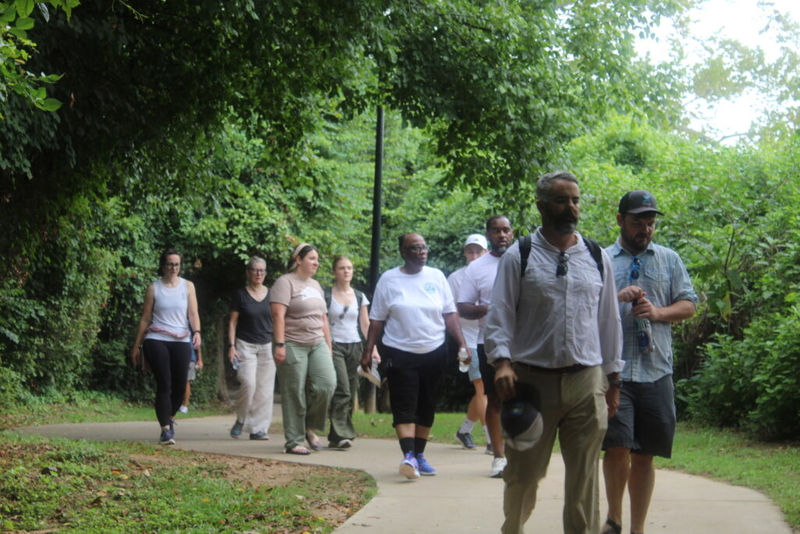
Hikers walk the West Columbia Riverwalk as part of the South Carolina 7 expedition in West Columbia, South Carolina, on Monday, July 13, 2026. (Photo by Skylar Laird/SC Daily Gazette)
WEST COLUMBIA — By the end of July, members of South Carolina 7 will have rafted down the Chattooga and Edisto rivers, watched the sunset from the state’s highest point and walked more than 300 miles that roughly represent the entire state, from mountains to beaches.
Most every day, members of the public can join portions of the expedition in an effort to get people outside and show off South Carolina’s natural beauty. More than 1,000 people have joined for the first 13 days of hikes and demonstrations, more than any past year, said Michelle McCollum, president of the nonprofit South Carolina Natural Heritage Corridor and chief logistics officer of SC7.
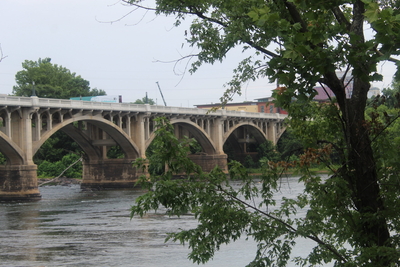
The expedition spans the state, with the hopes of enticing people statewide with varying skill levels and abilities to join.
Many days, like Monday’s 3-mile walk along the Congaree River, are hikes, often following the 410-mile Palmetto Trail. Other days involve whitewater rafting, tubing, yoga and talks about the importance of the outdoors. (A few excursions, including a sunrise tour of Bull Island, are closed to the public.)
The goal is to encourage people to get outside, whatever that means for them, McCollum said. The more people appreciate the beauty of nature surrounding them, the more likely they are to want to protect it, she added.
“What I hope that they take away is the power of nature for health and wellness, and also recognizing that it’s all of our responsibility to make sure that we keep these places in a condition where we can continue to enjoy them,” McCollum said.
A less experienced hiker might opt for a tour of the South Carolina Botanical Garden in Clemson or some yoga at Colonial Dorchester State Historic Site in Summerville. A paddler might prefer to go on a whitewater rafting trip down the Chattooga River in the Upstate or relax on a tube floating down the Edisto River in the Lowcountry.
This year, the expedition also incorporated the nation’s 250th birthday. Stops include Cowpens National Battlefield, Kings Mountain National Military Park and Battle of Musgrove Mill State Historic Site.
A hike through Poinsett State Park and a kayaking trip down the Santee, Wateree and Congaree rivers include history lessons about the areas’ roles in the Revolutionary War.
However people choose to participate, what’s most important is that they’re outside and appreciating the beauty of their surroundings, McCollum said.
After all, conservation often starts with people recognizing how nature can benefit them, she added.
Research shows being near water can make people happier. Hiking and other exercise can help with both physical and mental wellbeing, researchers have found. When people have that positive association with a hiking trail or waterway, they’re more likely to fight to keep it there, McCollum said.
“The whole concept behind SC7 was to get people in the outdoors for health and wellness,” she said. “When we get them outdoors, they begin to appreciate the outdoors, and they’ll then do their part to protect the outdoors.”
At the heart of the nonprofit’s work is the “seven geographic wonders unique to the Palmetto State.”
All seven are among the spots the 30-day tour will hit, emphasizing the state’s biodiversity and the importance of saving it, McCollum said.
“These are the seven places in South Carolina that every South Carolinian should go visit,” McCollum said. “They are very unique to our state, and we should be very proud of having those locations here in South Carolina.”
People often don’t realize how close they live to wetlands, woods and other natural areas, McCollum said. Along with inviting people to get outside, the 30-day expedition can act as a guide for those who might not know they have a hiking trail, river or garden nearby, or who want to explore different parts of the state, even beyond the “seven wonders,” she said.
The West Columbia Riverwalk, for instance, is a good example of urban hiking, showing people they don’t always have to travel far to connect with nature, she said.
The approximately 3-mile hike Monday began at Savage Craft Ale Works, a Lexington County brewery. From there, around 100 people walked a half-mile down to the river, then set off on the paved trail. West Columbia’s retail center, lined with restaurants and bars, gave way to million-dollar homes, then to the appearance of unbroken woods.
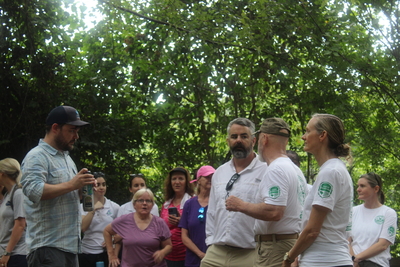
Hikers marveled at the feeling of being so surrounded by nature just a several-minute drive from the state’s capital city.
“One thing that is neat to think about is we’re pretty much in the middle of metropolitan Columbia,” said Cissy Terlizzi, a 64-year-old retired band teacher from Batesburg-Leesville. “But you’d never have known it.”
That’s the beauty of the riverwalk, which extends into nearby Cayce and connects to Columbia’s canal as part of the Three Rivers Greenway, said Rep. Micah Caskey, whose district includes the area.
“West Columbia and Cayce are showing what is possible for ways to introduce people to the environment, ways to get out and see this great state,” the West Columbia Republican said.
Conservation is “an integral part of our state,” Caskey said.
This year, he proposed spending $300,000 to support the expedition, which is run through National Heritage Corridor, a nonprofit focused on driving tourism to natural areas. Two years ago, SC7 received $250,000 in state taxpayer dollars.
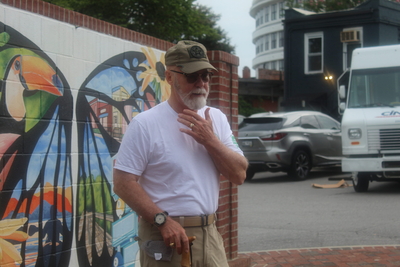
Along with protecting untouched rural areas, a key aspect to protecting the environment is convincing cities and towns to leave certain plots of land wild and free to the public the way West Columbia and nearby Cayce have, said Tom Mullikin, director of the Department of Natural Resources.
Often, conversations around conservation are framed as development versus protection. That doesn’t have to be the case, said Mullikin, who has also led the expeditions since SC7 started in 2019.
As South Carolina grows, striking a balance between economic development and protecting the environment is vital to ensure the state stays both prosperous and wild, he said.
“We’re not asking you to choose between economic and environmental sustainability,” Mullikin said. “These two work hand in hand.”
Legislators from both parties have made conservation a priority.
A law passed this year emphasized the state’s commitment to protecting the state’s natural resources and set a goal of preserving 7 million acres by 2050, roughly double the number already protected. Only two legislators in each chamber voted against it.
The law includes no consequences for failing to meet that goal. But it shows that legislators recognize the importance of South Carolina’s natural sites, Mullikin said.
“A lot of times, this idea of protecting our natural resources gets sucked into a political conversation,” Mullikin said. South Carolina’s nonpartisan attitude “really is a model for global success,” he added.
For Julie Moniot, who has done six of the events so far, the best part is getting to go outside for a while.
Hiking took the place of Moniot’s full-time job after she retired, and the SC7 tour gives her a reason to travel to different parts of the state and meet new people, she said.
“It’s fun to get out in nature,” the 64-year-old Greenville resident said. “It really is.”

Columbia