With a budget compromise on data centers, it’s all over but the teeth-gnashing
Jul 13, 2026 | 5:25 am ET
Description
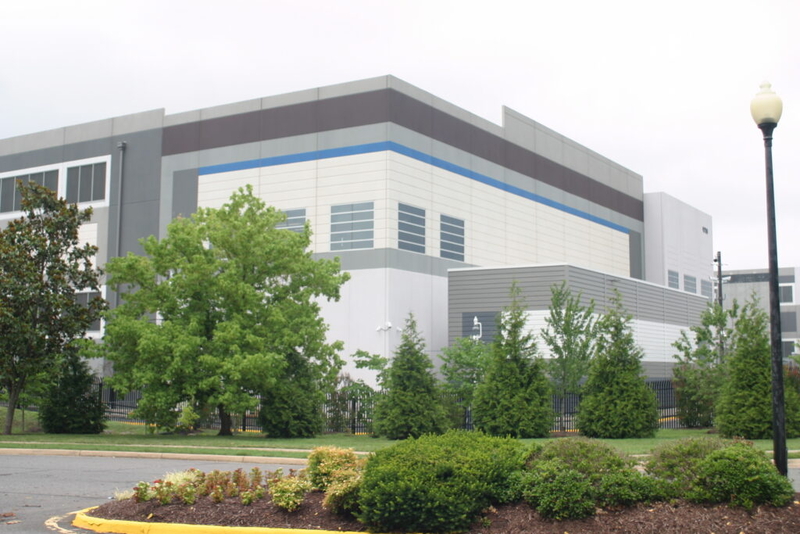
A data center in Prince William County, Virginia. (Photo by Shannon Heckt/Virginia Mercury)
At last, there’s peace in the valley: after weeks of battle, the Democratic governor of Virginia and Democratic House and Senate leaders in Virginia’s General Assembly finally agreed on a budget.
Getting to that point required them to reach a compromise on the treatment of data centers that retained the industry’s sales tax exemption while imposing a new energy tax. In lieu of clean energy requirements, legislators adopted a couple of softball provisions on noise and water use. Virginia leaders declared victory and went home happy.
Virginia General Assembly approves Spanberger’s budget amendments, ending monthslong impasse
The same cannot be said of the industry’s opponents. They had embraced both the Senate’s original proposal to eliminate the tax exemption and the House’s proposal to condition the exemption on data centers meeting stringent environmental standards around energy use and diesel generator pollution.
Either result might have slowed the growth of the industry in Virginia, with the House approach pushing out mainly those companies who aren’t willing to clean up their energy use. The fact that Virginia leaders found a way to do neither predictably antagonized grassroots activists and community members.
But the data center industry also took issue with the result.
Josh Levi, President and CEO of the Data Center Coalition, called the budget provisions “a sweeping package of regulations and tax hikes intended to claw back the state’s economic development agreements.” He warned that tech companies would now “prioritize new investment in states with competitive and stable business environments.”
This response is interesting because the idea of instituting an energy tax in lieu of rolling back the sales tax exemption reportedly originated with lobbyists for the data center industry, who hoped the deal would include an extension of the sales tax exemption beyond 2035. It isn’t so much the tax itself they object to, it seems, as not getting everything else they wanted.
So while Levi stomps around gnashing his teeth and instilling hope in data center opponents that the industry will indeed “prioritize new investment” in other states, Virginia leaders can feel confident that their budget deal won’t stop data center growth.
Indeed, the new energy tax is likely too low to make a difference. U.S. Energy Information Agency data shows Virginia’s commercial electricity rate is the lowest in the Southeast and more than three cents per kilowatt-hour below the national average.
Even adding Virginia’s new energy tax of just over a penny per kilowatt-hour, only North Carolina and Georgia will have lower rates anywhere in the East. (These two states are also trying to figure out how to deal with the data center onslaught, and are watching Virginia closely.)
The Data Center Coalition’s hostility to an energy tax and a couple of modest environmental guardrails is interesting for another reason. This is an industry that brags about its willingness to “pay its fair share,” its commitments to renewable energy, and its innovations to reduce its environmental impact. Why is it fighting so hard when asked to walk the talk?
Together, Amazon, Microsoft, Google and Meta accounted for half of all global clean energy purchase deals in 2025. Amazon, the largest data center operator in the world as well as in Virginia, is also the world’s biggest corporate buyer of clean energy, although not in a way that connects much of the electricity to Virginia.
Unfortunately, the race to develop artificial intelligence has become more important for these companies than preserving their good-guy status.
Google set one of the highest bars for sustainability and has pursued more innovative approaches than any of its peers, yet its carbon footprint has increased by 51% since 2019. Microsoft, another climate leader, is reportedly reconsidering its clean energy pledge in the face of AI demands.
That they have fallen short is not entirely their fault. PJM, the grid operator for the region that includes Virginia, has failed to approve new generating projects fast enough to meet the sudden spike in power demand. Wind, solar and battery projects languished for years in PJM’s queue even as data centers proliferated. Now PJM wants to prioritize construction of plants that burn fossil gas ahead of cheaper, cleaner, and faster-to-build solar energy.
National policy is also working against them. As I’ve written, President Donald Trump, his cabinet appointees and his disciples in Congress have been doing everything imaginable to block new wind and solar energy from reaching the grid.
But if the tech companies tried to change these outcomes, they have been awfully quiet about it. You’d expect a company that wants to be taken seriously for its climate commitments to be active at all levels of government and in the offices of grid operators, utilities and state public utility commissions, demanding more access to clean energy.
Big Tech has instead focused its lobbying power on defeating anything that stands in the way of developing artificial intelligence. As the Data Center Coalition’s actions demonstrate, that includes Virginia’s efforts to impose clean energy requirements.
Part of the problem may be that Amazon, Google, Meta and Microsoft aren’t the only members of the Data Center Coalition. Dive deep into the map of data centers in Virginia and you will find a host of companies you probably never heard of. Many of these are colocation providers, meaning they rent data center space to other businesses. These operators talk a good game on sustainability, but the details tend to be squishy, and greenwashing is rampant.
Take Equinix, a top colocation provider in Northern Virginia. Equinix boasts it matches its electricity demand with renewable energy, but its map shows these are mostly dirt-cheap renewable energy certificates from existing wind farms in Texas and Oklahoma, which don’t send power to Virginia.
Or look at Vantage, which says its customers “can take advantage of renewable energy to reduce their carbon emissions,” using utility green power programs and voluntary purchases of renewable energy credits. That’s something anyone can do anyway, and it rarely supports new projects.
And then there’s QTS, the Blackstone company that recently threw in the towel on its scandal-plagued effort to build the Prince William Digital Gateway. QTS claims to purchase renewable energy (it doesn’t elaborate), but its most recent “annual” sustainability report, dating from 2024, shows sharply increasing CO2 emissions from its operations.
Frankly, though, it doesn’t much matter what kind of green claims a corporation makes when its actions tell a different story. In Virginia, the story is that the data center industry will fight any attempt to regulate it, whether through taxes or environmental protections.
Levi and the Data Center Coalition insist the problem isn’t the industry’s actions, it’s that the public doesn’t appreciate all data centers have done for Virginia. Levi lamented to one reporter that the industry is “not readily understood, and it’s on us that it’s not readily understood.”
Oh, honey, we understand you perfectly well.
Richmond, VA