Oklahoma lawmakers’ recess requirement adds more stress to schools’ micromanaged calendars
Jul 13, 2026 | 6:29 am ET
Description
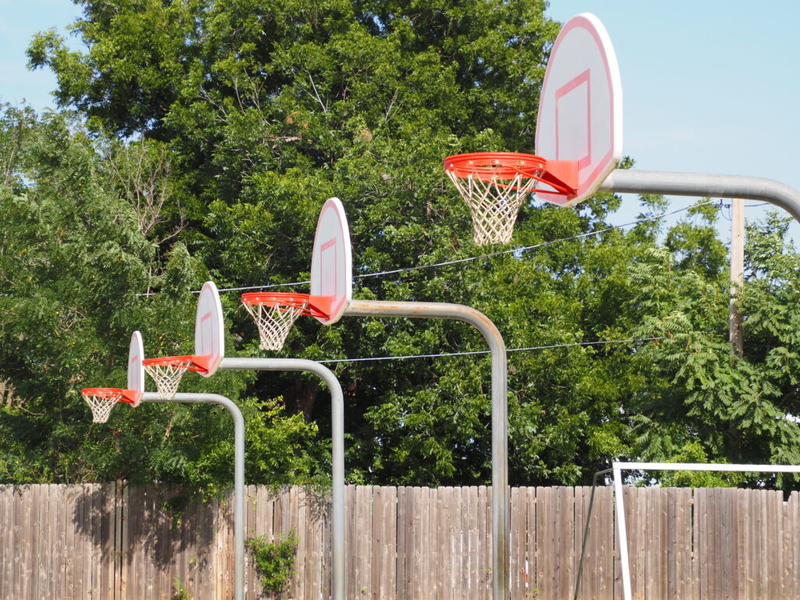
The playground is pictured at Eugene Field Elementary in Oklahoma City. (Photo by Nuria Martinez-Keel/Oklahoma Voice)
You know a law won’t be good when the most thought-provoking question a lawmaker faces during the vetting process is whether he liked jump-roping or four square better at recess.
Unfortunately, Oklahoma legislators have left our public schools, businesses and families cleaning mud off their faces like kids on a playground with the asinine requirement that elementary campuses double the minimum amount of time students must spend at recess, from 20 to 40 minutes daily.
They proclaimed this would be a simple but critically needed change that will help students and schools thrive.
“Kids aren’t meant to sit all day,” Senate author Ally Seifried, R-Claremore, said in a statement as her chamber unanimously sent the bill to the House in March.
Lawmakers apparently conveniently forgot — or didn’t understand — that they’ve already been micromanaging schooldays so much that tacking on 20 minutes poses a major challenge for administrators and school boards across the state.
Oklahoma law requires that schools provide 1,086 hours of instructional time each school year, so school administrators carefully set their schedules to align with the requirements.
Legislators’ extra 20 minutes of mandated recess time is forcing schools that provided less to lengthen their existing school days or create new ones to make it work — without the financial support from legislators to do so.
Then after lawmakers headed home from their annual legislative session early, state Superintendent Lindel Fields, decided to throw an additional wrench into the works.
In the 2026-27 school year, Fields has graciously decreed that 20 minutes of recess can count as instructional time. But the remaining 20 minutes cannot.
The bureaucrat – who was appointed by Gov. Kevin Stitt – also abruptly decided that beginning in the 2027-28 school year, recess will no longer be allowed to count toward any instructional time, meaning districts will be required to rework their schedules again to accommodate 40 minutes of play.
Complicated much?
Recess used to be fun. Now state leaders have apparently graduated to using it to seize control from local leaders.
The law coupled with Fields’ pronouncement has thrown school calendars into chaos.
For example, beginning in 2027-28, Deer Creek Public Schools, north of Oklahoma City, will have to add 35 more hours of instructional time to accommodate recess. If a student goes to school for seven hours a day, that’s the equivalent of about five more school days.
That will certainly eat into children’s unstructured play time outside of school.
It’s also going to make it more expensive for schools because teachers, bus drivers and other staff will have to work longer hours.
Lawmakers are forcing us all to invest money to pay for more recess, which they don’t even consider to be instructional time? No district has extra money laying around to pay for this, but if they did, why are legislators not investing in literacy, math, science or social studies initiatives?
Changing school hours also has a ripple effect on the greater community because if a child starts school earlier or ends later, it affects childcare providers and other businesses who employ parents. It impacts high school sports because in larger districts, transportation schedules have to change for all students.
Elementary students will get home later, which means teachers and bus drivers will have to work later.
But I guess it’s not surprising that those pesky details got overlooked when you had a bipartisan group of House lawmakers focused on pandering to a bunch of elementary students.
The same April day that House lawmakers were considering adding 20 minutes of recess, there was a boisterous group of Oklahoma fourth graders sitting in the House gallery learning about the democratic process.
Other than a serious question about what grades the bill would affect — that’s kindergarten through fifth, by the way — the Q&A session went a bit like this:
Rep. Trish Ranson, D-Stillwater, asked House author Chad Caldwell, R-Enid, what his favorite recess activity was: four square or jump rope?
Caldwell said if those were his only two options, he would choose four square, a game played with a bouncy ball with the goal of moving to the top square by knocking the ball past your opponent. Caldwell, though, said he was more of a “dodgeball guy.”
Another legislator said he liked tetherball.
And with a grin on her face, House Minority Leader Cyndi Munson, D-Oklahoma City, who is running for governor, asked cheekily if fourth graders would benefit from 40 minutes of recess.
The students cheered en masse.
“I think this is apparently my most popular bill ever,” Caldwell said at one point.
The House by a bipartisan 86-1 vote sent the measure to Stitt, who went on to sign it into law. The students cheered, certain there could be nothing wrong with having more time on the playground.
State Rep. Jim Olsen, R-Roland, was the only lawmaker in either chamber to oppose it. Probably sensing popular sentiment was against him and that he’d find himself loudly booed by the fourth graders, which would not look good on future campaign mailers, Olsen did not weigh in ahead of the vote.
It’s unfortunate that he did not. Perhaps he could have singlehandedly saved districts, businesses and families from this debacle.
This demonstrates exactly why crafting legislation is not supposed to be a popularity contest, why we’re not supposed to be allowing people to cheer loudly in the Capitol spectator galleries and why we allow only adults to serve in our Legislature.
Laws shouldn’t be passed to gain the adoration of fourth graders. They should be crafted with the utmost seriousness by adults who understand their work has ramifications that extend well beyond the walls of our Capitol.

Oklahoma City, OK