Missouri’s ‘gray market’ gambling fight was never as gray as advertised
Jul 13, 2026 | 6:45 am ET
Description
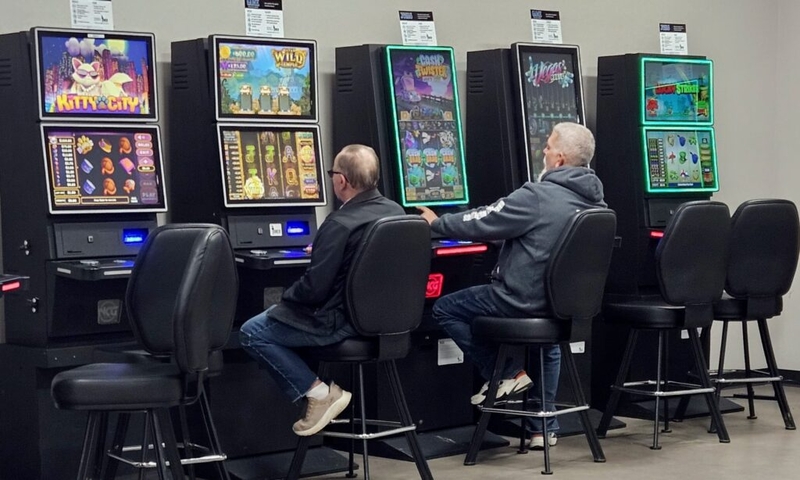
Customers play Torch slot machines April 10 at a Columbia convenience store (Rudi Keller/Missouri Independent).
Every good hustle needs a snappy name, and for a long time Missouri had a beauty: gray market games.
It rolled off the tongue and suggested a place between the lines, a zone the lawyers hadn’t gotten around to coloring in yet.
The companies behind the machines in bars and VFW halls and convenience stores had a story to match the name. These weren’t slot machines. They were “no chance” games. Some even let you peek at the prize before the next play, which was supposed to prove the whole thing was on the level.
Where’s the gamble if you can see what’s coming?
Attorney General Catherine Hanaway has spent recent months declaring the gray market era over: felony charges against convenience store owners, a four-county sting with seizures and demand letters to businesses still hosting the machines.
The pushback arrived in two recent lawsuits. A bar in St. Charles called Tuners filed late last month. Then came a broader suit filed by MOLAG, an Osage Beach group founded last year that does not publicly identify its members.
The groups are careful about what they’re arguing. They aren’t leading with a claim that the machines are legal. Their lawsuits are about process: The state, they argue, can’t declare a machine illegal by press release and then threaten criminal charges or loss of liquor licenses.
Prove it, machine by machine, in front of a judge.
But a process argument is not a legality argument. And the legality argument did not begin with Hanaway. The state’s theory didn’t change, only the attorney general’s willingness to put the weight of the office behind it.
The Missouri Gaming Commission examined a “no chance gaming” device in 2019 and concluded it was a gambling device under state law, pre-reveal feature or not.
In February, U.S. District Judge John Ross ruled “no chance” machines operated by Wildwood-based Torch Electronics were gambling devices under Missouri law and illegal outside a licensed casino. Missouri law does not ask whether a machine is technologically identical to a casino slot. It asks whether someone risks something of value on an outcome they cannot control.
The prize viewer, Ross found, did not save the machines. It showed the next payout, not the ones after it. A player who saw a losing turn and kept going, hoping the next preview would be better, was wagering on something he could not predict.
Missouri courts saw the preview trick a long time ago. In 1913, a state appeals court examined a machine that showed the next payout and still found it was built to lure players into one more turn. In 2020, a Platte County judge found Integrity Vending guilty of promoting gambling over machines with a similar prize-viewing feature.
None of this puts Hanaway beyond scrutiny. It is fair to ask why Missouri tolerated the machines for so long, whether enforcement lands on operators or the small businesses hosting them, and whether the state treats all gambling with equal seriousness.
And lawmakers may yet legalize and tax these machines.
But a failed effort to legalize something does not prove it was already legal. And years of uneven enforcement do not create a permanent right to profit from machines that courts and prosecutors say fit Missouri’s gambling laws.
Which is the last thing to know about the gray market. It was never really a place on the map. It was a stretch of time when the state’s theory was clearer than its willingness to enforce it.

Jefferson City, MO