OPINION: America’s AI future will be decided in local zoning meetings
Jul 13, 2026 | 6:00 am ET
Description
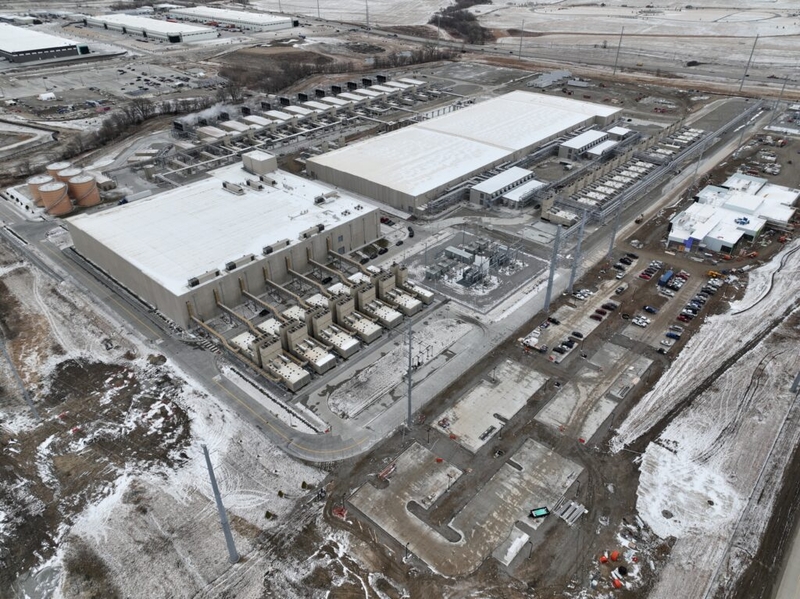
Google's Papillion data center site, in 2022, before an expansion to the west. (Courtesy of Google)
The global competition between the United States and China for artificial intelligence leadership will not be decided only in Silicon Valley, Washington, D.C., or Beijing.
Increasingly, it will be decided in county commission chambers, planning commission hearings and local zoning board meetings across America.
That is not an understatement, but a reflection of the reality in front of us. America’s lead in artificial intelligence depends on our ability to build the digital infrastructure that powers it. The United States holds an advantage in frontier AI capabilities today, but maintaining that lead will require more data centers, more computing power, and more communities willing to thoughtfully consider the infrastructure behind every breakthrough.
Lengthy permitting battles and inconsistent local approvals risk slowing that progress at the exact moment China is accelerating its own investments.
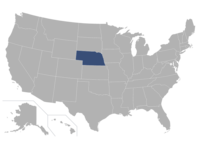
That is why Nebraska matters.
Our state has many of the assets global technology companies need: abundant public power, affordable electricity, a central location on the nation’s fiber backbone, a highly skilled workforce and one of the safest environments in America for critical infrastructure. Those advantages have already helped attract more than $15 billion in Google investment since 2019, supporting thousands of Nebraska jobs and billions in statewide economic activity.
As we know, competitive advantages alone are not enough.
Communities have every right to ask serious questions about electricity, water, taxes, farmland and quality of life. Those concerns deserve thoughtful answers. Good public policy requires transparency, accountability, and careful planning.
The answer, however, cannot simply be “no.”
If America makes it too difficult to build the infrastructure needed for artificial intelligence, China will seize on our hesitation. AI is quickly becoming foundational to national security, advanced manufacturing, precision agriculture, health care, financial services, logistics, scientific research and military readiness. The nation that builds the strongest AI infrastructure will hold meaningful economic and geopolitical advantages for decades.
Nebraska can offer a model for how responsible development and community protection can work together. Unlike every other state, Nebraska operates under a public power system. Our utilities exist to serve customers, not shareholders. That means large industrial users can be required to pay their own way through carefully designed rates and infrastructure agreements that protect residential customers and small businesses. Public power gives Nebraska tools many states simply do not have.
Local governments should also insist on transparency around water use, investments in grid reliability, local workforce development and long-term tax benefits. Responsible zoning means evaluating projects based on facts, negotiating from a position of trust and ensuring communities share directly in the benefits.
Nebraska has already shown this balanced approach can work. Data center development supports skilled construction careers, permanent technical jobs, partnerships with higher education institutions, and significant local property tax revenue that helps fund schools, roads and public safety. The question before local elected officials is larger than any single development application.
When zoning boards consider the next data center proposal, their decisions reach far beyond county lines. They influence whether Nebraska remains competitive for billions of dollars in private investment. They shape opportunities for the next generation of Nebraska workers. Increasingly, they help determine whether America maintains its technological leadership in an era of intense global competition.
It is absolutely vital to the future of our country that United States wins the AI race.
Winning will require more than better algorithms or faster computer chips. It will require communities willing to thoughtfully approve the infrastructure that makes those innovations possible.
The road to American AI leadership may begin in Washington, but increasingly it runs through local zoning meetings across Nebraska and throughout the nation.
Lincoln, NE