Fish and Game funding crisis often portrayed as a financial issue. In reality, it’s a political one.
Jul 13, 2026 | 4:55 am ET
Description
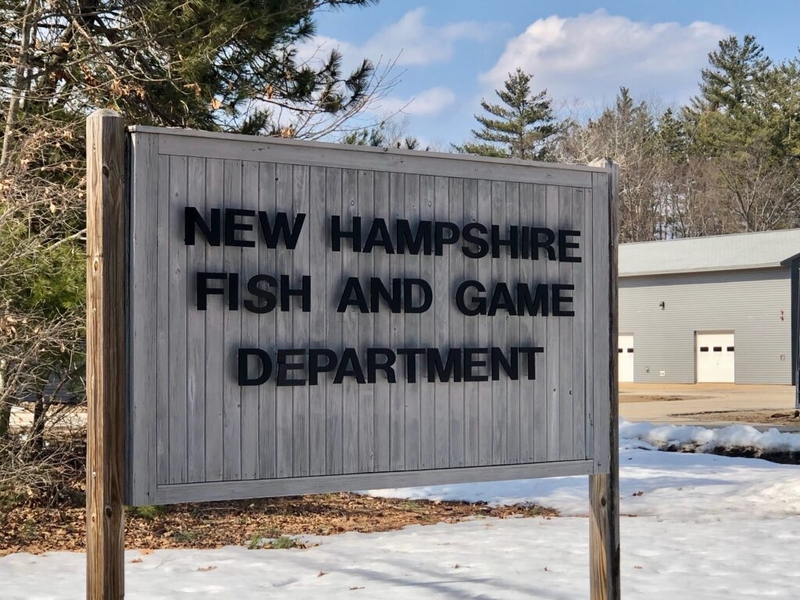
The New Hampshire Fish and Game Department headquarters in Concord. (File photo by Hadley Barndollar/New Hampshire Bulletin)
For nearly two decades, New Hampshire has studied the Fish and Game Department’s funding and governance problems, identified practical solutions, and then failed to implement them. The department’s current financial crisis was not inevitable — it was both predictable and preventable.
Since the Legislative Performance Audit and Oversight Committee in 2008, the SB 48 Commission to Study the Efficiency and Effectiveness of Fish and Game Department Operations in 2018, and most recently the SB 542 committee to study Fish and Game Department funding in 2024, the conclusion has remained remarkably consistent: the New Hampshire Fish and Game Department is carrying out a statewide public mission with a funding structure that no longer reflects the people who benefit from that mission.
The obstacle to finding additional ways to fund New Hampshire Fish and Game has never been a lack of alternatives. Rather, meaningful reforms have repeatedly stalled because expanding the department’s funding base has been viewed by some as expanding its accountability to stakeholders beyond hunters and trappers.
However, the numbers tell a different story. The SB 48 Committee found that hunting and fishing license sales, together with federal excise taxes on hunting and fishing equipment, generated only about 40% of the department’s budget. At the same time, surveys conducted by both the U.S. Fish and Wildlife Service and New Hampshire Fish and Game show that residents and nonresidents who enjoy wildlife through birdwatching, photography, hiking, and other non-consumptive activities spend substantially more on wildlife-related recreation than hunters and anglers in New Hampshire.
Yet the department continues to rely on a funding model rooted in the realities of the 1950s rather than the New Hampshire of today. The misconception that hunters and anglers alone fund Fish and Game — and that others therefore have “no skin in the game”— simply is not supported by the department’s own financial data.
The consequences of failing to modernize that funding model are becoming increasingly apparent. As an example, Fish and Game should not have to depend on unpredictable General Fund appropriations to carry out its statutory responsibilities. Yet in fiscal year 2026 the department received only a little more than $100,000 from the General Fund, compared with roughly $500,000 to $900,000 in recent years.
What kind of effective business can be managed with that level of uncertainty?
After years of legislative inaction and what appears to be declining General Fund support, the department attempted this year to address part of its shortfall through modest license fee increases — the first in more than a decade. Even that effort was ultimately rejected when Gov. Kelly Ayotte opposed the fee increase, perhaps because she believed that in this politically sensitive campaigning period it may have alienated some of her constituency.
Ironically, when the Fish and Game Commission was reorganized in 1935, the Legislature intentionally insulated wildlife management from just this type of short-term political pressure by creating a bipartisan citizen commission with staggered terms and statewide representation. Unfortunately, today funding decisions for the department increasingly seem to reflect political partisanship.
The department faces an ever-expanding public mission while operating under an outdated funding structure that no longer reflects either its responsibilities or those it serves. For nearly 20 years, legislative committees have acknowledged the problem, studied it repeatedly, and identified practical solutions. What has been missing is not information; it has been the political will to act.
Although our organization, the New Hampshire Wildlife Coalition, may disagree at times with specific wildlife management decisions, we recognize that the department is staffed by dedicated and highly qualified professionals who are trying to fulfill an increasingly complex mission under significant financial constraints. We believe recent leadership of Executive Director Dr. Stephanie Simek and Commission Chair A.J. DeRosa is capable of embracing a broader vision for wildlife conservation in New Hampshire if given the resources to do so.
However, leadership alone cannot overcome chronic underfunding.
The time for studying this problem has long since passed. Continuing to postpone meaningful reform will only make the department’s financial challenges — and the consequences for New Hampshire’s wildlife and citizens — more severe. Chronic underfunding serves neither wildlife nor the people of New Hampshire.
What is needed now is the political courage to implement the solutions that have been sitting on the shelf for nearly two decades.
Concord, NH