Louisiana rewrites law that criminalized publication of elected officials’ personal information
Jul 12, 2026 | 8:00 am ET

Description
The Louisiana Legislature has watered down a state law that has made it a criminal offense to publish elected officials’ personal information on the internet. (Photo credit: Wes Muller/Louisiana Illuminator)
The Louisiana Legislature has watered down a state law that has made it a criminal offense to publish elected officials’ personal information on the internet. The statute had been used by a former Louisiana Supreme Court justice to justify the sealing of his divorce records two years ago.
Critics described the original law as unconstitutional.
“The bottom line is that privacy rights are not a caste system, and the Legislature should not be in the business of deciding what categories of people should have greater privacy rights than others,” wrote Bruce Hamilton, director of the First Amendment Clinic at Tulane University Law School, in an email to the Illuminator.
Lawmakers wrote the law, which went into full effect in February, to give a wide range of state government officials privacy protections not granted to the general public.
But an overhaul of the statute in late May eliminated criminal and potential financial penalties that had most troubled government transparency advocates.
Trump federal court nominee cited new Louisiana law to keep his divorce records private
The rewrite was designed to make sure the measure could “withstand any legal challenges,” said Sen. Greg Miller, R-Norco, who ushered through most of the legal amendments on the Senate floor.
The new version of the statute will take effect Aug. 1.
‘If you wish the governor a happy birthday, you can commit a crime’
Under the original version of the law, which remains in effect until next month, hundreds of public officials can demand the removal of their personal information from the internet with the threat of a lawsuit, criminal fines and prison time.
Those protections are extended to judges, state legislators, statewide elected officials, public service commissioners, district attorneys, assistant district attorneys, district attorney investigators and any family members who live with those individuals.
Specifically, these public officials can require other people to take down webpages and social media posts that include the officials’ personal email accounts, cellphone numbers, birth dates, home addresses, marital records, places of worship and employment location of their spouses or children.
The officials had said the privacy law was necessary to ensure their safety and the safety of their loved ones.
But transparency advocates complained the law could be used to intimidate government critics and to hide unflattering information about government officials. They said it went too far in criminalizing the dissemination of factual information.
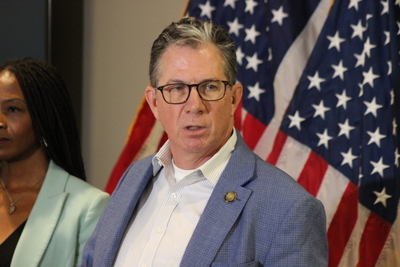
“If you wish the governor a happy birthday, you can commit a crime,” Scott Sternberg, an attorney for several media companies in Louisiana, including the Illuminator, and a First Amendment advocate, said during a Louisiana Senate hearing on the law in May.
The statue has already been used to keep information about public officials out of the public eye.
U.S. District Court Judge Will Crain, who serves in the Eastern District of Louisiana, cited the law as a justification for putting his divorce records under seal in 2024. At the time, Crain served as an elected Republican from the Northshore on the Louisiana Supreme Court.
Crain’s seal was granted by Billy Burris, the Republican judge who ended up winning the seat on the state Supreme Court left empty by Crain when Crain joined the federal bench.
Three elected juvenile court judges in Jefferson Parish also used the new privacy law last year to remove their home address and their spouse’s work addresses from the state’s online campaign finance database that tracks political donations.
‘We would like to keep our records public’
With the reworking of the law, it will likely no longer allow for the online redactions like the ones granted to Crain and the three other judges moving forward.
House Bill 339, sponsored by Rep. Tehmi Chassion, D-Lafayette, significantly limits what types of internet posts are affected by the privacy restrictions and does away with some of the tougher penalties that can be doled out for not complying. Gov. Jeff Landry signed the legislation May 29.
Starting next month, public officials will no longer be able to ask private entities and individuals to remove their personal information from social media posts and websites. The officials will only be able to demand the removal of online, personal information about them from government bodies.
So for example, a public official could no longer demand that a news outlet or political critic remove information about their birth date or where they worshipped from a private website.
The changes to the law also require that any personal information a public official asks to have removed has to have been posted with an intent to harm the official. The information can only be taken down if it was posted “without legitimate political, economic, or social interest, or with the intent to publicly intimidate or harass the protected individual.”
It also eliminates the misdemeanor penalties, including up to 90 days in jail, for not complying with the law and the potential to sue for financial damages over a violation.
Louisiana ethics board raises questions about judges’ campaign transparency
“I think the amendments, in particular eliminating the criminal provision, are a great change to a law that now, at least to me, looks much more palatable from a constitutional standpoint,” Sternberg said in an interview.
The law’s application to online government databases will also be more limited.
House Bill 67, sponsored by Rep. Tony Bacala, R-Gonzales, prohibits the privacy redactions from being applied to most online court records, the state’s political campaign finance database and government official personal financial disclosure documents.
It exempts records maintained by the district clerks of court and the Louisiana Board of Ethics from being subjected to the privacy law. A similar exception already exists for online business records maintained by the Louisiana Secretary of State’s office.
Ascension Parish Clerk of Court Bridget Hanna, a Republican, asked Bacala to file the legislation. She said clerks of court don’t have the manpower to do the record redactions the law requires.
“We are a public service office and we would like to keep our records public,” she told senators at a hearing earlier this month.
But Hamilton, with the Tulane First Amendment Clinic, said the carve outs for three types of government agencies creates inconsistencies in the law. He would prefer no government be able to grant the redactions.
“[The legislation] exempts the secretary of state’s office, district court clerks, and the board of ethics. In other words, these public bodies can publish the personal information of protected individuals, but others can’t, which raises the question of why?” Hamilton wrote in an email.
“Why is it illegal for some public bodies to publish information but legal for others?” he said.
‘They didn’t really talk to each other’
Certain sections of the legal rewrite also conflict with each other.
Chassion’s bill, for example, significantly restricts the circumstances under which the law can be applied but also added to the list of people who can take advantage of it. Law enforcement officers and administrative law judges will be newly defined as protected persons under the law starting in August.
House Bill 1012, sponsored by Rep. Delisha Boyd, D-New Orleans, also added victims of sex crimes to the list of “protected persons” that can take advantage of the privacy protections.
An individual will have to provide a police report, protective order or final judgement indicating the person is or is alleged to be a sex crime victim before being eligible.
Boyd’s bill partially mirrors the soon-to-be-repealed version of the public officials protected persons law. It also references sections of that statute that will be eliminated when Chassion’s bill goes into effect next month.
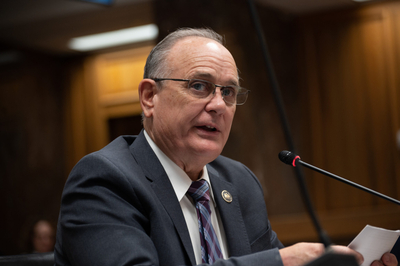
The legislation allows sex crime victims and alleged sex crime victims to require “third parties” remove their personal information if they “should reasonably know” sharing such information would pose a serious threat to the victim.
Those who don’t comply with a victim’s request to remove such information could face up to 18 months in jail or up to a $5,000 fine.
Boyd said she hopes the new law will make sex crime victims feel more comfortable testifying against their alleged attackers in court. She said crime victims are deterred from coming forward because they worry about being harassed and stalked by defendants.
But Hamilton said the conflicts of the two bills shows that the authors of the different legislation “didn’t really talk to each other” before passing the proposals.
“Since it was enacted in 2024, [the law] has now been changed at least four times in two years, which is problematic for a variety of reasons,” he wrote. “It seems to be addressing a complicated issue through fragmented measures instead of through one thoughtful, comprehensive bill.”
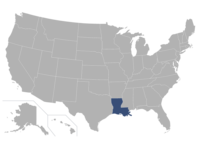
Baton Rouge, LA