Q&A: A conversation with Chris Van Hollen
Jul 11, 2026 | 4:27 am ET
Description
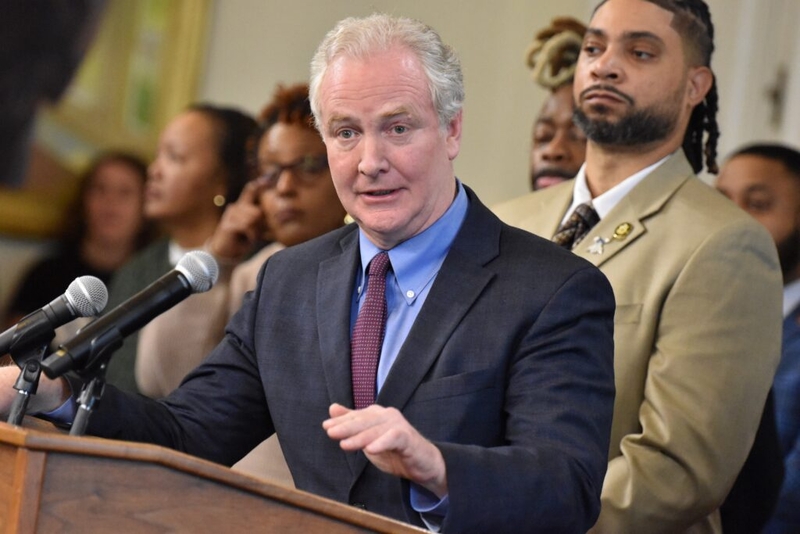
U.S. Sen. Chris Van Hollen (D-Md.) speaking in February 2025. (Photo by Bryan P. Sears/Maryland Matters)
Over his 36-year political career, Sen. Chris Van Hollen (D-Md.) has waged high-profile policy fights with legislative leaders in Annapolis, defeated a Kennedy scion and a popular Republican incumbent en route to winning a congressional seat.
In the House of Representatives, Van Hollen was a top lieutenant to Speaker Nancy Pelosi (D-Calif.) before moving to the U.S. Senate where he pursued progressive and reform policies. In recent years, Van Hollen has elevated his national profile, becoming a leading congressional critic of Benjamin Netanyahu’s government in Israel, and last year making a high-profile trip to El Salvador to check the condition – and to demand the release – of his constituent, Kilmer Abrego Garcia. More recently, Van Hollen has called out the influence of corporate money in Democratic politics and blasted party leaders for not doing enough to confront President Donald Trump. He has begun to make purely political trips outside the state – to former Iowa U.S. Sen. Tom Harkin’s annual steak fry, and to a Democratic gathering in Cheshire County, New Hampshire, among others.
So it should not have been a surprise when Van Hollen, 67, told the “On NOTUS” podcast in mid-June that he was “kicking the tires” on a possible presidential bid in 2028 – when he also must decide whether to seek a third Senate term.
Maryland Matters sat down with Van Hollen in a coffee shop in Kensington in late June, about 10 days after his podcast interview, to ask him further about his presidential musings, the state of political discourse in the U.S. and in Maryland – and his role in it. An edited transcript of the interview follows:
Maryland Matters: What does kicking the tires look like? Who will you be talking to? How long does the process last?
Chris Van Hollen: Well, most of all, it involves listening to people. … A lot of people approached me to take a look at it. That’s not in itself a reason to run – a reason to run would be to shake up the status quo.
Van Hollen tells podcast he is ‘kicking the tires’ on potential run for president
But I was invited last September to go to the [Iowa] steak fry. You know we have this little inside joke among the people who are thinking about running as to whether they got themselves invited or were just invited, and I swear to God, we were just invited. I called [former Iowa U.S. Rep.] Bruce Braley and said, “Should I do this?” And he said, “Yeah.” So that was how I got to the Harkin steak fry. And same thing with Cheshire County. I got the invitation and I called [former New Hampshire Rep.] Annie Kuster and she said, “Yeah, you should go do it.” So in both cases, it’s clear that people of course want people who are fighting a lawless Trump administration, but they do appreciate those who have been fighting him from Day One. But I also think Democrats have been way too timid writ large. So right now I’m listening and we’ll see what that turns into.
MM: Will you be more proactive or will you be waiting for invitations in early primary states?
CVH: We’ll see. We’ve had outreach from people in many states and we’ll decide. I’ve been asked to go places where I have not been able to go. So we’ll see. We’ll try to be proactive and see where we can go. It’s good to have choices.
MM: At some point you have to be mindful of the state’s filing deadline [for the 2028 Senate race].
CVH: Yeah, sure. It’s one or the other. We don’t have the New Jersey law. I think they call it the [Sen. Cory] Booker Law.
MM: Well, it’s no secret that our governor is probably going to run for president or is taking steps to run for president. Have you talked to him about this at all?
CVH: I have no idea what his plans are. I have not talked to him about this. I have heard him say on numerous occasions that he’s not running, so we’ll see.
MM: Feel free to disabuse me of this, but I’ve seen your career over 30 years, and I’ve been struck by how vocal you’ve become on the national stage in the last couple of years – by how more critical you’ve been of leadership, by how you’ve been willing to speak out on the Middle East. I believe you’ve been consistent ideologically, philosophically. But some of what you’re doing now is reminiscent of the way you were in Annapolis. Is that a fair assessment?
CVH: I’m glad you said the days of Annapolis, because, you know, I cut my teeth in Annapolis, especially in the state Senate, taking on the leadership. But even in the House, I introduced “schools before stadiums” legislation, and [House Appropriations Chair] Pete Rawlings was unhappy with it, and leadership was unhappy with it. And then I took the fight to the state Senate and as you know, [Senate President] Mike Miller was unhappy with that, and we only lost by one vote. I was like, back seat to the wall [in the Senate chamber] and we only lost by one vote … We fought [Miller] on the tobacco tax and on the gun safety issue. So I cut my teeth taking on the Democratic establishment in Annapolis.
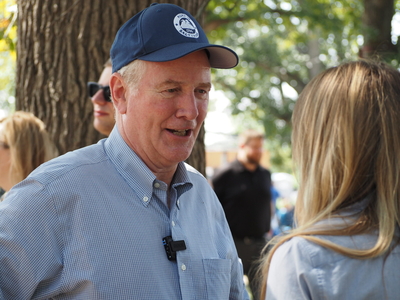
Then when I ran for the House of Representatives [in 2002], I was running against the Kennedy family. So my campaign was the kitchen table against, it’s fair to say, the Kennedy machine. Ultimately it was like, the labor unions would say, “Chris, you have a great labor record, but Ted Kennedy called us.” And Patrick Kennedy was the chair of the [Democratic Congressional Campaign Committee], which is one of the reasons I believe the national party should not be wading into primaries – with some exceptions.
So when I was elected to the House, it was interesting…. Nancy Pelosi reached out to me. I was just one of two Democrats who had defeated [Republican] incumbents. So that caught Pelosi’s eye. And you know, you don’t think of Pelosi this way now, but in the context of the Democratic caucus, when she started out, she did have a big California base, but she was the upstart, taking on folks in the party. And she pushed through a lot of things, we got a lot of things done. The Affordable Care Act. Out of the House we passed the Clean Energy bill, which got killed in the Senate. We passed the DISCLOSE Act [campaign finance reform legislation]. Sixteen, 17 years ago in the House, we passed a lot of important stuff. Some of it hit a wall in the Senate, with the filibuster.
So in the Senate, if you look at the bills I’ve introduced, the things I’m fighting for now, campaign finance bills, fundamental shakeups to the tax code…. I think we made some progress. I would say that right now, and this is one of the reasons why we started to fight, because I was frustrated with two things, and so were some of my colleagues: That we didn’t think the Democratic caucus was fighting hard enough against Trump. We did see unity more recently, and we had to fight. And then we had the Democratic Senatorial Campaign Committee weighing in on some of these primaries, and I go back to my time running against the insider candidate, and I think a lot of us really objected [to the leadership taking sides]. Every senator is free to endorse whoever they want, but having the party in D.C. do that we felt is essentially wrong and we thought they were picking the wrong candidates.
So that’s a long answer to your question. But I think on the Middle East, I have always been consistent. I have always been for a two-state solution.
MM: Is that still attainable?
CVH: I think the goal is the organizing approach we need to take, because it is the one approach that allows for self-determination for the people of Israel and self-determination for the Palestinians … So it is the last gasp. But I do strongly believe that for those of us who take seriously the idea that human rights, self-determination is something that we should be fighting for all around the world. For those of us who take it seriously, we cannot have a blank check for Netanyahu. But … if you go back to my days in the Senate, my first term, I was quite outspoken on that and in committee, I offered amendments [to limit funding to Israel to extend the occupation of Gaza]. I gave this big speech on the Senate floor when there was an effort to, and there still is, to punish people around the country who engage in the boycott [Israel] movement. My view is that the government shouldn’t use its power to punish people who are exercising their free speech, First Amendment rights, and that was a big fight.
War of words over Israel heats up between Van Hollen and Halber
MM: Have you been surprised by the level of criticism you’ve received from certain supporters of Israel and are you surprised by the angst the issue has caused for the Democratic Party?
CVH: Clearly this is a fundamental issue I believe of human rights and values, and obviously the destruction that has taken place in Gaza has caused a lot of people to ask, what is the role of the United States as far as complicity? I’ve been crystal clear from the very start, from my first posts on social media, that the attacks of Oct. 7 were heinous, attacks from a terror organization, Hamas. And I’ve been crystal clear about Israel’s right to defend itself – crystal clear. But it’s also crystal clear that the response from the Netanyahu government went well beyond a targeted response…. It’s amounted to “ethnic cleansing” as a policy. So I think for people who feel strongly about human rights it’s been an issue. I’ve been consistent.
I’ve also been leading the fight on [human rights abuses in] Sudan. I offered two amendments in committee the other day – one was to prohibit U.S. military sales to the UAE. Also I have another one that says no aid to any of the parties that may be engaged in human rights violations…. We got a good number of votes, but not a majority. I’ve been leading on Burma human rights and really, importantly, it always gets lost in this, I’ve always tried to hold our government to account, before the Trump administration.
I think what’s happened is, despite everything we’re seeing that Israel has [done], with Gaza in the West Bank, even with the opposition, [AIPAC refuses] to give up on the fundamental thing, which is U.S. support of Israel should be unconditional, especially when it comes to military support. During the legislation about funding Ukraine, which wound up providing aid for Israel, I had an amendment that said this: It didn’t apply to any one country, it said the United States military aid to a country should be conditioned on that country agreeing in writing that U.S. weapons will be used in accordance with U.S. and international law. And one of the U.S. laws on the books is, anyplace in the world where U.S. weapons are being used, the country using those weapons have to allow access to humanitarian aid. The government of Israel is in clear violation of this. So AIPAC came out against it.
[On the Kilmer Abrego Garcia case], I was ready for the barrage of criticism from the Trump administration. I was surprised by the sniping from Democratic pundits who all said that they wouldn’t have done it. They were sniping. They were sniping at me. And that was a revealing moment for me. Here you have a guy who was snatched off the streets of Maryland. It was a violation of his civil rights, and more important, it was a violation of his constitutional rights for due process. And he had done zero to warrant this. So I wanted to make sure he was alive and that he had his due process. And the country ended up agreeing, but the fundamental change that took place was, people began to distinguish between immigration policy, which can be very contentious, and defending institutions and laws. And recognizing, if you take away his rights, you’re threatening everybody’s.
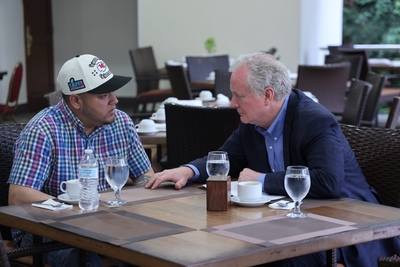
MM: Do you ever contemplate the possibility of a single-issue primary challenge if you run for another term to the Senate?
CVH: Oh, I would not be surprised if AIPAC is trying to recruit a challenger against me.
MM: Is that something that keeps you up at night?
CVH: It does not.
MM: Well, that’s a good segue to my next question, which is about your decision to speak out on the flood of outside money that went into certain races in our recent primary. Did you get any blowback, or do you expect any blowback, from your congressional colleagues or anyone else for speaking out?
CVH: The short answer, I have not … I have been speaking out against Citizens United from Day One. And I know a huge amount of super PAC money, dark money, has an impact on these races.
Let me take the 5th District first. And I want you to know, I’ve been in touch with Adrian [Boafo]. I’ve pledged to support him in the general and welcomed him to the delegation. But when you’ve got $11 million coming into a race to support one candidate – half is crypto, half is AIPAC – obviously, this is not charity. These are people who have their own interests. They spend the money because they want to elect the candidates that they believe will advance those interests.
The broader point is, Bernie [Sanders] and I and others sent a letter to the [Democratic National Committee], saying the Democratic Party should create more incentives for candidates to be very clear that they will not be captive to outside super PAC money. Now, as you know, it’s tricky because you cannot legally connect with somebody [from an outside group]. You can create rules that sort of penalize individuals who rely on these funds and that may deter outside groups from coming in to support them.
MM: Is that a legislative remedy?
CVH: It would have to be a party rule….
MM: I feel like your decision to speak out about [third-party PAC ads in] the Montgomery County executive race – it may be an exaggeration to say it tipped the race to [Will] Jawando, but I think it made people take notice, and I think it may have helped Jawando to a degree.
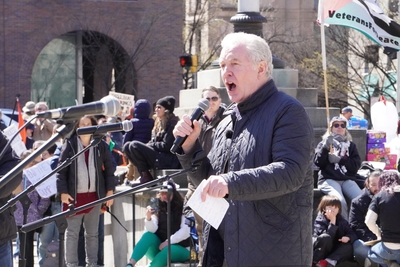
CVH: So my goal there was to, well, I actually saw the [real estate group super PAC] ad [attacking Jawando]. That’s what motivated me. I was sitting on my couch. That was a little bit of a separate issue. I didn’t like the outside money, but there were two pieces. One was blaming Jawando for all the troubles in our education system. The other was tax stuff. I never spoke out on the tax stuff. They had an ad against Jawando on taxes – “don’t be afraid to say no.” That’s on taxes. That’s fair. I just remember looking at the ad on education and that’s when my blood pressure went up. Because it was just untrue. And so I decided to weigh in.
It’s interesting. I told the others in that race – I think I decided to send them a text – because people said, “What are you doing?” – that I am going to speak out. Do you remember when Jamie [Raskin] took on [then-state Sen.] Ida Ruben [in a 2006 Democratic primary]?
MM: I remember it well. I never imagined he was going to win. But that says something about my political antennae.
CVH: So in that race, I can’t remember if it was Ida Ruben’s campaign or an outside group – it really didn’t matter – they put out mailers about Jamie that were outright lies. So I made a statement saying this is out of bounds and if it keeps on going, I’m going to endorse Jamie. And it kept on going. It was just smears. So I did tell the other guys [in the county executive race] this is not the first time I’m doing this.
MM: How likely do you think it is that the Democrats take over the House and Senate in the fall?
CVH: I think our chances are very good. We do have to make up some room [in the House] because of redistricting, but I do think there’s a wave, anti-Trump, anti-Republican, enough to win the House. In the Senate I think, and a year ago I would not have said this, but I think we have a good chance. We’ve got to hold on to three [Democratic] seats – Georgia, New Hampshire and Michigan. So we need to pick up a net of four [GOP seats]. You’ve got North Carolina, you’ve got Maine, you have Texas, you have Iowa, you have Alaska, you’ve got Ohio, and maybe Nebraska, where you have an independent [challenging a Republican]. And I’ve done events for a lot of these candidates here, most recently for [Texas Senate nominee James] Talarico.
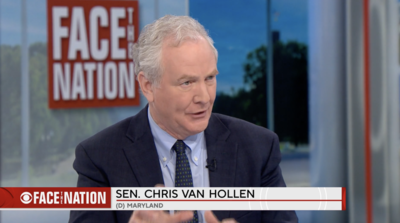
MM: Will there be a challenge to [Chuck] Schumer for Democratic leader after the election?
CVH: I think everyone is just pretty focused on winning.
MM: Do you ever contemplate running for Senate leader?
CVH: It’s not been on my game card.
MM: What do the next two years in D.C. look like?
CVH: The good news is, if we win back the Senate or the House, we can stop bad legislation. We can stop bad things from happening … Even before then, we’ll be debating the $80 billion supplemental funding bill for the Iran war. That will be a big issue for the Democrats. Because [Republicans] put a lot of things in the supplemental [besides war funding]. I knew they would. For farmers, and there are other things. These I suppose are sweeteners, but Democrats should overwhelmingly resist any additional funding for the war….
Next year we’ll have hearings, obviously, in the House, and in the Senate. If we take back the Senate, you’re not going to get some of his nominees through, some of these outrageous nominees we’ve had, like [Pete] Hegseth at Defense, or RFK at the Department of Health. But then I do think, back to our earlier conversation, and I’ve been on leadership about this, that we should have our own agenda. When I was at the [Democratic Congressional Campaign Committee] in ‘06, we had six for ‘06. We had six major agenda items and that’s what we used for messaging leading up to the election. We told people what we would do, and we did it, and I think we should do that in ‘26. I don’t think that we are, and it’s probably fair, since it’s a referendum on Trump.
But we need to move quickly [after the election]. If it’s the Senate and the House, and even if it’s only the House, or if it comes to the White House and it’s vetoed, we should be passing stuff. Let Trump veto it. We should let people know what we’re going to do. And it better be ambitious.

Annapolis, MD