State attorney seeks to combine Libertarian ballot cases
Jul 10, 2026 | 6:29 pm ET
Description
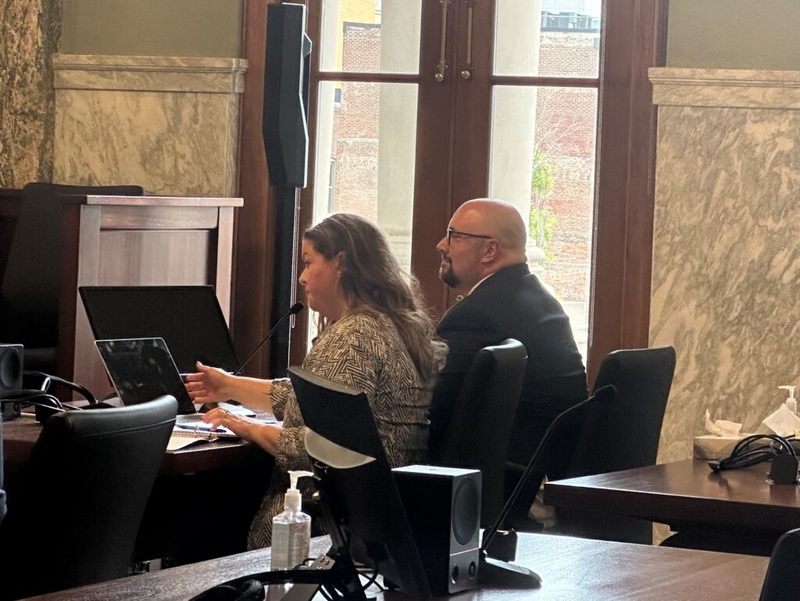
Marco Battaglia, right, and attorney Rachel Scherle attend a hearing to appeal the State Objection Panel's removal of his name from election ballots on July 10, 2026. (Photo by Brooklyn Draisey/Iowa Capital Dispatch)
Petitioners in court cases contesting Iowa Libertarian congressional candidates’ spots on the 2026 general election ballot are seeking to consolidate the two cases into one, claiming they both deal with the same legal questions related to candidates using names other than their legal names in their nominating petitions or for the ballot.
The State Objection Panel last month removed Marco Battaglia, whose legal name is Mark T. Anderson, from the ballot in the race for Iowa’s 3rd Congressional District after Republicans filed challenges against him and other Libertarians. Only one of three Libertarians, Rick Stewart, whose legal name is Richard, was permitted to remain on the ballot for Iowa’s 2nd Congressional District.
The name in dispute is the one Battaglia said he is best known for in his music and podcasting work, so it wouldn’t create confusion on the ballot, and the fact that he previously ran for office with that name without issue. Nicholas Gluba, a Libertarian running for the open governor seat, and his running mate, Jules Cutler, have also filed appeals against the objection panel’s decision to take them off the ballot.
Attorneys for the State Objection Panel argued Friday before Polk County District Judge Patrick Smith to consolidate the appeal of Battaglia’s removal from ballots with that of Stewart. Bernie Hayes, a former Republican candidate for Iowa Senate, filed the original complaint against Stewart and has appealed the panel’s decision to allow his name on ballots.
Rachel Scherle, Battaglia’s attorney, said they would prefer to keep his and Stewart’s cases separate, as they tackle different legal issues despite the common origin of name discrepancies. She said the consolidation could impact the timeliness of Battaglia’s petition being resolved in the hope he can resume his campaign. The fact that the objections panel handled the cases separately shows that the appeals should be as well, she said.
“The bottom line is, we don’t want the consolidation of these cases to slow down Mr. Battaglia’s case in any way,” Scherle said. “And so, for those reasons, we believe that keeping these cases separate is appropriate.”
Deputy Solicitor General Patrick Valencia, representing the State Objection Panel, said during the hearing that in 2024 when three Libertarian candidates were removed from the general election ballot — including Battaglia and Gluba — their cases were consolidated, eventually leading to an Iowa Supreme Court decision to keep their names off the list.
Both cases stem from the same legal question as well, he said, relating to candidates’ names, and both Battaglia and Hayes are seeking to reverse the panel’s decisions. Hayes’ attorney, Alan Ostergren, said he was in agreement about consolidating the cases.
While both cases have to do with candidate names, Scherle said they don’t deal with the same petitioners, races or areas of the state. Battaglia is also challenging the panel’s interpretation of Iowa Code relating to names on ballots, she said, where Hayes’ complaint comes from the use of a shortened name, one different from the name used to get signatures for the nomination petition.
Battaglia said after the hearing that another reason he wants his case to be tried separately from Stewart’s is to keep their names separate and mitigate perceptions of them working together politically.
If Smith decides to keep Battaglia’s and Stewart’s cases separate, attorneys requested that the scheduling for both be kept “consistent,” with hearings close together, though whether they want the same judge presiding over both cases differed between the parties, with the state in favor and Libertarians opposed.
Des Moines, IA