Bush honeysuckle added to Kansas noxious weed list, forcing landowners to eradicate invasive species
Jul 02, 2026 | 2:26 pm ET
Description
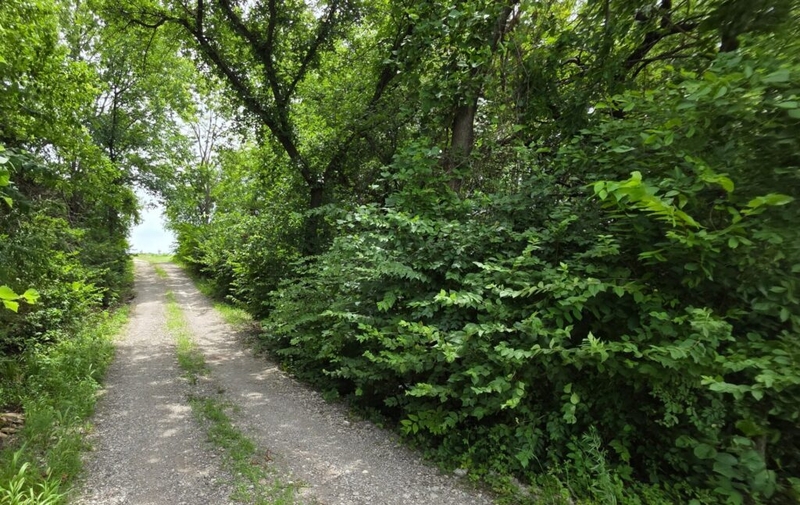
Amur honeysuckle, sometimes called bush honeysuckle, lines a driveway in Shawnee County and thrives under the wooded area along a dry creek bed. The plant was added to the noxious weed list in Kansas, meaning homeowners will have to begin removing it. (Photo by Morgan Chilson/Kansas Reflector)
TOPEKA — Kansans must eradicate an invasive type of honeysuckle and four other plants from their land after the state Department of Agriculture added them to the noxious weed list.
It has been more than 20 years since additions were made to the list of plants considered noxious, said Jeff Vogel, the Department of Agriculture’s plant protection and weed control program manager.
Amur honeysuckle was added to the list in May, along with spotted knapweed, diffuse knapweed, common teasel and cutleaf teasel, Vogel said. Pignut was removed from the list.
Amur is a type of honeysuckle that grows as a bush, and doesn’t include Japanese honeysuckle, which is a vine, Vogel said.
When a plant is added to the noxious weed list, it becomes the property owner’s responsibility to control the species, Vogel said.
“The idea is to try to prevent the spread and the production of seeds or reproductive parts,” he said. “But I think more importantly here, too, is that this gets our county weed departments involved. Counties offer cost-share herbicides for our noxious weeds.”
When a plant is on the noxious weeds list, Vogel said, landowners can get assistance from county public works departments, which help with identifying plants, advice on controlling the weed and purchasing reduced-cost herbicides.
Counties purchase herbicides, sometimes at discounted prices, and pass those along to consumers to be used on any plant on the list, he said.
Making the list
Before 2018, noxious weeds were added to the list by the Kansas Legislature, he said. But a law change that year set up a Noxious Weeds Advisory Board that assesses the effects weeds are having in Kansas, gathers data about how the plants are spreading and makes a decision on what to add or take off the list, Vogel said.
“We’re looking at scientific data and making a recommendation of declaring a weed noxious before it becomes a statewide issue,” he said.
Invasive weeds like those on the list affect native plants across the state, Vogel said.
“What that really means is that these plants can come into our native areas, native grass, potentially even disturbed areas, and displace native species, and also interfere with the production of crops,” he said. “Wildlife is a part of that also. That’s why it’s important — not to mention potentially with crops reducing yields — to get on top of these before it becomes a larger problem.”
County-level control
Rich Rodvelt, director of Brown County’s noxious weed department, said rural counties like his, where most land is used in agriculture, don’t have much trouble with honeysuckle. But, he said, other weeds on the list can be problematic.
Honeysuckle is typically found growing in wooded areas, he said.
People in Brown County can buy herbicides from the county office, Rodvelt said. If a landowner doesn’t control noxious weeds on their property, the county sends a letter notifying them of the problem, he said.
If the landowner doesn’t comply, the county can send someone in to eradicate the noxious weed and then bill the landowner for the cost of removal, Rodvelt said. But in his memory, Brown County hasn’t taken that step.
Rodvelt said he prefers education and supporting landowners over punitive action, although he expressed frustration that some landowners running organic operations don’t make an effort to control noxious weeds.
In Sedgwick County, Mark Furry, director of noxious weeds, said the county does sometimes take action to get landowners to comply. But with the new additions to the noxious weed list, he is putting together a social media campaign trying to get the word out and creating fact sheets about the plants.
The amur honeysuckle is going to take several years of consistent effort to eradicate, Furry said. Because it’s found in heavily wooded areas, it can be difficult to access, and landowners also have to be careful not to spray other plants that they don’t want to kill.
“I’m personally only going to recommend one type of treatment, and that’s either an early spring or a late fall treatment with glyphosate,” he said, adding that other treatments that work on bush honeysuckle can kill a lot of other trees around it that homeowners don’t want to kill. Glyphosate doesn’t have that danger, Furry said.
“It’s a pretty safe product, as far as hurting surrounding plants,” he added. “It’s only going to touch the leaves, and it’s only going to kill the plant that has the leaves. So if you spray in the early spring or late fall, you’re going to get a really good control, and it’s not going to hurt other plants.”
Vogel said amur honeysuckle leaves stay green longer than most plants, so he recommends spraying in November when most plants have dropped their leaves and are less likely to be affected by herbicides.
Noxious weeds vary significantly in each county, Furry said. Knowing the additions were coming to the noxious weed list, he surveyed county roads and property and found no honeysuckle that needed to be addressed, although it was on adjacent properties.
Furry said he expects it to take several years for areas thick with amur honeysuckle to be cleared. It’s difficult to access underneath wooded areas, and landowners may need to clear 10 feet into the woods one year, and then go farther the next year, he said.
Amur honeysuckle was added as a Category C noxious weed, which means it already has extensive spread throughout the state, Furry said. He was glad it was put on the list in that category because it means you’re not to allow the honeysuckle to spread to other people’s property and you must try to eradicate it on your land.
“But they understand that it’s probably not going to happen, and especially in the next couple years, it’s not going to happen, so you know, as long as you’re working on it and it’s not spreading to other people’s property, there’s a lot of leniency as far as the law goes,” Furry said.
Category A weeds are not widely established in the state and are targeted for eradication, Vogel said. Category B plants are in certain areas of the state, and the goal is to prevent further spread.
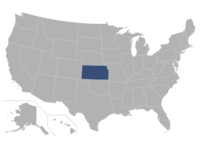
Topeka, KS