$34 billion NC budget on its way to Gov. Josh Stein after year-long delay
Jul 02, 2026 | 3:40 pm ET
Description
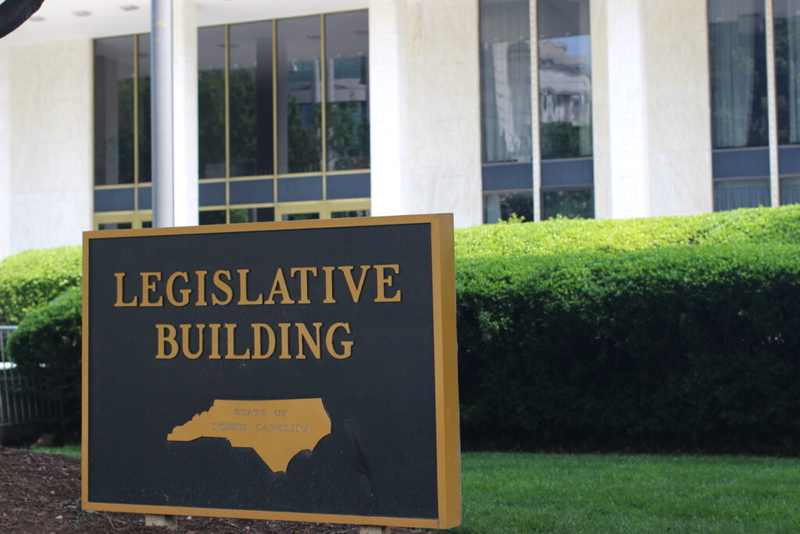
The North Carolina Legislative Building (Photo: Galen Bacharier/NC Newsline)
The state House and Senate gave final approval to a $34 billion budget Thursday with bipartisan support.
The House approved the budget with an 88-21 vote. The budget won approval in the Senate with a vote of 35-10. The budget now goes to Democratic Gov. Josh Stein for his consideration. He has until July 12 to decide whether to sign it, veto it, or let it become law without his signature.
Debate in the Senate was brief. Sen. Michael Garrett (D-Guilford) criticized the budget for creating two sets of rules for gambling sites. Sports betting operators will have to pay a 23% tax on gross revenue and a $1 million licensing fee. But prediction market trading sites such as Kalshi and Polymarket will pay only a 6% tax on net revenue and no licensing fee.
Garrett predicted that the disparity would prompt sports operators to move toward prediction market products instead.
“We’re building them the exit ramp ourselves,” Garrett said, adding that UNC schools and other beneficiaries of sports gambling revenue could lose money because of it.
Sen. Brent Jackson (R-Sampson), a Senate budget committee chairman, said the provision on the prediction market tax was added to the budget after it left the hands of budget committee negotiators, so he could not say who asked for it – only that the provision came from the House.
Senate Leader Phil Berger (R-Rockingham) told reporters later that the tax rates are different because the business models are different.
“I felt it would be important for us to begin the process of having some tax on that business model,” Berger said of the prediction markets. “There was no question in my mind that it was something that was here, didn’t appear to be getting smaller but getting larger, and we needed to start somewhere. And this was the place where we could get some consensus on where to start.”
In the House, as Democrats criticized the budget’s lateness — the legislature failed to pass a comprehensive budget last year — Republicans rose to defend it.
The fine print: NC’s $34B budget includes DEI cuts, ferry tolls, AI, prison funds and more
Rep Donny Lambeth (R-Forsyth), a House budget chairman, said it is routine for the legislature to pass budgets after July 1, the beginning of the fiscal year. It also happened when Democrats were in control, he said.
Rep. John Blust (R-Guilford) said the state would have been worse off if the House had caved to the Senate last year and given Senate Republicans the budget they wanted.
In some years, state budgets have missed the July 1 deadline by months.
It is rare, though, for the state to go without a comprehensive budget written in what’s known as the “long session” for more than a year.
In 2019, a standoff over Medicaid expansion between Republicans in the legislature and then-Gov. Roy Cooper, a Democrat, left the state without a new, comprehensive budget. Instead, the legislature passed and Cooper signed a series of mini-budgets that gave raises to state Highway Patrol officers, adult correctional officers, SBI and ALE officers, and other state employees. The legislature also passed stand-alone budgets for the Department of Transportation, other state agencies, and school safety programs.
Last year’s budget standoff was between Republicans in the state House and Senate. The legislature passed a few mini-budgets last year, but state workers and teachers went without raises.
Raises in the budget that won final approval Thursday do not make up for that lost year because the increases are not retroactive.
Raleigh, NC