No offense, but the Upstate won the Revolutionary War — and you’re welcome
Jul 02, 2026 | 9:00 am ET
Description
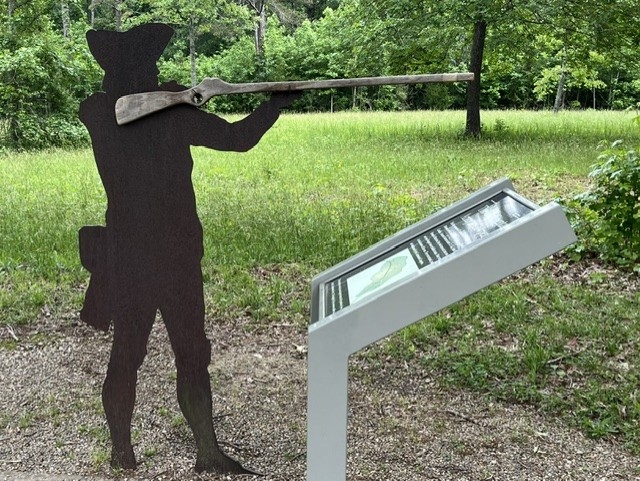
The height of the average Patriot soldier at the Battle of Cowpens in January 1781 was 5-feet-5-inches, according to signage at Cowpens National Battlefield in Cherokee County, South Carolina. (Photo by Paul Hyde/Special to the SC Daily Gazette)
South Carolina’s new license plate is slowly but surely making its way onto cars across the state.
You’ve seen it by now. It bears a sweeping claim: “Where the Revolutionary War Was Won.”
Allow me to propose a modest amendment.
The plate should really read: “Upstate South Carolina: Where the Revolutionary War Was Won.”
Before readers in Columbia or Holy Charleston accuse me of historical malpractice, hear me out.
If there is any corner of South Carolina entitled to bragging rights, it is the Upstate.
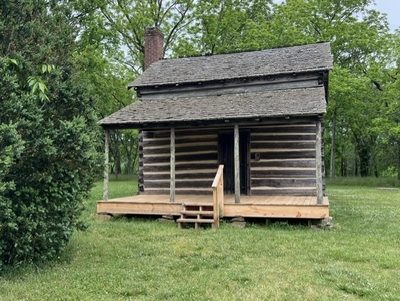
It was here, among rugged hills and backcountry farms, that Patriot forces won two battles that transformed the southern campaign and helped make eventual American victory possible.
In other words, our dirt farmers may have saved everyone else’s bacon.
No need to send a thank-you note. We consider it a public service.
These battles — Kings Mountain and Cowpens — occurred at a time when the British seemed firmly in control of South Carolina.
The folks in the Upstate changed all that.
The Kings Mountain victory occurred in October 1780. The battle is famous for the “Overmountain Men” — ordinary dirt farmers who journeyed over the mountains to save our state.
Frontier militiamen from the Carolinas, Virginia and what is now Tennessee surrounded British Major Patrick Ferguson’s force atop a rocky ridge and attacked from all sides.
In a little more than hour, Ferguson was killed, his army was shattered, and for the first time in months the British advance in the South seemed vulnerable. Thomas Jefferson called the battle “the turn of the tide of success.”
‘Bloody Ban’ and Morgan
Three months later came Cowpens, a personal favorite — partially because it’s such a rollicking good story.
Cowpens pitted a 1,200-man British force led by the notoriously brutal Lt. Col. Banastre “Bloody Ban” Tarleton against the older Brig. Gen. Daniel Morgan commanding 600 Patriots.
This looked like South Carolina’s Alamo — except we won.
Tarleton was a wealthy, Oxford-educated officer. The folksy Morgan was a rough backcountry soldier with limited literacy and a lifetime of hard experience, including getting shot in the neck in an earlier battle and losing some teeth from the adventure.
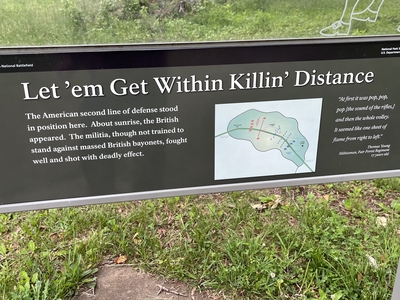
Yet, here’s what Morgan said before the battle: “On this ground I will beat Benny Tarleton or I will lay my bones.”
In other words, what a guy!
At Cowpens in January 1781, Morgan devised a brilliant plan to use Tarleton’s impetuousness against him. Militia troops fired several volleys and withdrew, luring the British into what appeared to be a retreat.
Waiting behind them were seasoned Continental soldiers who turned and delivered a devastating counterattack.
American cavalry swept in from the flank, and Tarleton’s force collapsed.
Cowpens deprived the British of some of their best troops, emboldened patriot supporters and set in motion a chain of events leading to Guilford Courthouse and ultimately Yorktown.
“This victory (Cowpens),” said Gen. George Washington, “so decisive and glorious, gained with an inferior force over a select corps of British troops, reflects the highest honor on our arms.”
No wonder Upstate residents remain proud of these places. They are reminders that ordinary people — farmers, hunters and tradesmen — can alter the course of history.
Experience history
Kings Mountain and Cowpens also happen to be two of the finest Revolutionary War sites preserved by the National Park Service. At either battlefield, it is easy to imagine the smoke, confusion and courage of those winter days.
Now, I will concede that this may simply be the Upstate pride of an armchair historian talking.
Perhaps the Revolutionary War was really won at Saratoga, which persuaded France to join the American cause. Perhaps it was won at Yorktown, where Lord Cornwallis finally surrendered.
Reasonable people may disagree.
As America turns 250, nonprofit offers free lessons to help K-12 students learn about SC’s role
Still, South Carolina’s new license plate is onto something.
Whichever state deserves ultimate credit for winning the Revolution, South Carolina played an outsized role in securing American independence.
More than 200 battles and skirmishes took place here, and many of their stories remain surprisingly little known.
As we celebrate Independence Day and the 250th anniversary of the Declaration of Independence, we should make an effort to visit some of these places.
Cowpens and Kings Mountain are obvious starting points, but so are Ninety Six, Camden, Fort Moultrie, and dozens of smaller sites scattered across the state.
The SC250 initiative offers an excellent guide.
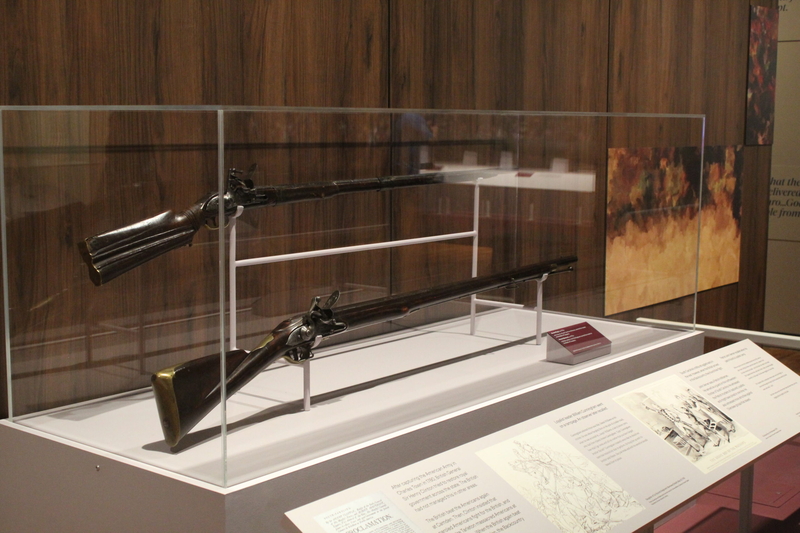
And don’t miss the State Museum’s terrific exhibition on South Carolina’s role in the Revolutionary War.
Whether the Revolutionary War was won in Massachusetts, Virginia, New York or South Carolina, we can all agree on one thing:
It certainly wasn’t won in North Carolina.
Columbia