Bill would give more independence to Ohio’s civic centers one year after Senate Bill 1 took effect
Jul 02, 2026 | 3:50 am ET
Description
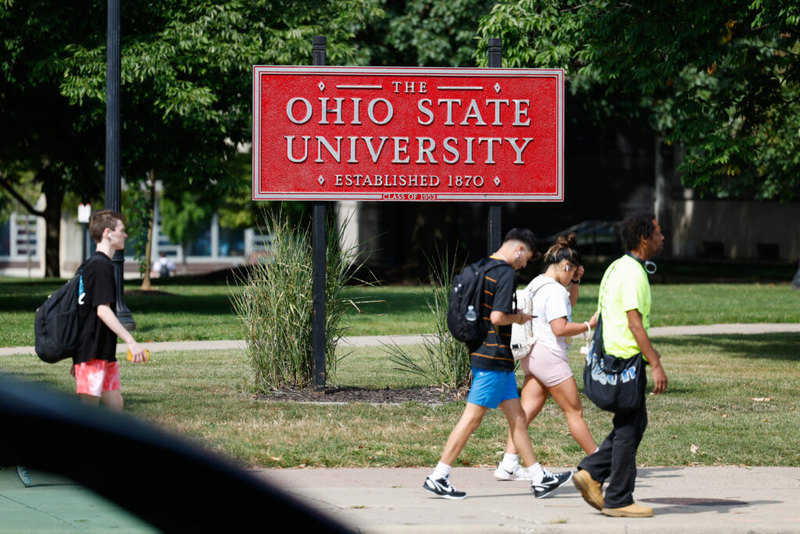
On the campus of The Ohio State University in Columbus, Ohio. (Photo by Graham Stokes for the Ohio Capital Journal. Republish photo only with original story.)
An Ohio state senator recently introduced a bill that would give the five Ohio “civics centers” created last year by Republican lawmakers more autonomy at their various universities.
Ohio Senate Bill 461 would give academic centers the “rights and privileges of an independent college of the university,” according to the bill’s language.
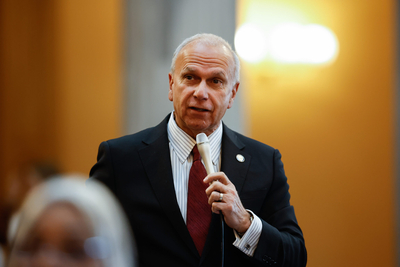
Ohio state Sen. Jerry Cirino, R-Kirtland, introduced the bill which would give the centers’ directors the sole authority to hire faculty and staff, as well as determine their rank, salary, and tenure.
Cirino was the lawmaker behind S.B. 1 which bans diversity efforts, regulates classroom discussion, prohibits faculty strikes, creates post-tenure reviews, puts diversity scholarships at risk, and creates a retrenchment provision that blocks unions from negotiating on tenure.
Cirino’s latest proposal would give the new centers “unlimited authority” on their curriculum, he said.
“It clarifies that the center directors have the sole exclusive and unlimited authority to oversee, develop, and approve the center’s curriculum,” Cirino said.
The centers would also receive all tuition and revenue from the courses it offers.
Ohio State University and the University of Toledo’s civic centers would become schools and their directors would become deans of the school starting Jan. 1, 2027, according to the bill.
Miami University, Cleveland State University, and Wright State University also have civic centers. The bill would require a student at a university with a center to take a course through their center.
“I think over time we will likely see that the other three centers will also qualify as they build up their student body and their curriculum, but it’s important that we recognize and put in law the complete independence of these centers, lest in the future there be some question about what authorities they do have,” Cirino said.
Ohio’s five civic centers were created through the state’s two-year budget in 2023 for $24 million.
The civics centers have hired more than 60 faculty members, and have either developed or secured approval for more than 60 new courses, Cirino said.
“They are not conservative centers,” he claimed, “they are centers to foster open debate and inquiry on major topics.”
Miami anticipates 3,000 students will enroll in their civic center courses, Ohio State expects more than 800 students, Toledo anticipates 250, and Wright State expects 600 students, Cirino said.
Cleveland State’s center is projected to grow from 28 students to 1,400 students, he said.
Toledo’s center has taught 15 courses since Fall 2024, university spokesperson Nicki Gorny said.
Ohio State’s center will offer 10 courses for the fall semester including American Creeds and Conflicts, Law and Economics, and How Politics Breaks Your Brain, said Executive Director Lee Strang.
Ohio State’s center had 18 faculty members and 159 students enrolled last academic year, Strang said.
Cleveland State’s center will offer two general education courses next school year — The American Republic and Great American Debates, said university spokesperson Kristin Broka.
Cleveland State’s center has hired seven faculty members and 28 students enrolled last academic year, Broka said.
Miami’s center will have 11 faculty members next academic year and 350 students took courses through the center last academic year, said university spokesperson Seth Bauguess.
Wright State’s civic center helps supports the Wright-Patterson Air Force Base and the center will offer a 90-credit-hour bachelor’s program for base personnel starting in Fall 2027, university spokesperson Deena John said.
Wright State’s center will also oversee up to 20 class sections of the U.S. Civic Literacy course this upcoming academic year, she said.
The Ohio Conference of the American Association of University Professors opposes S.B. 461.
“SB 461 requires Ohio’s universities to fund the five new civic centers before anything else — even if they aren’t offering courses that help students graduate or don’t have students enrolled in their programs or courses,” OCAAUP Executive Director Jennifer Tisone Price said in a statement.
“This absolutely drives up tuition costs for every other student at that university.”
Ohio lawmakers are on break and will come back after the November election. Any bill that does not pass before the end of the year must be reintroduced in the new General Assembly to be considered.
Senate Bill 1
The Ohio Senate Bill 1 higher education overhaul became law a little over a year ago.
Cirino said the bill was to counter what he viewed as left-wing ideology on college campuses.
“I think the left wokeness had taken over for a long time in our universities and community colleges, and a lot of it was just out of control,” Cirino said.
Ohio colleges and universities are also required to cut any undergraduate degree programs that produce on average less than five degrees annually over a three-year period.
“I think we’ve eliminated close to over 530 programs today so far, and more of those are coming, and what that’s going to do is free up assets, the deployment of assets and resources for programs that really matter to us here,” Cirino said.
The Ohio Capital Journal did a story earlier this year about nearly 90 degree programs that had been cut since Senate Bill 1.
“These were very low in demand majors and, quite frankly, if you’re supporting three students in a program, it doesn’t pass the smell test,” Cirino said.
“We can take that tenured professor position that we’re maintaining for that low number of students and put it over someplace else … that’s in more demand.”

Dylan Repertorio transferred from Cleveland State University to University at Albany in New York after S.B. 1 was signed into law.
“I’ve gotten to take coursework that does include diversity, equity, and inclusion, and it’s actually opened up my eyes,” he said. “Moving away gave me a more open academic environment.”
Repertorio, who is originally from New York, said he has felt affirmed in moving back to his home state.
“I should just be (in college) to focus on my degree … I don’t really want to have to worry about these more bureaucratic things,” he said.
Cirino said he has not yet talked to Ohio Republican governor candidate Vivek Ramaswamy about higher education.
Earlier this year, Ramaswamy said he wants to consolidate Ohio colleges and universities.
“I don’t know how much he knows about how higher ed works in the state of Ohio,” Cirino said when asked about Ramaswamy’s comments.
“I would look forward to that discussion with him.”
Ohio House Bill 698 would tie a portion of college and university funding to S.B. 1 compliance.
Ohio state Rep. Tom Young, R-Washington Twp., introduced the bill earlier this year, but Cirino said the bill “was not necessary and premature.”
“I don’t think it would be a good thing right now to double-down on punitive actions for non-compliance,” Cirino said.
“Let’s see how the compliance goes. … I’m not against holding people to compliance, but I think it would be too early.”
Follow Ohio Capital Journal Reporter Megan Henry on X or on Bluesky.
Columbus, OH