Alabama consumers to pay more for groceries as state sales tax holiday ends
Jun 30, 2026 | 5:59 am ET
Description
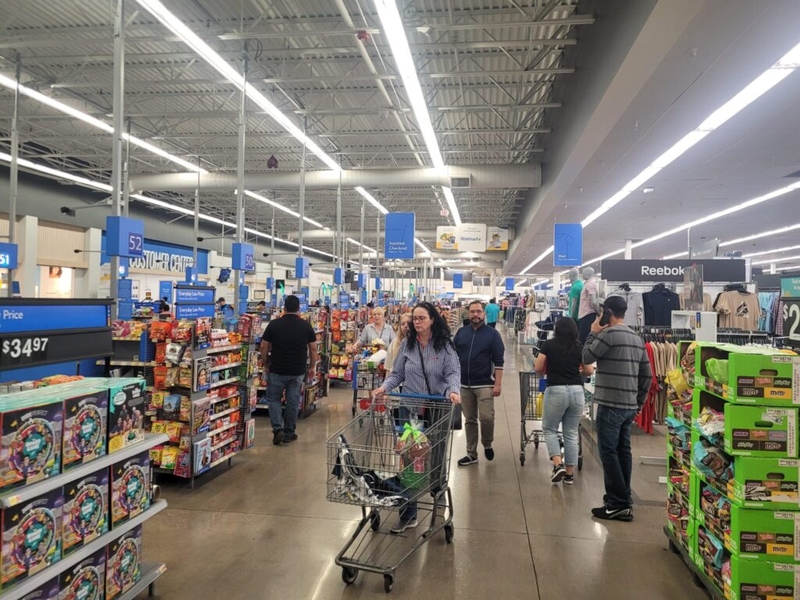
People shop for groceries at a Walmart store in Ohio. A two-month suspension of Alabama's state grocery tax, which coincided with primary and primary runoff elections in the state in May and June, will end on Tuesday. (Marty Schladen/Ohio Capital Journal)
Key points
- Shoppers will pay more for groceries starting in the next few days as state sales tax holiday expires.
- The holiday suspended the 2% portion imposed by the state on groceries because of an amendment added to a bill
- Advocates will continue to lobby to eliminate the remaining 2% tax.
Alabama consumers will pay more for groceries later this week after a two-month suspension of the state portion of the grocery tax ends at the end of the day on Tuesday.
The tax holiday, which temporarily removed Alabama’s 2% sales tax on groceries, ran from May 1 to June 30. The holiday did not apply to local grocery taxes. Alabama is one of the few remaining states that imposes levies on groceries, though lawmakers have cut the state portion in recent years.
“I am disappointed,” said Rep. Penni McClammy, D-Montgomery, who led the effort to reduce the grocery tax back in 2023. “We filed several bills in the last session to continue to try and remove the tax on groceries. I just think we put too much focus on other areas where we spend money, instead of something as simple as making sure that we don’t have to tax the very thing that we need to survive, which is to eat.”
A message seeking comment was sent to Rep. Mike Shaw, R-Hoover, who introduced the measure creating the holiday.
Shaw’s proposal amended HB 527, sponsored by Rep. James Lomax, R-Huntsville, meant to address tax deductions for overtime pay.
Alabama House attaches grocery tax holiday to overtime pay deduction bill
Lawmakers approved Shaw’s amendment when HB 527 was on the House floor.
The suspension covered the May 19 primary and the June 16 primary runoffs.
McClammy said she would have preferred a holiday to take place at another time. “Christmas, Thanksgiving, Fourth of July, those are some of the main holidays,” McClammy said.
Advocates for lower-income families hoped the holiday would have lasted even longer.
“This was such a short grocery tax holiday in the grand scheme of the year, that I feel like a lot of people were unaware of it,” said Robyn Hyden, executive director of Alabama Arise, an organization which has led efforts to reduce the grocery tax. “It does make a difference over time when you go through a full year with no grocery tax, but two months is just a really short step in the grand scheme of the year.”
The tax holiday took effect when children were still in school and not in the summer when parents had additional food expenses when the grocery tax holiday could have truly helped, McClammy said.
Alabama is one of 13 states that taxes food, and until 2023, was one of only three that fully levied it. Attempts to cut the tax in the past often foundered on questions of replacing the lost revenue, which brought in up to $600 million a year to the Education Trust Fund earlier in the decade.
But with record growth in ETF revenues in 2023, the state approved a bill sponsored by Rep. Danny Garrett, R-Trussville that cut the state sales tax on groceries from 4% to 3%, In 2025, Alabama enacted HB 386, also sponsored by Garrett, that reduced the state portion of the grocery tax from 3% to 2%.
The cuts did not apply to local grocery taxes, but the 2023 law prevented local governments from raising them further.
Hyden said the holiday provided relief amid rising food prices, but said she would have preferred to see it later in the summer.
Hyden and McClammy said they will continue to advocate for elimination of the grocery tax.
“The most important thing for now is to make sure that it is permanent, and that we push wholeheartedly to do that,” McClammy said.
The Key Points box was written by Ralph Chapoco.
Montgomery