Voting rights advocates score three legal victories but remain on alert against election threats
Jun 30, 2026 | 8:00 am ET
Description
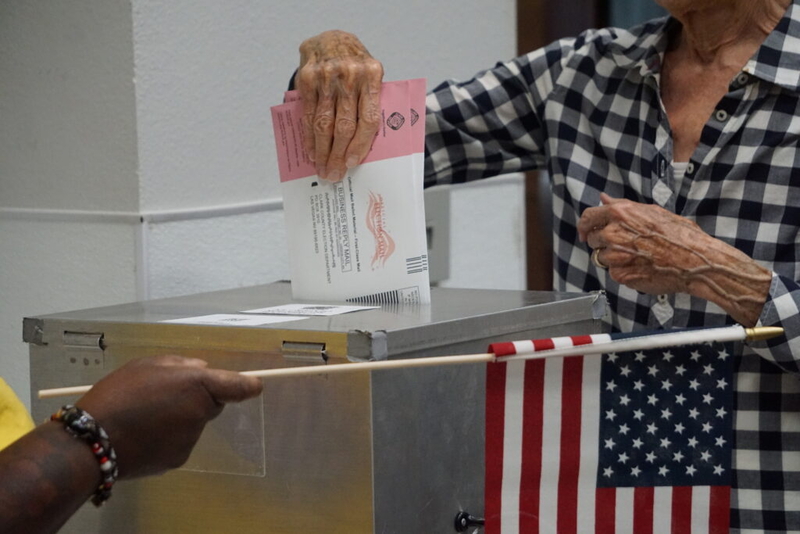
Statewide, nearly 86% of voters have used a mail ballot at least once since 2022. (Photo: Jeniffer Solis/Nevada Current)
Nevada’s “grace period” for accepting mail ballots that are postmarked by Election Day but received by officials in the days following will continue. The policy, set in statute by the state lawmakers in 2021, had been at risk as the U.S. Supreme Court considered a similar policy in Mississippi.
“Today’s decision by the Supreme Court is a win for Nevada and for the sovereign right of states to conduct their elections in the manner they see fit,” said Democratic Attorney General Aaron Ford in a statement Monday after the court ruled against the Trump administration’s effort to disqualify ballots arriving after Election Day.
The decision rounds out a trio of wins in the past week for Democratic states and voting rights advocates. However, with much at stake in the upcoming midterm elections, voting rights advocates say they remain vigilant against any additional attempts by the Republican National Committee and the Trump administration to restrict access to the ballot box.
“While this ruling preserves our state’s election processes for now, we remain prepared to do everything we can alongside our partner organizations to ensure our election system in Nevada isn’t undermined because of Washington politicians,” said American Civil Liberties Union of Nevada Executive Director Athar Haseebullah.
Trump on social media called the high court’s ruling “a tremendous loss” and pushed for the SAVE America Act, which targets the extremely rare phenomenon of noncitizen voting by requiring documentary proof of citizenship in order to register to vote. The legislation has passed the House but remains stalled in the Senate where a handful of Republicans and all Democrats are opposed.
Mail ballots under attack
On Monday, the U.S. Supreme Court upheld a Mississippi law allowing ballots postmarked by Election Day to be counted as long as they arrived within five business days. The court ruled, in a 5-4 decision, that “nothing in the federal election-day statutes requires ballots to be received by election day.”
In Nevada, ballots postmarked by Election Day must be counted if they are received by election officials within four business days. (If the postmark is missing or unclear, the ballot can be accepted up to three days after Election Day.) A dozen other states have broad grace periods similar to Mississippi’s and Nevada’s. Thirty states accept military and overseas ballots delivered after Election Day.
Nevada Secretary of State Francisco Aguilar praised the SCOTUS ruling and emphasized that mail ballots have been widely embraced.
“Rural voters, military and overseas voters and working voters of every political party rely on mail ballots to make their voices heard in a way that works for them,” said Aguilar in a statement. “In the June Primary election, 60% of voters used mail ballots – with our most rural counties using them at the highest rates.”
In Douglas County, 3 out of 4 people–77%–used a mail ballot for this year’s primary election. Statewide, nearly 86% of voters have used a mail ballot at least once since 2022.
The overwhelming majority of mail ballots in Nevada are received on or before Election Day, data shows. In 2024, less than 2% of ballots – almost 12,000 – in Clark and Washoe counties were received after Election Day.
Added Aguilar, “Nevada is a battleground state and every single eligible vote counts – those votes can make an impact in the closest of races.”
Local voting advocates praised the SCOTUS decision.
“A ballot postmarked by Election Day is a vote cast by Election Day, period,” said Shelbie Swartz, executive director for Institute for a Progressive Nevada. “Voting is a right, not a race against the postal service. Americans who do everything required of them to cast a ballot should not lose their voice because of delays they cannot control.”
“Mail delays are not hypothetical,” said Barbara Hartzell, executive director of Indigenous Voices of Nevada, in a similar statement. “They happen every day. That reality is especially familiar in rural and Tribal communities, where mail service often takes longer and voters may have few alternatives beyond driving long distances to an in-person polling location.”
In the lead up to the June 9 primary, the Nevada SOS office recommended voters use a ballot dropbox after June 2 in order to ensure the ballot arrived on time. An earlier arrival also provides additional time for curing time, should there be a problem with the ballot that the voter needs to address.
Trump executive order shot down
The U.S. Supreme Court ruling comes the week after two U.S. District Court judges ruled againstTrump executive orders that sought to restrict how states operate their elections.
Trump, through an executive order issued earlier this year, sought to create a nationalized list of eligible voters and direct the U.S. Postal Service to only send mail ballots to those on the list. States and elected officials that did not comply would be at risk of losing federal funds or criminal prosecution.
A judge ruled those provisions of the executive order unconstitutional and beyond the president’s authority.
Trump also, through an executive order issued in March 2025, sought to require proof of citizenship for voter registration and restrict mail ballot counting. That executive order had previously been put under a preliminary injunction that was made permanent last week.
Next battle: Overseas voters?
The Republican National Committee and Jim Marchant, the Republican challenging Aguilar for SOS, sued the State of Nevada on Friday over a state law addressing what they’ve dubbed “never-resident voters” — a no doubt minuscule number of U.S. citizens born abroad and who vote based on their parent or legal guardian’s last residence in the U.S.
According to Democracy Docket, which reported the Nevada suit, similar legal challenges have been filed in Nebraska, Colorado, Virginia, Arizona, North Carolina, and Michigan. The Michigan case was rejected by a court there in April.
Marchant is an ardent election denier who continues to peddle unfounded conspiracy theories. He believes the 2020 presidential election was stolen from Trump.
In 2022, Marchant ran for secretary of state against Aguilar and lost. While on the campaign trail that year, Marchant said that “the people of Nevada have not elected anybody since 2006. They’ve been installed by the deep state cabal.”
In May, ahead of the competitive Republican SOS primary, Marchant told News4 in Reno he believes 20,000 votes were “manufactured” to secure an Aguilar victory in 2022. When asked for proof of that claim, Marchant directed the reporter to “ask Tulsi Gabbard,” at the time the director of national intelligence, and President Trump.
Marchant did not respond to the Current’s request for comment Monday.
Las Vegas, NV