Virginia has a new two-year budget. Here’s what lawmakers now require of data centers.
Jun 30, 2026 | 5:25 am ET
Description
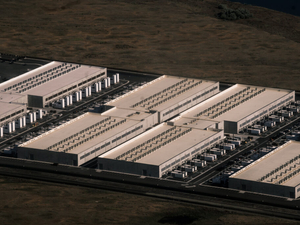
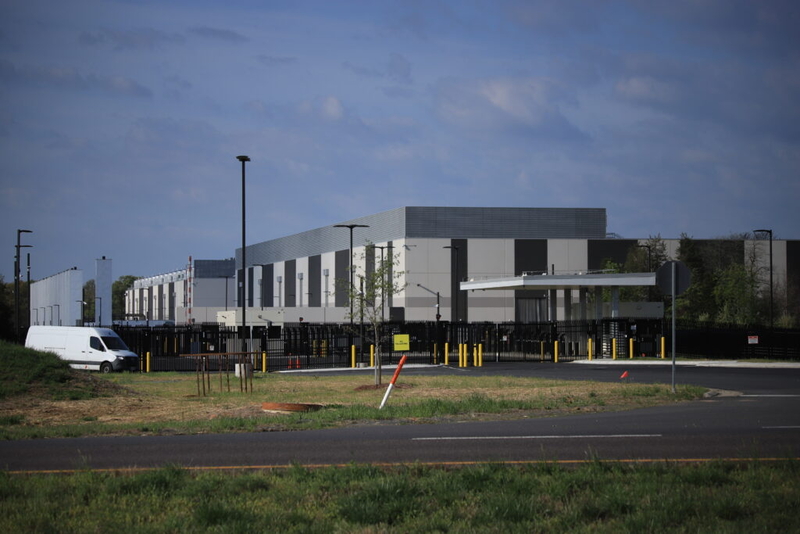
Marvell data center in Culpeper County. The Virginia legislature's new two-year budget imposes new standards on the industry to address concerns about data centers' energy use and impact on the environment. (Photo by Evan Visconti/Virginia Mercury)
A new tax has been activated for data centers, the most energy-intensive industry in Virginia, through a provision of the two-year state budget the legislature finalized Monday.
Virginia General Assembly approves Spanberger’s budget amendments, ending monthslong impasse
The spending plan preserves data centers’ sales and use tax exemption, the focus of a protracted legislative fight over the past few months. But the new tax represents the state’s first major efforts to claw back millions from the industry specifically for their energy use and address residents’ concerns about the rapidly multiplying facilities.
“We have more data centers than anywhere else in the entire world, and I think the entire country is looking to us to set policy on this, and we’ve taken the first step this year, in terms of generating some more revenue,” said Sen. Scott Surovell, D-Fairfax.
Energy consumption tax
Data centers will now have to pay a $.011 tax on every kilowatt hour of power they use. The state can collect a maximum of $600 million a year, a total of $1.2 billion to be collected over the biennium.
Any amount collected over the cap will be refunded to data centers at the end of each fiscal year.
According to the 2024 Joint Legislative Audit and Review Commission report on data centers, the industry used approximately 5,050 megawatts of power that year, based on peak load forecasts by Dominion Energy and Mecklenburg, Northern Virginia, and Rappahannock electric cooperatives in August of 2023.
Dominion reported at the end of 2025 they had 70,000 MW of large load energy requests in their queue.
The state sales and use tax exemption saves data centers an estimated $1.9 billion a year, a figure that dwarfs the expected revenue from the new energy consumption tax.
A work group will study how the tax exemption could be phased out or other ways to make data centers pay their fair share, a position Senate Finance Chair Sen. L. Louise Lucas, D-Portsmouth, and other lawmakers have pushed for months.
The work group will present a report to the General Assembly in November to help lawmakers craft bills for the January legislative session. Lucas has stressed that the discussions around the sales tax exemption are not over.
Water scarcity areas
Data centers will now be required to try and limit their water use, another new provision of the budget.
Data centers that are not closed loop cooling systems use millions of gallons of water a year. The Department of Environmental Quality will locate cooling water scarcity areas, where using drinkable water to cool down the computers could put local water quality and availability at risk.
Those scarcity areas must be identified by July 2027. Before 2032, data centers located in scarcity areas or in the Eastern Virginia Groundwater Management Area, which covers all areas east of I-95, must show they’ve minimized the use of any water for cooling purposes.
They will be required to use the best available water-efficient technologies — like air cooling, closed-loop systems, recycled water, stormwater reuse, non-potable reclaimed water use — or other department-approved methods.
Gov. Abigail Spanberger proposed an amendment to the data center water use measure on Friday, altering the language to make data centers show they have used less water for cooling in order to use evaporative cooling, in part, with other DEQ approved methods.
The previous version of the budget passed by the House and Senate last week did not allow for evaporative cooling at all in the scarcity areas.
Some lawmakers felt the governor’s tweaks were too subjective and left the door open for data centers to continue using evaporative cooling.
Sen. Danica Roem, D-Prince William, stated that the language Spanberger pitched saying data centers “shall demonstrate to the satisfaction of the department that it has minimized the use of any type of water for cooling purposes” is not clear enough and does not lay out specific limits for water use.
“My concern here always goes back to sufficient legal recourse because right now, we have plans and we’ve got minimalization, but what we don’t have, in my point of view, is sufficient requirements,” Roem said on Monday at the Capitol.
Data centers in those areas will only be able to use direct evaporative cooling in conjunction with one of the other technologies. But while the closed-loop systems use less water, they use more energy than the non-closed loop systems.
Budget conferee Sen. Richard Stuart, R-King George, said that allowing evaporative cooling at all is not a way to conserve water, even if it is in conjunction with the more water-efficient methods. The senator pushed his colleagues to reject the amendment, but it ultimately passed.
“If you’re gonna evaporate 50% of the water into the atmosphere, how will we be conservative with water?” Stuart asked. “This was one of the most significant conservation measures that we got in the conference report. We couldn’t get anything on electricity … we got promises to do something in the future. And now they want to take this away from us.”
The Department of Environmental Quality will be required to conduct a study by Oct. 15 of this year on how to retrofit existing data centers in the groundwater management area to use air cooling, 100% recycled water/stormwater, or switch to a closed loop system.
Noise levels
The new budget also mandates DEQ regulate data centers’ noise levels for the first time.
By 2029, the department will have to find exactly how quiet a data center could be and make that the standard for the industry, starting in 2030. Noise produced by the warehouse-like facilities has been a rising concern for people who live in areas where data centers have been proposed.
After those regulations are put in place, a facility in violation of the noise ordinance will face a fine of $32,500 a day.
Richmond, VA