The declaration’s lesson: Credibility matters. Arkansas leaders should take notice.
Jun 28, 2026 | 6:00 am ET
Description
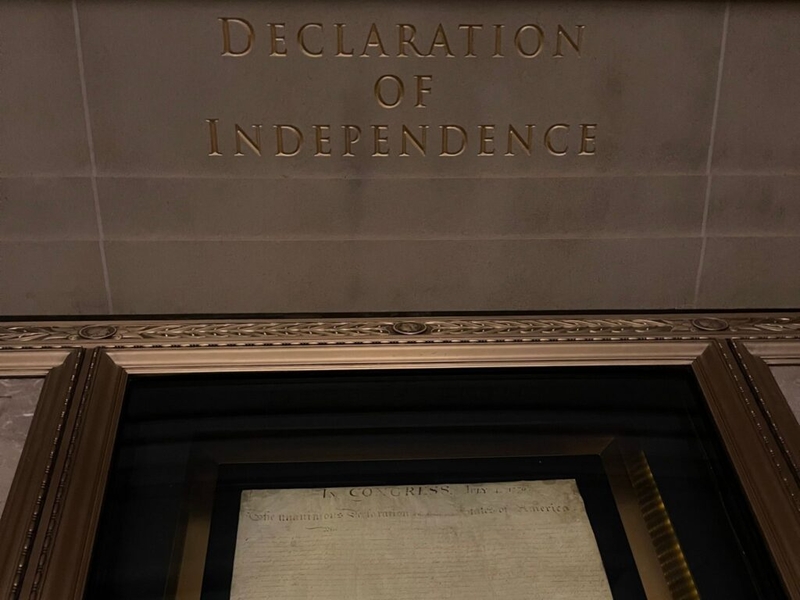
The Declaration of Independence on display at the National Archives in Washington on June 7, 2024. (Photo by Andrew DeMillo/Arkansas Advocate)
There’s no shortage of events occurring around Arkansas in the coming days to mark the 250th anniversary of the Declaration of Independence’s signing.
One line in the nation’s founding document deserves particularly special attention amidst the fireworks, parades and other July 4 commemorations.
“Let facts be submitted to a candid world,” the declaration states before outlining the litany of offenses by the king that prompted the colonies to seek independence.
It’s an easily overlooked passage, especially compared to the declaration’s much more famous second sentence. But it’s a reminder how imperative credibility was for the nation’s birth.
The founders weren’t simply declaring independence. They were making a case for it, and they understood that case required solid evidence they could back up.
It’s a lesson that elected officials in Arkansas should take note of as they prepare to celebrate the nation’s semisesquicentennial.
That point is underscored by recent reporting from the Arkansas Democrat-Gazette that showed Gov. Sarah Huckabee Sanders’ office used unproven claims to link businesses to Communist China.
The reporting came from texts included within thousands of pages of court documents that showed Sanders’ office rebuffed requests from Attorney General Tim Griffin’s office to delay pronouncements about the links until they could be investigated.
A top Sanders staffer said the administration “would rather have the media hit and have to walk it back later,” a deputy to Griffin wrote in one of the text messages. It’s a statement that should concern Arkansans no matter their political background.
Sanders has defended the move, telling reporters that her office takes serious “any allegation” that Chinese-owned companies secretly buy land in the state. She cited the case of a company fined in 2023 for not reporting that the Chinese government owned a stake in it.
Those jaded to politics may be quick to dismiss this as the usual spin to expect from elected officials.
But the latest episode is one that has very real implications for Arkansas.
The consequences go beyond pulling the wool over reporters’ eyes. How can Arkansas expect businesses to invest in a state if they fear they’ll be targeted with public accusations before the facts are established? How can the government operate if officials’ warnings about unproven claims go unheeded?
But more importantly, how can the state expect citizens to trust officials if they suspect appearances are overriding substance?
Whether Arkansas and other states should place limits on companies linked to other countries owning land is a fair policy debate to have, and one where people may and will disagree.
But whether the state should rely on unproven claims to make its case for investigating landowners shouldn’t be up for debate. That kind of approach chips away at the state’s credibility.
Our country was founded on the promise of equality and liberty, but the declaration reminds us how important a virtue credibility is. Without that credibility, it’s impossible to earn the people’s trust.
The point is made even stronger in Thomas Jeferson’s original rough draft of the declaration.
“Let facts be submitted to a candid world, for the truth of which we pledge a faith yet unsullied by falsehood,” the draft reads.
Two-hundred and fifty years later, that faith remains a standard that Arkansas’ elected officials need to strive for.
Little Rock