Survey shows Montanans interested in more public transit
Jun 26, 2026 | 4:00 pm ET
Description
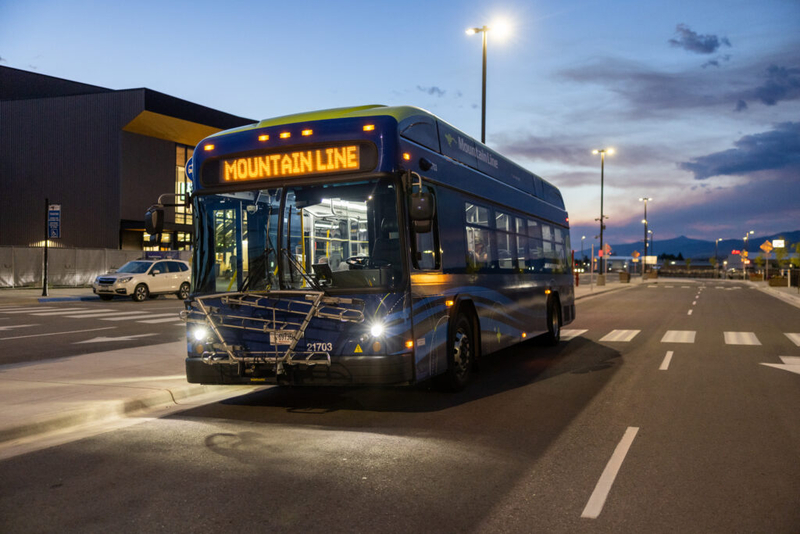
A Mountain Line bus is pictured in Missoula. (Mountain Line photo)
Some Montana legislators want to expand state funding for public transportation projects and a recent public survey that came as part of a legislative study bill, shows support in communities for increased investment.
The survey was released last month and legislators are planning to discuss the issue at a July 8 meeting. But there’s been a long-running push for increased public transit spending as the state grows and roads become more crowded, especially in tourist hotspots. And in some of Montana’s larger cities, such as Missoula and Bozeman, there’s been recent increases in passengers on bus routes in those places.
Currently, state public transit funding is only for buses for disabled, elderly and other residents who cannot get from place to place on their own. Passenger bus service, in Missoula and Bozeman for example, rely almost entirely on local taxes and federal grants.
Some legislators, including Billings Democratic Rep. Denise Baum and Missoula Democratic Sen. Andrea Olsen, have pushed for increased access to passenger rail alongside some of their Republican counterparts, including Glasgow Sen. Gregg Hunter.
More people are coming to Montana, both to visit and to stay, Olsen said, adding the longer the state waits to build out infrastructure, the more expensive it will get.
“We don’t have room for as many cars as we have now without changing the system,” Olsen said. “I want the state to be a participant in that. Not a bystander.”
Of the respondents to the legislative survey who use public transit, the highest share was ridesharing services like Uber, followed by buses and the Essential Air Service. The air service is a federal program in which certain small flights are subsidized with the purpose of connecting extremely remote communities with transportation.
Those flights carry less than 10 people, but are usually full, Hunter said, adding he has become familiar with the service over the years, having both used the service and even worked for former air carrier Big Sky when he was younger. He said it’s especially useful for those who need medical care in larger cities, such as Billings.
Montana also used to have a much more robust inter-state air travel network, and people could hop on small planes in their communities, fly to Billings and then catch another plane to Missoula, Great Falls and Helena.
Hunter said he used to take his son to train taekwondo in larger cities using the flights. Competition was better in the bigger cities, and the air service made it a reality for Hunter’s son to train for national competitions.
“One of the biggest things that we’re happy about, and we couldn’t do without is the Cape Air, our airline service, our Essential Air,” Hunter said. “Without them, I think it would be very hard for some people to do medical stuff down in Billings, like they do now with Cape Air.”
Of the respondents who use public transit, 30% use it to access recreational opportunities, the highest percentage of any use. Employment and shopping were tied at second with 18%. Medical visits were third at 14%.
Another question asked why people didn’t take transit.
“Comments indicated that the lack of availability applies to both time and location. Either the available routes are not run frequently enough to be considered reliable, or the route does not reach a desired location,” the analysis of the public survey reads.
Transit agencies around the state have noted people want access to recreation, and are taking small steps to expand those offerings. Following a pilot project last year, Missoula’s transit agency, Mountain Line, is now offering rides to Marshall Mountain throughout the summer.
“The largest response was for recreation access, so tourism, hello, dollars, economic growth, job development,” Baum said. “That speaks volumes.”
In Gallatin County, buses run to move people to ski at Bridger Bowl, said Sunshine Ross, transit director at Gallatin Valley Urban Transportation District.
Traffic can get horrific in the winter, especially after a good snow.
“We would love to be able to get more buses up to Bridger,” Ross said. “You can directly correlate that congestion to that particular area.”
Gallatin Valley UTD is also looking at adding offerings to other popular trails and parks in and around the Bozeman area, Ross said.
Passenger rail
Advocacy groups, like Big Sky 55+, and agencies like the Big Sky Passenger Rail Authority are pushing for increased passenger rail service.
Many transit agencies around the state are interested in this conversation too, as adding train lines could be an opportunity for bus services to expand offerings. One question in the survey asked what type of public transportation would be used if it was offered. Trains were the most popular answer, followed by buses.
Dave Strohmaier, a Missoula County Commissioner and chairperson of the Big Sky Passenger Rail Authority, said a survey last year by the Missoula Metropolitan Planning Organization came to a similar conclusion.
“The public engagement that we’ve done, this falls right in line with what we’ve heard,” Strohmaier said. “But it’s pretty stark when you see it in a survey like this.”
Trains could also play a role in recreational access, Strohmaier said, saying some of their biggest supporters have been counties with tourism spots, as well as that industry itself.
“Among folks in the tourism industry I think there’s a recognition that rail and just transit in general can maybe help get folks to locations,” Strohmaier said.
Baum tried to get a $2 million statutory appropriation through the legislature last year to begin funding passenger rail, but it failed after stiff opposition from industrial interests — the money would have come from a rail car tax. Rail crowding is also a concern, and BNSF Railway utilizes Montana railroads heavily.
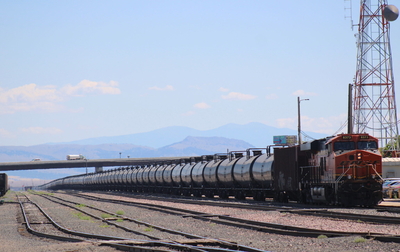
Hunter said that while he is in support of increased passenger rail — many people are, he said — there is the worry that increased traffic on railroads could be detrimental to some communities.
The Bakken oil fields are in production and crude is flowing right now, Hunter said, and there are currently BNSF Railway stops in Minot, North Dakota, Glasgow and Havre. There’s been talk of closing BNSF operations in Glasgow.
“There’s always been some talk about shutting Glasgow down, and then just running, Havre to Minot … that’d be just a devastating blow for Glasgow to lose those families in this community that are so crucial to keeping our schools and everything else going,” Hunter said. “And that’s some of the concern that people say, we use that train, and it’s used for agriculture, a lot of wheat and barley and grains and lentils, peas and it also hauls a lot of oil from the Bakken oil field through here.”
In an emailed response, a BNSF Railway spokesperson said there were currently no plans to close the Glasgow facility and that 116 employees work there.
In a statement to the Daily Montanan regarding passenger rail impacts to freight, BNSF said:
“BNSF has several successful collaborative partnerships with passenger-freight corridors and their sponsoring agencies across our network. BNSF reviews new or the expansion of existing passenger rail service in a shared BNSF owned and operated rail corridor through the lens of our longstanding Passenger Principles. These principles ensure BNSF can serve existing freight rail customers, future freight growth, and are not harmed by passenger rail. We believe it’s important that future passenger rail expansion costs be offset through dedicated funding and not be shifted to freight rail customers.”
The money in Baum’s bill would have been the first state funding directed toward bringing back public rail and despite the setback, advocates say there is some interest in many places, including small, rural communities, for increased train service. It’s also generally not a huge partisan issue, they’ve said.
Baum is planning to bring legislation in some form for passenger rail funding, she said this week. Previous legislation looking to fund the Big Sky Passenger Rail Authority would have allowed the agency to have money on hand for non-federal grant opportunities where they need to provide matching funding.
The authority is made up of local and county officials from across the state, and the BSPRA is spearheading the Big Sky North Coast Corridor, an effort to restore a passenger rail route through eight states.
“The vast majority of (Big Sky Passenger Rail Authority) member counties in the state of Montana are highly rural, deeply conservative, politically and culturally, and yet they are aligned on this issue of the importance of rail and passenger rail for the well-being of their citizenry,” Strohmaier said.
It’s also going to take federal money, as upgrading the rail infrastructure for passengers could take hundreds of millions, if not well more than a billion dollars to complete. The state is extremely unlikely to pick up that construction tab, Hunter said.
There’s also a fear that any shifts could have impacts on the Empire Builder, which starts in Chicago, runs through Montana, and splits and terminates in either Portland or Seattle. It’s a popular feature of the Hi-Line and Whitefish is one of the route’s most popular stops.
“The biggest thing up here is that everybody is afraid of losing the Empire Builder,” Hunter said.
Baum and others have also looked at passenger rail as an accessibility issue. Many nursing homes and other organizations also run buses that the general public can’t access, and she’s wondering if those might be leveraged to provide greater transportation access.
Olsen pushed through Senate Joint Resolution 19, a study into public transportation, last session, and the Transportation Interim Committee — which Baum, Olsen and Hunter are all on — got back public comment in mid-May on how people use public transit around the state, and what offerings they would like to see.
The survey received 1,330 responses from 55 of Montana’s 56 counties.
Montana fare challenges
The Gallatin Valley also has another challenge: It lost its rural status several years ago due to growth and is now classified as a “small urban area.” This means the area lost certain federal funding only available to rural communities and now has to expand service to access more transportation funds.
Counties and local governments have picked up most of the tab on public transportation, with federal matching and pass-through grants also making up the second-largest share of their budget.
Ross said transportation agencies also face a budget challenge that other services don’t – fares. In large cities with massive public transportation budgets like New York City or Seattle, fares make sense as an additional funding mechanism.
The problem for small transit systems, Ross said, is that fares are not eligible to be used as matching funds. If the Gallatin Valley UTD started charging fares, it would only cover around 8% or 9% of the transit agency’s budget, she added. As it is now, they would lose money if they started charging fares.
“If I have $100 in expenses and I collect $10 in fares, I only can ask for reimbursement for $90,” Ross said.
Helena, MT