Officials reject most signatures from conservative group seeking to reshape Lincoln elections
Aug 05, 2026 | 6:40 pm ET
Description
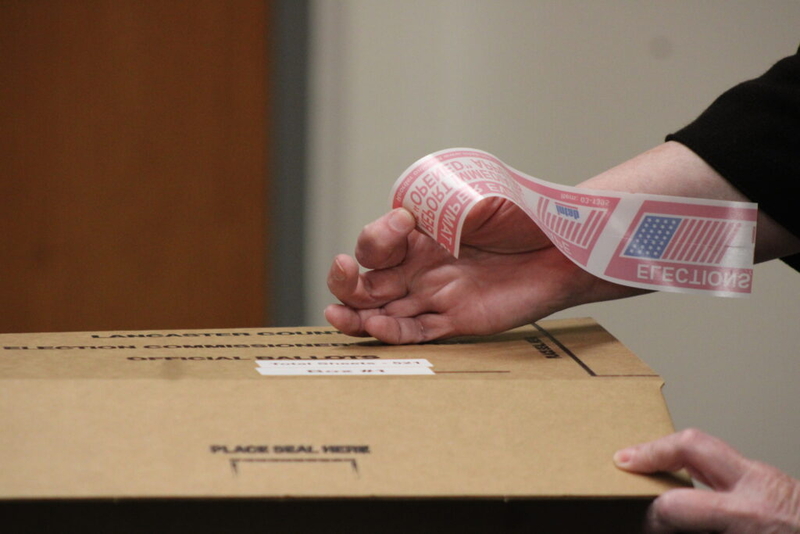
A box filled with test ballots about to be sealed up at the Lancaster County Election Commission office on April 24. 2026. (Juan Salinas II/Nebraska Examiner)
LINCOLN — The Lancaster County Election Commission rejected more than 65% of the signatures on three petitions from a conservative group seeking to reshape Lincoln elections this November.
However, supporters say they’ll restart signature gathering.
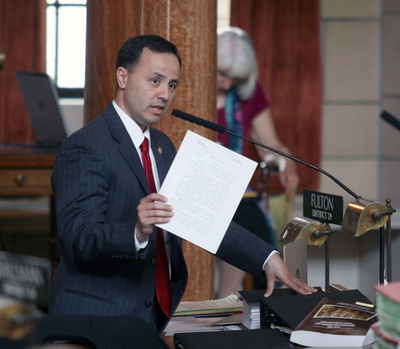
Lancaster County Election Commissioner Todd Wiltgen confirmed to the Lincoln City Clerk’s Office that his office had reviewed more than 30,100 signatures across the three petitions from Good Government Lincoln, according to a public records request.
The group did not meet its goal of securing at least 4,981 valid signatures on each petition. Nearly 10,400 total signatures were validated.
The Good Government Lincoln campaign, led by former state Sen. Tony Fulton of Lincoln, is seeking three amendments to Lincoln’s city charter to move the dates of city elections to align with statewide elections, allow certain residents within a few miles of city limits to vote in municipal elections, and place term limits on Lincoln City Council members.
Fulton, a Lincoln business owner and registered Republican, served as tax commissioner under former Gov. Pete Ricketts after six years in the Legislature.
Short of signature goal
Of the three petitions, according to the documents from the Lincoln city clerk:
- Changing election dates: 3,609 signatures accepted of 10,180 (64.5%).
- Expanding municipal election borders: 3,284 signatures accepted of 9,820 (66.7%).
- City council term limits: 3,506 signatures accepted of 10,104 (65.5%).
Wiltgen confirmed he had returned the petitions to the City of Lincoln on Wednesday but declined to say what happened.
“It’ll be their responsibility to share the results,” Wiltgen said in a text.
The Nebraska Constitution sets the signature requirement based on at least 5% of the number of Lincoln voters who turned out during the state’s last gubernatorial election in 2022.
The group said in a news release shortly after noon that it had heard no update from local election officials by that time and alleged — without evidence — that opponents “have begun to openly celebrate the amendments’ alleged failure to qualify,” so supporters “suspect underhanded opposition activity to undermine the signature-gathering process.”
“There is nothing in the numbers, and nothing in the history of success of the people involved in this effort, that explains why our opponents seem to know something we don’t,” said Jessica Flanagain, a leading conservative political consultant in the state and a consultant to the campaign.
Flanagain continued in her statement: “One of two things happened: either our opponents have sabotaged this effort and used unethical tactics to keep these measures off voters’ ballots, or election information has been shared unevenly.”
By Wednesday evening, Flanagain said the group still had not heard from any election official on the status of the signatures. But she said they had heard from multiple people that the mayor’s office, within a couple of days of the signatures being turned in, was celebrating the defeat of the effort.
“They clearly knew something we did not, and they should answer that question,” she said. “What we do know is that the voters of Lincoln want term limits, no taxation without representation, and they want more participation in elections.”
Wiltgen, a Republican whom Gov. Jim Pillen appointed to the top elections post in Nebraska’s second most-populous county in 2023, declined to comment further, including on any response to Good Government Lincoln’s concerns about how others had information on signatures before the campaign.
The Nebraska Secretary of State’s Office, which oversees elections alongside the local election officials in all 93 counties, declined to comment. A spokesperson noted such local ballot measures, allowed in Lincoln and Omaha, are handled entirely at the local level.
Lincoln mayor a vocal critic
Lincoln Mayor Leirion Gaylor Baird has been one of the most vocal opponents, but she has not issued any public comments regarding the petitions in recent days. She commented shortly after petition language was turned in June 3 and when they were turned in July 20.
Official and campaign spokespeople for Gaylor Baird had no immediate comment Wednesday.

Earlier this month, Gaylor Baird said the ideas are coming from “extreme partisans who haven’t been able to win in local elections on their merits.”
Lincoln has been represented by a Democratic mayor since 1999 and now has a 6-1 Democratic majority on the city council, while much of the rest of the state has remained red.
“No other city in Nebraska is facing such an attack — just Lincoln,” she said in a July 21 Facebook post. “Make no mistake, the partisan extremists behind this are not working for the common good, and they do not deserve your trust.”
Deadline nears for November
The first petition would eliminate Lincoln’s practice of holding city elections every odd year and instead align elections with statewide dates in even years, beginning in 2028. The terms of city council members who were elected in 2025 would be extended through 2030, while the mayor and city council members elected next May would instead serve through 2028, not mid-2031.

The second petition would limit Lincoln City Council members to two consecutive four-year terms, beginning with terms that begin next year. Voters approved that limit for the Lincoln mayor’s office in 2019.
The final petition would allow eligible voters living in Lincoln’s three-mile “extraterritorial zoning jurisdiction” around city limits to vote in municipal elections, excluding those on city bonds. These residents are subject to certain city zoning ordinances and regulations, in part to help with future city growth, but they do not pay the same taxes to the city as those within city limits.
Currently, Lincoln voters must live within city limits for at least three months to vote in city elections. A similar proposal to change state law around that requirement failed this spring.
Had enough signatures been verified or if enough are on the restarted effort, the Lincoln City Council would still need to act to place the measure on the November ballot. The deadline for a political subdivision to certify a special issue for inclusion on the Nov. 3 ballot is Sept. 1.
Nebraska Examiner political reporter Juan Salinas II contributed to this report.
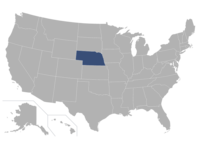
Lincoln, NE