Gov. Kim Reynolds calls for Iowans to donate blood amid national shortage
Aug 05, 2026 | 6:50 pm ET
Description
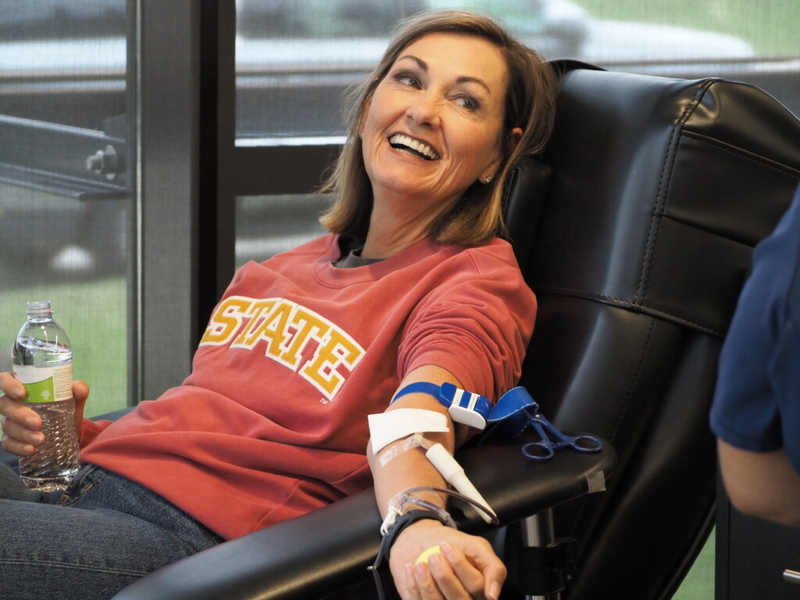
Iowa Gov. Kim Reynolds spoke with a nurse as she donated blood at the LifeServe Blood Center in Johnston Aug. 5, 2026. (Photo by Robin Opsahl/Iowa Capital Dispatch)
Iowa Gov. Kim Reynolds called for Iowans to donate blood amid a national shortage this summer — and said she would “lead by example” with a donation Wednesday at LifeServe Blood Center.
In late July, the American Red Cross declared a “national blood supply crisis” in the U.S. after blood donations fell to a four-year summer low. It’s the second time in history the organization has declared a national blood crisis, the first happening in January 2022.
But the shortage is a fixable problem — more people need to donate blood. Stacy Sime, president and CEO of LifeServe Blood Center, said 60% of the population is eligible to donate blood, but only 3% chooses to donate. Sime joined Reynolds as she donated blood — a trip the governor said was aimed at encouraging Iowans to step up and donate.
“I want to lead by example, I want to show that it’s easy,” Reynolds said. “It doesn’t take a lot of time, and it’s really important.”
Blood donations are often low in the summer, with no blood drives scheduled at high schools and colleges. Sime said people are often traveling and busy during the summer months and don’t think to donate blood — but it’s also a time of year when there’s a greater need for donations.
“People are out doing fun things, right?” Sime said. “They’re riding motorcycles, doing their other fun stuff. But that also is when they consider it to be trauma season, so there’s more accidents. And I think we’ve seen that in Iowa in recent days.”
Eighty percent of blood donated at LifeServe goes to Iowa hospitals, Sime said. There is a large and continuous need for donated blood, she said, because the two products sent to healthcare providers have shelf lives of five days and 42 days. These products are used both when someone needs a transfusion after an accident, but also in procedures like surgery or chemotherapy.
“The blood has to be on the shelf when you need it,” she said. “It’s not something that you can wait hours or days for. So it really has to be available.”
Iowa’s blood reserves are low, Sime said, currently sitting at a supply that could last between two and three days. This is lower than the “safe” supply level wanted, lasting between four to five days, she said.
The national shortage comes as blood donation centers are seeing a steep drop in donations among younger Americans. Sime said since the COVID-19 pandemic, there has been a 30% decline in people under age 30 who donate blood, which has been “a real challenge for us.”
Reynolds said she believed the people of the state would answer the call for more donations: “We’re Iowans, and so we see a need and we step in,” she said. The governor personally donated blood Wednesday, as did members of her staff and some members of the National Guard.
“I’m here to ask Iowans to consider this, step up, and especially if you’re under 30, we’d love to see you participate, be a blood donor, and truly make a difference in our state and for those that need it,” Reynolds said.
Des Moines, IA