Critics: Arizona’s ‘religious interference’ bill is a shield for anti-LGBTQ, anti-abortion protests
Jun 10, 2026 | 1:52 pm ET
Description
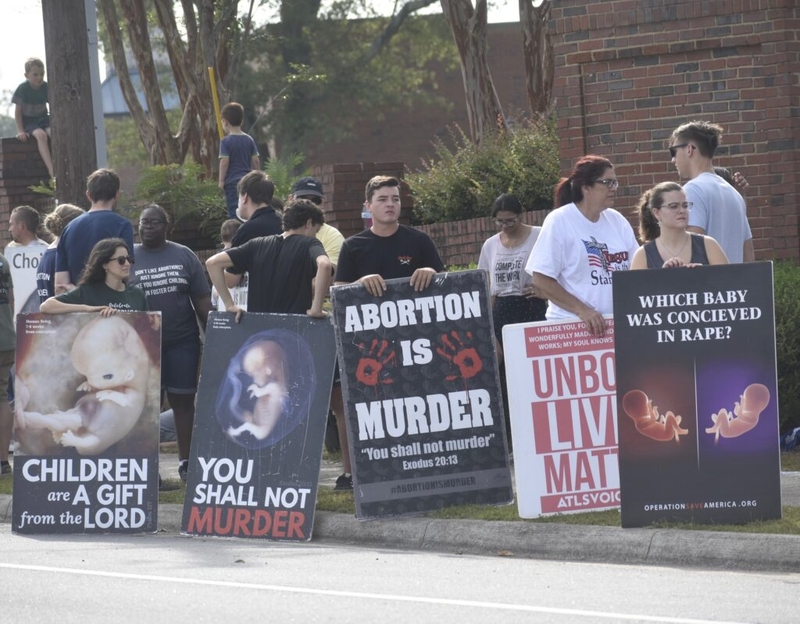
Three years after the U.S. Supreme Court’s Dobbs decision ended federal abortion rights, women around the country have faced criminal charges after their pregnancies ended in miscarriage or stillbirth, ranging from homicide to child abuse to abuse of corpse. (Photo by Ross Williams/Georgia Recorder)
Arizona Republicans want to make it a crime to disrupt religious activities, but critics warn it’s little more than a thinly veiled attempt to protect anti-LGBTQ and anti-abortion protestors.
On Tuesday, the state Senate gave preliminary approval to House Bill 4117, which would punish “interfering” with a religious service or activity with jail time. At a minimum, doing so would be a class 1 misdemeanor, which carries with it fines and a six month jail sentence. Repeat violations or the use of threats, force or physical intimidation could escalate that punishment up to a class 6 felony.
If it becomes law, “interfering” with a religious service or activity would happen when a person blocks someone from entering or exiting a place of worship or engages in a “protracted commotion, utterance or display” that disrupts proceedings in a place of worship.
But what has critics worried is how the bill defines a “place of worship,” which sweeps in far more than churches, synagogues, mosques and the like. Instead, as Sen. Mitzi Epstein, D-Tempe, pointed out during a debate on the bill, the measure defines a religious place of worship as a privately owned building or “designated location” where people assemble to engage in religious worship or activity. And that, she said, opens the door for any religious group to set up a counterprotest with a legal shield to rely on.
A previous iteration of the bill defined it as a location where people regularly gather to take part in religious activities or any location where an organized religious service is held, but Republicans amended it to be much more expansive.
Sen. Analise Ortiz, a Democrat who represents Phoenix, said she’s concerned that the revised language could embolden groups like the Westboro Baptist Church, which organizes anti-LGBTQ protests and has picketed funerals and vigils for military service members and shooting victims. In 2011, the group announced an intent to protest the funeral of 9-year-old Christina Green, who was killed in the Tucson shooting targeting U.S. Rep. Gabrielle Giffords, prompting the state legislature to ban protests within 300 feet of funerals.
Ortiz warned that the bill’s broad definition would protect the activities of the Westboro Baptist Church while at the same time punishing people who react to their protests.
“The Westboro Baptist Church might sporadically be outside of service member funerals protesting gay people,” she said. “That has been what they consider a ‘religious activity’. Under your bill, someone who might get involved and things spiral out of control could then be hit with a felony.”
Sen. John Kavanagh, a Republican from Fountain Hills who authored the amendment that opened up the definition of what a religious place of worship is, defended the language as necessary to cover religious groups that rent outdoor or community spaces for special services. When Ortiz pressed him about whether the bill could loop in discriminatory protests like those organized by the Westboro Baptist Church, Kavanagh avoided the issue, instead emphasizing that people would only face criminal charges if they deliberately interfere with an ongoing religious service.
“If they were across the street just chanting, that would not be interfering with the religious service,” he said. “In addition they would not be on the site of the religious service. They would be doubly removed.”
Ortiz was unconvinced, saying that leaves too much up to the judgment of responding law enforcement officers and prosecutors.
Sen. Lauren Kuby, D-Tempe, opposed the bill because of what she saw as its potential to criminalize people who respond to anti-abortion protestors at clinics. Groups that picket outside of abortion clinics frequently do so because of their religious opposition to the procedure, and they often recite prayers or scriptures to deter patients from receiving abortions. At least one abortion clinic, Camelback Family Planning, registered its opposition to the bill.
“The idea that someone could be subject to a class 6 felony or a class 1 misdemeanor because someone is protesting an abortion and they dare to say, ‘Leave me alone, stop bothering me, stop harassing me,’ that truly is the definition of a bad bill,” Kuby said.
But Kavanagh waved away that concern, saying that protests don’t qualify for the protections granted to places of religious worship under the proposal.
“Protesting against any political thing does not become a religious service because somebody says a prayer in the middle of a protest,” he said. “That’s not a religious service, that’s a political protest.”
The legislation moved forward with the approval of the GOP-majority Senate on Tuesday, but it has yet to undergo a formal vote. Even if it does earn the full chamber’s approval, however, it must next go back to the Arizona House of Representatives for a final vote before being sent to Gov. Katie Hobbs. It’s unclear where the Democrat stands on the legislation.
In the past, Hobbs has swiftly vetoed any proposals that fail to earn bipartisan support and are opposed by community advocates. Multiple progressive and religious groups, including the Arizona chapter of the American Civil Liberties Union, the National Council of Jewish Women Arizona and the Council on American Islamic Relations Arizona, are officially opposed to the bill.
But during Tuesday’s debate, Kavanagh shared that his revisions, including expanding what a place of worship is, were the result of negotiations with Hobbs’ office and the Anti-Defamation League, which supports the proposal. When asked whether the Governor’s Office was involved with negotiations around the legislation and if Hobbs approves of it, spokesman Christian Slater declined to comment.
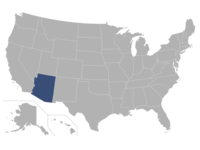
Phoenix, AZ