House committee considers bill to establish penalties for threats or harassment of DHHS caregivers
Jun 10, 2026 | 4:51 pm ET
Description
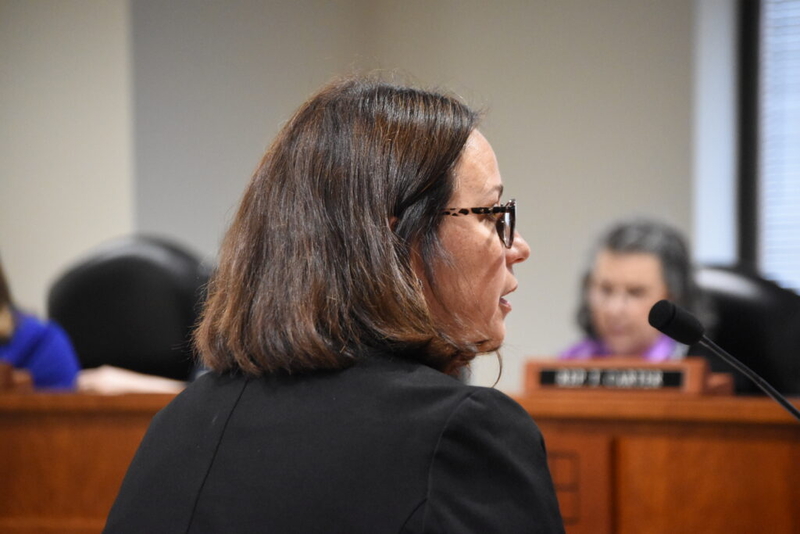
Jennifer Stevens, the Director of Foster Care at Samaritas, testified to the House Judiciary Committee about the need to establish penalties for threats and attacks on foster parents and similar caregivers. June 10, 2026. | Photo by Katherine Dailey/Michigan Advance.
The House Judiciary Committee heard testimony Wednesday on a package of bills that would establish new penalties for threatening, intimidating or harassing contractors or employees of the Michigan Department of Health and Human Services, specifically those who work as caregivers or foster parents.
“Foster parents, kinship caregivers, adoptive families, DHHS case workers step up every day for care of the most vulnerable children in this state. They open their homes, their hearts, and their lives often in moments of crisis, but too often these caregivers face threats, harassment, and even violence simply for doing what’s right. That is unacceptable,” said Rep. John Roth (R-Interlochen), the sponsor of House Bill 5686.
Roth said the bills provide needed protections for caregivers to be able to do their jobs without fear.
“When we protect caregivers, we protect placement stability, we protect healing, and most importantly, we protect the children,” Roth said.
Jennifer Stevens, the Director of Foster Care at Samaritas, was emotional as she explained the need for this type of legislation, telling the story of two foster parents in Washtenaw County who were attacked by the birth parent of a child that they were fostering, killing the foster mother and injuring the foster father.
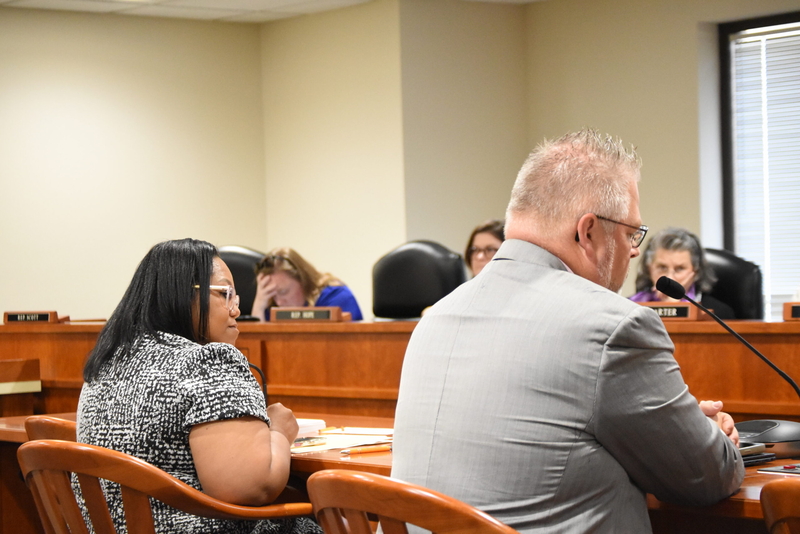
Private contractors deliver roughly 55% of Michigan foster care services, Stevens explained, but do not have the same protections as state agency staff doing the same work.
Rep. Phil Green (R-Millington), the sponsor of House Bill 5684, noted that the bills are a “natural extension” to an existing statute known as Lisa’s Law, which was passed in 2001 to protect MDHHS employees and child protective services workers in the wake of the 1998 killing of CPS worker Lisa Putman.
“The bill addresses a gap in the current law,” Rep. Kimberly Edwards (D-Eastpointe), who sponsored House Bill 5685, said. “Imagine going to work one day and you come home and your ribs are broken because of something that happened at your job, and the person who did it isn’t punished. They’re still there, nothing happens, but if you do something to them, you would lose your license, be fired from your job, amongst various other things that can happen.”
Rep. Kelly Breen (D-Novi), however, cast doubt on the premise of the bills, arguing that passing packages of increased penalties for threats and harassment do not address the root causes of these incidents.
“These are essential service providers, and we want to support them, but there isn’t evidence that higher penalties themselves deter violence. What does work in other situations are focused deterrence programs,” she said. “I understand passing these bills will send a message that we support you, we understand your work and the compassion you have, the risks you take, but I’m wondering, what can be done, if anything, what else could be done to help deter violence and not just enhance the penalty.”
Cathey Prudhomme, the president and CEO of Eagle Village, a child welfare organization in northern Michigan, however, pushed back on Breen’s argument.
“My perspective is that we’re teaching the kids the wrong things right now by not having some consequences and not having clarity, and I know that I hear from my residential youth regularly, well, there’s nothing you can do, and you can’t stop me,” she said.
The committee also voted unanimously to advance House Bill 5453, sponsored by Lightner, which would create a prison diversion program for those suspected of drug-related crimes, to the full House. The committee previously heard testimony on the legislation at its June 3 meeting.
Lansing, MI