USDA Secretary Rollins blames Biden border policies for screwworm threat
Jun 10, 2026 | 4:25 pm ET
Description
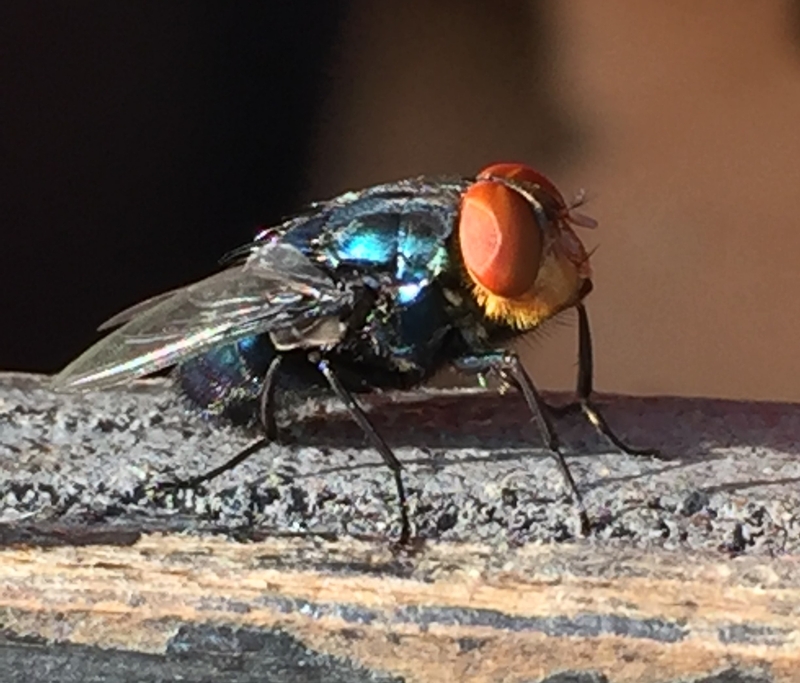
A closeup of a New World screwworm adult fly. (Photo by USDA)
WASHINGTON — Agriculture Secretary Brooke Rollins on Wednesday blamed the Biden administration’s “open-border policies” for the six confirmed cases of the New World screwworm that have reached the United States, repeating a theme among Republicans.
Speaking to members of the Senate Agriculture, Nutrition and Forestry Committee during an oversight hearing, Rollins said it was the previous administration as well as Mexican cartels’ “refusal to crack down” that allowed the New World screwworm fly to migrate north. The pests can be transported via infested livestock or pets.
“Everyone took their eye off the ball years ago, and unfortunately, because of the border policies, it's coming our way,” Rollins said.
According to Rollins, there are now six confirmed cases of the New World screwworm in the U.S., with five in South Texas and one in New Mexico.
The New World screwworm is a devastating pest that can wreak havoc on cattle herds and other livestock. The screwworm is a type of fly that spreads by laying eggs in other animals, with the eggs then hatching into larvae that will eat the animal’s flesh, causing significant harm and even potential death, according to the Centers for Disease Control and Prevention.
The fly had been eradicated in the U.S. since 1966.
USDA staff reductions
Throughout the hearing, committee members and Rollins agreed on the importance of working to eradicate the screwworm in the U.S.
But some Democrats said recent Trump administration decisions could hinder the department’s ability to carry out that task.
Sen. Amy Klobuchar, D-Minn., voiced concerns about the impact of recent layoffs at the U.S. Department of Agriculture on the department’s ability to combat issues like the screwworm threat. She noted that the department’s Animal and Plant Health Inspection Service lost 25% of its staff, including more than 300 veterinary services employees.
“Clearly, we need a long-term response,” Klobuchar, the committee’s ranking member, said. “I continue to be concerned about some of the reorganization's cuts to USDA. How that could affect our long-term response.”
Since President Donald Trump returned to office last year, the USDA has lost more than 21,000 employees, according to data from the Office of Personnel Management. It ranks among the largest decreases of any federal department or agency.
But Rollins reiterated that the staff dedicated to preventing the spread of the screwworm has actually increased. At the beginning of last year, she said, the USDA had 10 full-time staff members working on screwworm prevention, while it now has more than 120.
She said the department has allocated $1.3 billion to combat the screwworm.
“We're prioritizing where the big threats are as we're working to ensure that we're meeting all of the needs across the country,” she said.
During the hearing, Sen. Roger Marshall, R-Kansas, also pointed the blame toward the Biden administration.
“We saw this coming under the previous administration, and they refused to respond,” he said. “When you let millions of people migrate through Central America this way, we saw the screwworm just come with them — whether it was on their pets or maybe they were bringing livestock.”
USDA slowed screwworm spread
The agency’s internal predictions, according to Rollins, were that the screwworm, which is still widespread throughout South and Central America, would have reached the U.S. by last summer. But she said the department was able to slow the devastating pest’s arrival by closing all ports across the Southern border to livestock trade last summer.
USDA is primarily combating the spread of the New World screwworm by breeding and releasing sterile screwworm flies, which will limit the number of flies that can reproduce and ultimately reduce the population.
She said the U.S. currently produces about 100 million sterilized flies a week, but needs to increase its production to 500 million a week to eradicate the fly.
But Rollins stressed that while the screwworm poses a threat to U.S. livestock, particularly cattle herds, it doesn’t risk tainting the food supply itself.
“The food supply is 100% safe,” she said. “This is not a disease. It's not a virus. It’s a fly.”
All States Newsroom content is free to republish. Read our republishing policy for more information.