Court hears arguments on ballot-question deadlines as petition drive continues past disputed dates
Jun 10, 2026 | 4:50 pm ET
Description
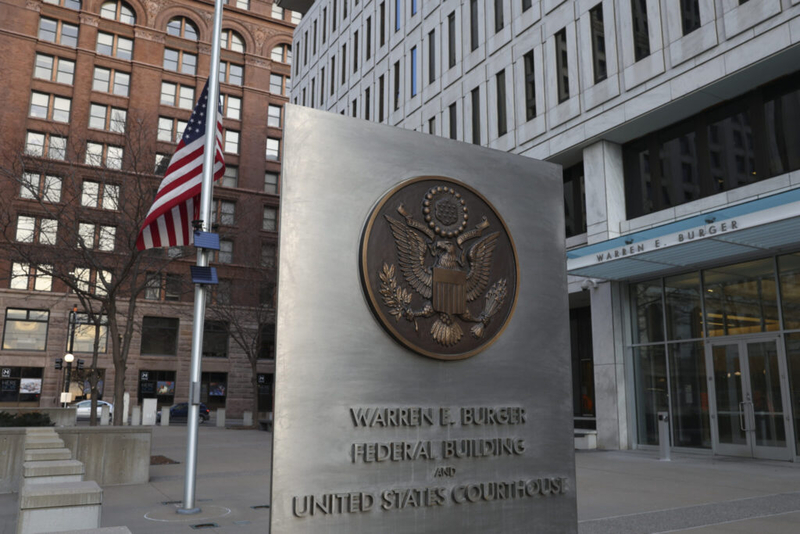
The Warren E. Burger Federal Building and U.S. Courthouse on Jan. 9, 2025, in downtown St. Paul, Minnesota. The courthouse recently hosted arguments in a South Dakota lawsuit over ballot-question petition deadlines. (Photo by Ellen Schmidt/Minnesota Reformer)
Listen to an audio version of this story by reporter Meghan O’Brien. For broadcasters: See below for a downloadable version with a script.
As a three-judge federal appeals court panel heard arguments Tuesday over South Dakota’s petition deadline for citizen-initiated ballot questions, efforts to gather signatures continued long past the disputed dates.
Petitioners need 17,508 signatures from registered voters to put a proposed law on the ballot in South Dakota, and 35,017 signatures to put a proposed state constitutional amendment on the ballot. South Dakota lawmakers approved legislation last year that moved the deadline for filing signed petitions in a general election year from the first Tuesday in May to the first Tuesday in February.
A group that’s been involved in numerous ballot questions, Dakotans for Health, filed a lawsuit. In August, a district court judge ruled the law violates the First Amendment, writing that moving the deadline three months earlier “arguably goes beyond merely inconvenient and enters the realm of severe.” The state appealed, and an Eighth Circuit panel heard arguments Tuesday in St. Paul, Minnesota.
Origins of litigation
The law’s prime sponsor, state Speaker of the House Jon Hansen, R-Dell Rapids, was motivated in part by a 2024 legal fight over an abortion-rights ballot question, Amendment G. Dakotans for Health sponsored the measure.
Judge blocks South Dakota from enforcing earlier ballot question petition deadline
Hansen opposed that initiative in his capacity as co-chair of the Life Defense Fund. His group’s lawsuit challenging the validity of Amendment G’s petition signatures wasn’t resolved before Election Day in 2024, which Hansen cited as a reason to require earlier deadlines so legal challenges have more time to unfold. Voters rejected the amendment.
On Tuesday, the state’s lawyer, Paul Swedlund of the state’s Attorney General’s Office, made similar statements while urging judges to overturn last year’s lower court decision.
“The more time that you have to litigate a case, the better chance it is that you’re going to get it finished,” Swedlund said.
Jim Leach, lawyer for Dakotans for Health, argued that the earlier deadline “eliminates three months of core political speech for no good reason.” He said the state’s Supreme Court has shown its willingness to consider post-election litigation, ruling on laws that voters have already voted to approve.
“No matter how you decide this case, that’s still going to be the law in South Dakota,” Leach said.
Swedlund said litigating ballot measures after elections leaves voters feeling like their voices aren’t heard.
“They lose confidence in the system when these things appear on the ballot, and then a court comes along later and says, ‘Nope, we’re nullifying, we’re not going to recognize the outcome of this vote,’” Swedlund said.
Leach called that position the “ultimate, unprincipled flip-flop” from where some state officials stood five years ago in Thom v. Barnett, when the state’s Supreme Court ruled the legalization of recreational marijuana use was unconstitutional after voters had approved it.
The panel of federal appellate judges will issue a ruling at a later date.
Petition circulation continues
Meanwhile, state lawmakers have not passed any further legislation regarding the petition deadline. That’s left Dakotans for Health’s Rick Weiland believing there’s no legally enforceable deadline, so his group is circulating petitions for two proposed Nov. 3 ballot questions.
“We don’t really have a date to turn in at this point because the Legislature dropped the ball,” Weiland said. “So, we’re going to continue to collect until we have enough signatures and hopefully submit them and get it approved, so that the voters are going to have a chance to decide on our two initiated amendments.”
The first of those amendments would protect voter-approved ballot measures from being changed by state lawmakers for seven years. Then, lawmakers would need a supermajority vote in both chambers and would still need voter approval.
The second would require that changes to the initiated ballot measure process that are approved by the Legislature — like regulations on how organizations or individuals collect signatures — would also have to be approved by voters at the next general election.
The legal limbo could give the state standing to challenge the group’s signatures, Weiland said, “but you’d have to ask them what their legal arguments are going to be.”
“My guess is that they’re going to try to wait it out and see if we have enough signatures to submit, and then there’ll be a fight,” Weiland said.
In addition to Dakotans for Health’s potential ballot questions, legislators have placed four state constitutional amendments on the November ballot. Those amendments would allow the state to withdraw from expanded Medicaid if federal funding for it declines, clarify that a voter must be a U.S. citizen, establish a trust fund for unclaimed property proceeds, and require that future state constitutional amendments receive 60% support from voters rather than a simple majority.
For broadcasters

Pierre, SD