Indiana child well-being rank declines in national report
Jun 09, 2026 | 4:30 am ET
Description
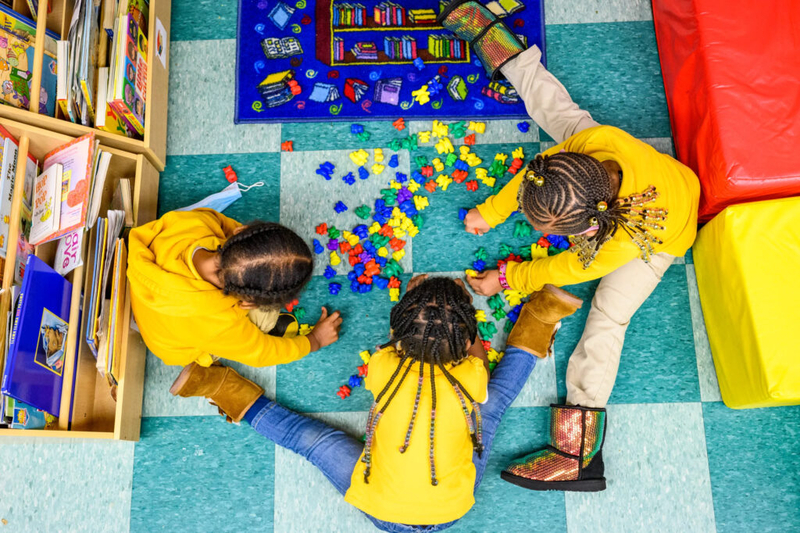
Indiana's education ranking remains a bright spot in annual state-by-state review of child well-being. (Getty Images)
A new report shows Indiana’s ranking in a prominent child well-being report declined, despite marked improvements in youth health outcomes and one of the best education rankings in the nation.
The Annie E. Casey Foundation’s 2026 KIDS COUNT Data Book ranks Indiana 29th in the nation for overall child well-being — the state’s worst ranking since 2021, and a decline of four spots from last year. The report is a state-by-state review of youth health, education, economic, family and community health indicators observed over a five-year period from 2019 to 2024.
“These data represent real children,” Tami Silverman, president and CEO of the Indiana Youth Institute, a member of the foundation’s KIDS COUNT network, said in a statement.
“They show where kids are thriving and where adults must do better to ensure every child can reach their full potential. The data reveal where progress is real and illuminate areas where we thought we were succeeding but still have work to do.”
Indiana’s education rating remains high
Indiana ranked 11th in the nation for education — same as last year, despite an overall lower score as other states also regressed in academic performance.
The report, released Monday, follows a Harvard-Stanford study from May that rated Indiana’s reading recovery sixth in the nation.
Both reports show a need for improvement in reading and mathematics proficiency, even as the Hoosier State leads the nation in reading gains attributed to early literacy reforms.
Sixty-six percent of Hoosier fourth graders failed to meet proficient standards in reading in 2024, compared to 63% of fourth graders who fell short in 2019.
Meanwhile, 69% of Hoosier eighth graders were not proficient in mathematics, a six percentage point increase from 2019.
More Hoosiers are graduating high school on time: The report found only 11% of high school seniors failed to graduate within four years, compared to 13% in 2019.
The percentage of pre-school aged children not in school increased slightly from 59% to 60%, or a total of 103,000 Hoosier children, though Gov. Mike Braun’s administration is working to expand access to early childhood education and childcare vouchers for low-income families.
Health
Indiana’s child health ranking rose from 30th to 27th in the nation, with the most notable improvement observed in child and adolescent obesity.
Thirty-percent of Hoosier children ages 10 to 17 were overweight or obese in 2024, a decline of six percentage points from 2019 — on par with the national average.
The state reported a modest improvement in health insurance coverage, with only 6% or 102,000 Hoosier children who went uninsured in 2024 — same as the national average.
The report found an increase in low birth-weight babies and Hoosier child and teen deaths, though only the latter exceeds the national trend.
Economic well-being
Indiana’s economic well-being score declined 89 points, moving its ranking from 11th to 23rd in the nation as more Hoosier children live in poverty and households with a high housing cost burden.
The report found 16%, or 254,000 Hoosier children, living in poverty in 2024 — a modest increase compared to 15% five years earlier.
Meanwhile, it found 23%, or 369,000 Hoosier children, living in households with a high housing cost burden — still lower than the 31% national average fueled by inflation.
Fewer Hoosier children were living with parents who lacked secure jobs in 2024 (23%) compared to 2019 (27%), yet the percentage of teens reported as neither working nor in school increased to 8% or 29,000 Hoosier adolescents, according to the report.
Family and community
Indiana ranked toward the bottom at 36th in the nation for family and community health indicators, despite improvements in the state’s teen birth rate and a declining prevalence of single-parent families and children living in high-poverty neighborhoods.
The report found fewer Hoosier children lived in single-parent families in 2024 — 513,000 children or 34% of the state’s youth, a modest decline from 35% five years earlier.
It also found declines in teen births — 15 per 1,000 births in 2024, compared to 21 per 1,000 births five years earlier — and in children living in high-poverty neighborhoods, which fell from 8% to 7% or 114,000 Hoosier youths.
The prevalence of children living in families where the head of household did not earn a high school diploma — an indicator for child poverty — remains the same as five years earlier at 11% of Hoosier children.
“We know kids need stable homes, strong schools, nutritious foods, meaningful relationships and opportunities to learn, play and grow so they can grow up healthy and connected and thrive as adults,” Silverman said. “Programs that meet these needs are smart investments, fostering long-term gains like employment and economic growth.”
Indianapolis, IN