What mifepristone fight’s really about: Why Maryland must protect providers, patients
Jun 08, 2026 | 6:40 pm ET
Description
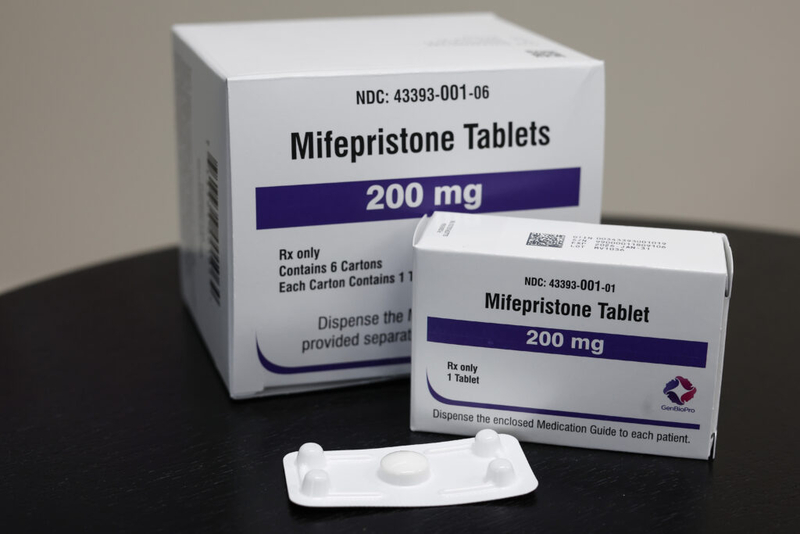
The court fight over mifepristone was never about the safety of the abortion drug, which has been used safely for years, write Amy Hagstrom Miller and Christie Pitney. (Photo by Anna Moneymaker/Getty Images)
On May 1, the ultraconservative 5th U.S. Circuit Court of Appeals did something equal parts unprecedented and outrageous: It overruled the scientific and medical expertise of the Food and Drug Administration, reinstating a nationwide ban on mailing mifepristone, a safe, effective medication used in most U.S. abortions and early miscarriage care. The ruling also banned filling a prescription for mifepristone at a retail pharmacy.
While the U.S. Supreme Court blocked this decision from taking effect May 14, the legal whiplash abortion providers in Maryland have experienced in just the past few weeks has been debilitating. During this turbulence, patients are the ones left the most confused.
Forward Midwifery fielded questions from patients who did not know if they would still be able to access abortion care via telehealth and some, who already had mifepristone on hand, were wondering if they could be criminalized for taking it.
Whole Woman’s Health of Baltimore’s patients heard inaccurate news coverage that claimed “telemedicine was banned,” that “mifepristone was banned,” and that “abortion pills were banned” instead of the real situation: That mifepristone was being restricted to in-person dispensing only.
Not only did our Baltimore patients worry about their options, but our telemedicine patients in Maryland were worried they could no longer be seen at all for the abortion care they wanted virtually. And our patients who use insurance or Medicaid to cover their abortion care – Whole Woman’s Health accepts both for in-clinic as well as telemedicine abortions in Maryland – were unsure if their insurance would still cover their care.
Your opinion matters
Maryland Matters welcomes guest commentary submissions at [email protected].
We suggest a 750-word limit and reserve the right to edit or reject submissions. We do not accept columns that are endorsements of candidates, and no longer accept submissions from public officials or political candidates.
Opinion pieces must be signed by at least one individual using their real name. We do not accept columns signed by an organization. Commentary writers must include a short bio and a photo for their bylines.
Views of writers are their own.
This confusion is by design, and unfortunately the inaccuracies in news reporting only compound the issues for the people in need of care, as well as for those of us providing it.
The case that sparked this chaos returns to the 5th Circuit. If Louisiana gets its way, patients in states across the country, including Maryland, will be limited in their ability to use telemedicine to obtain mifepristone. Marylanders, and out-of-state patients, will be forced to travel to a health center just to pick up a pill instead of filling their prescription by mail or at a local pharmacy.
This would upend how abortion and miscarriage care is currently delivered across the country – including here. Data shows that 17% of all abortion care was delivered via telehealth in Maryland between January and June 2025. What’s more, two other cases brought by anti-abortion states pending in federal courts threaten to even further disrupt access to mifepristone, including by removing its approval for use in the U.S. altogether.
In our practices, we are used to adapting, and this moment is no different. We are prepared to pivot to evidence-based options to continue to provide medication abortion care via telehealth, including a protocol using only misoprostol. This regimen is also evidence-based and has been used for decades internationally where mifepristone is not available.
This commitment to providing compassionate, high-quality care to our patients makes ensuring Maryland’s laws adequately protect abortion providers – and those we care for – more urgent than ever. While Maryland currently has a robust shield law, lawmakers must enact stronger protections for the safety and confidentiality of providers and patients accessing this care – no matter what happens in the courts.
For example, if patients are required to obtain mifepristone in person, we expect states like Maryland to be inundated with traveling patients. These patients could return home with a prescription that could be weaponized against them by an abusive partner or unsympathetic healthcare provider.
Make no mistake, when telemedicine is restricted, rural communities, low-income people, communities of color and survivors of intimate partner violence shoulder the biggest burdens. Having a prescription filled by mail or at a local pharmacy means people seeking this care don’t need to miss work, arrange for child care, or travel potentially hundreds of miles just to pick up a pill.
Our patients expect and deserve high-quality, evidence-based care from us – not judicially imposed restrictions on access to a medication that has been safely used in this country for a quarter of a century.
And let’s be clear about what this fight isn’t about. It isn’t about mifepristone’s safety. Decades of use and over 100 peer-reviewed studies have repeatedly proven that mifepristone is safe and effective. It isn’t about the safety of mailing mifepristone or filling a prescription at a pharmacy, which the FDA deemed safe five years ago.
What this fight is about is legislating abortion out of existence by creating fear, confusion, and barriers to care. It was never about protecting patients – it’s about controlling them, and all of us.
Annapolis, MD