The case for maintaining Medicaid coverage for GLP-1s to treat obesity in Rhode Island
Jun 10, 2026 | 2:53 pm ET
Description
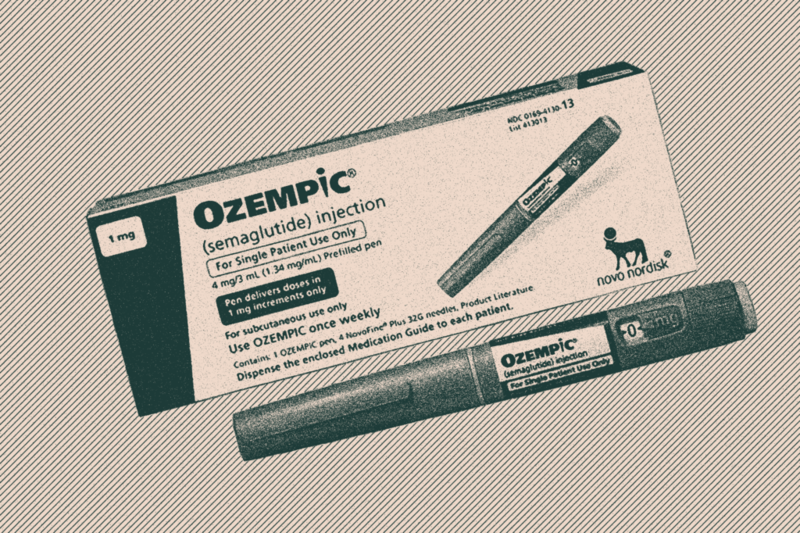
Slashing Medicaid coverage of GLP-1 drugs like Ozempic as a weight loss treatment is projected to save the state of Rhode Island $20.3 million. But the long term consequences are expected to cost far more, research published in JAMA Network Open suggests. (Product image courtesy of Novo Nordisk; Photo illustration by Alexander Castro/Rhode Island Current)
Rhode Island has long been a champion of impressive public health initiatives, gaining national recognition for its work to address disparities and improve the overall wellbeing of its residents. In 2022, the Rhode Island Department of Health unveiled a five-year strategic plan to promote access to nutritious foods and opportunities for active living in response to rising obesity rates across the state.
This is an important effort. When Rhode Islanders eat better and stay active, their health improves and the state reaps the benefits in lower healthcare costs. It is for these reasons that the National Consumers League has serious concerns over Gov. Dan McKee’s fiscal 2027 budget proposal, which seeks to eliminate Medicaid coverage for GLP-1 obesity treatments.
The governor believes this action will help balance the budget and reduce the state’s costs. And state lawmakers agreed with him, restricting Medicaid coverage for GLP-1s only for those with Type 2 diabetes in the budget they approved and sent to the governor’s desk. The move saved the state $20.3 million, including $6.3 million from general revenues, from restricting the use of GLP-1 treatment medications to only those with Type 2 diabetes.
But at best, the savings are short-term while the unintended consequences are long-term, resulting in poorer health and medical expenditures much greater than the roughly $96 million Rhode Island now spends on obesity care. Simply put, because obesity worsens the outcomes of over 230 chronic diseases, not treating obesity will result in more costly knee and hip replacements, sleep apnea treatments, glucose monitors, heart stents, hospitalizations, and other expenditures estimated to cost the state $218 million yearly.
At best, the savings are short-term while the unintended consequences are long-term, resulting in poorer health and medical expenditures much greater than the roughly $96 million Rhode Island now spends on obesity care.
What’s even more concerning, eliminating coverage for Rhode Islanders on Medicaid could result in a two-tiered system where those able to afford private insurance get obesity treatment and the medically underserved just get sick. Recognizing what is at stake, the National Consumers League joins local advocates in urging Rhode Island’s General Assembly to maintain Medicaid coverage for GLP-1 drugs.
Here is why maintaining coverage for GLP-1 obesity treatment is the right thing to do:
- Successfully treating obesity improves people’s lives. According to a 2018 study published in Current Obesity Reports, even a modest weight loss of 5-10 percent reduces LDL (“bad”) cholesterol and triglycerides in the blood. Similarly, weight loss of 10-15% achieves a maximum therapeutic benefit for cardiovascular disease, GERD and conditions like urinary stress incontinence. Additionally, a 15-20% weight loss produces remission of type 2 diabetes and a maximum therapeutic benefit for congestive heart failure and cardiovascular mortality.
- Research suggests that Rhode Island can actually save money by covering obesity medications through Medicaid. A large study of privately insured adults and Medicare beneficiaries published in JAMA Network Open showed that annual health spending increased by $326 per person for each percentage-point increase in body mass index (BMI) when obesity was left untreated. However, when a person with obesity who also has one or more chronic conditions achieved a 5% weight loss, there was a $1,262 reduction in healthcare spending. A 10% weight loss nearly doubled the savings to $2,430. For a 25% weight loss, the reduction in health expenditures was $5,444 per person.
- Adding to the evidence, new research reported in the journal Diabetes, Obesity and CardioMetabolic CARE finds that treating obesity in adult Medicaid recipients could generate nearly $1 billion in medical cost savings nationally every year.
- Also of note, lawmakers may be acting on outdated information when calculating the cost of covering GLP-1 obesity treatments. In 2025, the White House and the GLP-1 drug makers reached an agreement that significantly lowers the cost of FDA-approved injectable GLP-1s to $245 per month for state Medicaid programs. Understanding this change could be a deciding factor in keeping coverage for Medicaid enrollees.
Considering the significant health benefits and reduced medical costs from treating obesity, the National Consumers League urges Rhode Island’s General Assembly to maintain GLP-1 obesity treatment coverage for Medicaid patients. While some difficult decisions must be made, the governor’s budget proposal to end coverage for GLP-1s will worsen health outcomes and increase overall health expenditures. It is a price tag that is much too high.
Providence, RI