Arizona’s $18.3B budget deal sets up Thursday vote — and leaves little room for changes
Jun 10, 2026 | 10:31 pm ET

Description
Image via Getty Images
Now that legislative leaders from both parties have reached a budget agreement with Arizona Democratic Gov. Katie Hobbs, they’ve entered the annual sprint to pass the package of proposed bills before anyone changes their mind.
That doesn’t leave much time for state and local government agencies, much less voters, to point out problems or advocate for changes. One of the chief architects of the budget package, Rep. David Livingston, a Peoria Republican, said on Wednesday that significant changes were unlikely.
The budget documents were released late Tuesday afternoon, public testimony began the following morning and the Arizona House of Representatives and Arizona Senate plan to vote on the spending plan on Thursday.
The Republicans who control both chambers of the Arizona Legislature, along with minority party leaders and Hobbs, are all celebrating their consensus on an $18.3 billion state budget deal during a difficult year, with funding cuts from the federal government and an unpredictable economy spurred by tariffs and the war in Iran.
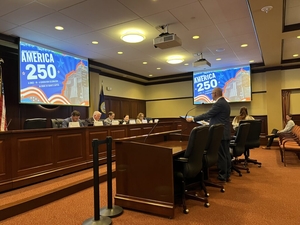
During a Wednesday Joint Appropriations Committee hearing, Livingston, the chairman of the House budget committee, said that by far the most important item in the budget deal was $1.4 billion in tax cuts to align the state tax code with many of the federal changes made through President Donald Trump’s “One Big Beautiful Bill.”
“It’s a big deal, and it’s all that matters in this budget,” he said. “Everything else is small potatoes.”
For their part, Democrats convinced Republicans to reduce cuts to most state agencies to 2.5% from the 5% cuts in their partisan budget plan that Hobbs vetoed in early May.
Democrats also managed to secure a three-year pause on new sales tax exemption certificates for the data centers that run generative artificial intelligence, and they preserved tax breaks for renewable energy businesses that Republicans had planned to end.
Other wins for Republicans:
- Heightened eligibility checks for those who rely on the Supplemental Nutrition Assistance Program, formerly known as food stamps, and for the Arizona Health Care Cost Containment System, the state’s Medicaid program
- Continued funding and no new regulations for the K-12 school voucher program
Other wins for Democrats:
- Protection of the Rio Nuevo tax increment finance district in Tucson, which Republicans planned to end
- Preservation of healthcare coverage for 40,000 Arizonans enrolled in AHCCCS
- $45 million for childcare assistance
Hobbs and Democrats failed to persuade Republicans to put to voters a continuation of Proposition 123, which was approved by voters in 2016 and expired last year. It provided about $300 million annually for K-12 public education from the state land trust. Hobbs initially walked away from budget negotiations after Republicans said it was off the table.
Before members of the public or legislators on the committee had a chance to comment on the budget bills Wednesday, Livingston told them that the budget plan was virtually set in stone.
“There is to be very limited amendments,” he said. “We are basically just doing technical fixes.”
But rank-and-file members of both parties — but especially Democrats — had plenty of complaints about the contents of the budget proposal, as did the agencies and members of the public who will be impacted by the legislation.
Several advocates for the developmental disabilities community decried a $1.2 million cut in funding for Disability Rights Arizona’s Compliance, Oversight, Monitoring, and Investigations Team, which was created in 2022 and made permanent in 2025.
Without changes to the budget plan, the team, which provides oversight for residential treatment facilities that care for people with developmental disabilities, would be left without any funding.
Amy Haley, who has a son with profound disabilities, described the team as “Arizona’s independent set of eyes inside licensed residential settings, serving some of our state’s most vulnerable citizens.”
Haley said that the creation of COMIT was in response to the 2018 rape and impregnation of a resident of Hacienda HealthCare in Phoenix by one of the workers there. The woman could not move or speak. The former nurse, Nathan Sutherland, was sentenced in 2021 to 10 years in prison for sexual abuse and vulnerable adult abuse.
“The people COMIT serves often cannot report abuse, neglect, poor care or unsafe conditions,” Haley told lawmakers. “That makes independent monitoring especially important.”
Nick Ponder, a lobbyist representing the Arizona Community College Coordinating Council, asked the legislators to reconsider funding adult education programs, which help Arizonans obtain a GED and provide workforce training.
“In the most recent federal budget, there is no funding for adult education,” he said. “So, if the state is not providing funding to these programs, there’s a very good chance that these programs are going to shut down.”
That would leave the 800,000 Arizonans who don’t have a high school degree without the help they need to get better jobs, which decreases the likelihood that they will need the help of programs like SNAP and AHCCCS, Ponder said.
Brandy Petrone, a lobbyist for Equifax, said she was hopeful that a 75% cut in funding — from $6.7 million to $2.6 million — for crime victim notification was an error. The program, created by the legislature in 2022, currently provides 2.1 million notifications about arrests and investigations to victims of crimes in Arizona annually.
Gretchen Jacobs, a lobbyist representing the Arizona Department of Education, asked the lawmakers to move $4 million from closed Empowerment Scholarship Account program accounts to use for oversight and fraud detection for the program. The more than $1 billion universal school voucher program has come under fire after reports that parents have used ESA money to purchase things like household appliances and lingerie.
Legislators from both sides of the aisle, including Rep. Matt Gress, another major budget architect for Republicans, said they were concerned with a 33% cut to the Arizona Board of Regents, which provides oversight of the state’s universities and is a pass-through agency for much of their funding.
Many of the legislators on the joint committee praised lawmakers and staff members for their hard work on the budget, which came after months of arguing between the parties.
Livingston said he was proud that the final budget was based on the spending plan that Republicans passed along party lines in early May and was swiftly vetoed by Hobbs.
Rep. Stacey Travers, D-Chandler, urged those displeased with the budget to take their frustration to the ballot box in November. Republicans have controlled both chambers of the Arizona Legislature nearly uninterrupted since the mid 1960s.
“If you are not happy, pay attention and vote,” she said. “That’s the only way conversations are going to change.”
Phoenix, AZ