Summer EBT food benefits are here, redemption rate was 80% last year
Jun 08, 2026 | 8:10 am ET
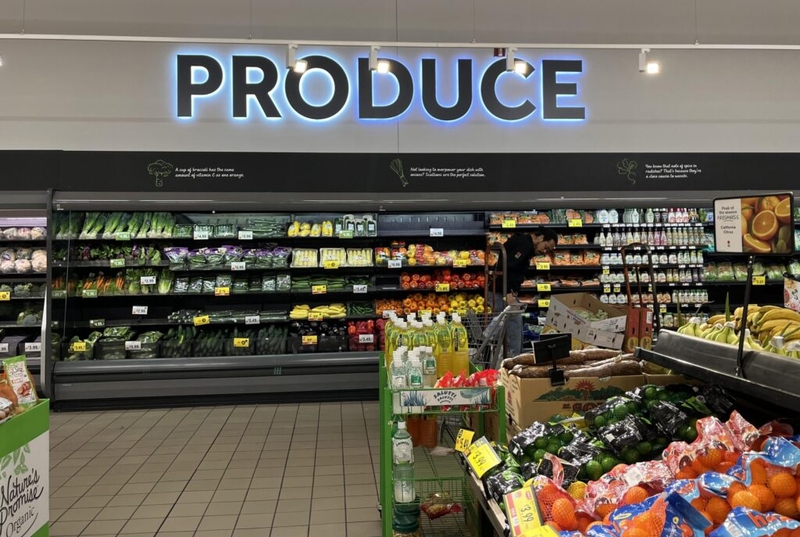
Description
(Photo by New Jersey Monitor)
Nevada families will once again receive a one-time payment of $120 per child this summer to help buy groceries during months when free or reduced school meals are not available.
The federal nutrition assistance program, known as Summer Electronic Benefits Transfer (S-EBT), will benefit more than 300,000 school-aged children in Nevada.
The Nevada Division of Social Services, which administers the food assistance program, said more than $36 million in benefits will be sent out this summer as part of an effort to combat childhood hunger.
Last year, the Nevada Division of Social Services issued more than $37,000 in S-EBT benefits, but only about $30,0000 was used by eligible families, meaning about 20% of food benefits were lost.
Under the program, benefits expire after 122 days after they are issued.
The Nevada Division of Social Services said some families may have been unaware last year that S-EBT benefits were loaded onto existing cards they had received in the program’s inaugural year, which could have lowered the redemption rate.
This year, state agencies notified families by email and text messages that benefits were issued to their existing EBT cards. The Division of Social Services also promoted the program on social media pages and held a Facebook live event with the Clark County School District in hopes of increasing S-EBT benefit use.
Kelly Cantrelle, the deputy administrator of the Nevada Division of Social Services, said they worked closely with the Nevada Department of Education to ensure all eligible students were automatically sent summer food benefits.
“Their partnership allows DSS to distribute these benefits quickly to families that need additional support during the summer months,” Cantrelle said in a statement.
Overall, Nevada has strong distribution rates with about 80% of eligible families utilizing their full benefits.
How benefits will be distributed
More than half of eligible families were issued summer food benefits on May 23, which were delivered on existing EBT cards that work like a debit card and can be used at grocery stores and approved online retailers.
Families that do not have existing EBT cards will be sent new summer EBT cards by mail through mid-July. Those families will be notified through email and text as their benefits are issued.
Families who did not receive a card or lost their existing summer EBT card can call or write the Nevada Division of Social Services for a new card, which will take about 2-3 weeks to arrive.
Not all families are automatically eligible for the summer nutrition program, and the agency is encouraging families to apply for benefits on the Access Nevada Summer EBT portal through Aug. 9. Once approved, the family will be notified and mailed a summer EBT card.
The Nevada Division of Social Services has received about 1,400 applications for the summer EBT program this year, and about 1,000 of those applications have been approved.
Families can check to see if their child is automatically enrolled into the program through an online portal at Access Nevada.
Children are automatically eligible for the S-EBT program if they attend a school that participates in the National School Lunch Program or School Breakfast Program .
If a child receives Supplemental Nutrition Assistance Program (SNAP), Temporary Assistance for Needy Families (TANF), or Medicaid they are automatically eligible regardless of what school they attend.
Children participating in the Food Distribution Program on Indian Reservations (FDPIR) are also automatically eligible.
SNAP applications are down
About half of children eligible for the summer EBT program are also participating in SNAP or TANF, meaning they are automatically issued the summer food benefits on cards their family already uses on a regular basis.
David Rubel, a New York City-based education consultant who tracks S-EBT redemption rates nationally, said families are less likely to lose track of SNAP or TANF cards compared to S-EBT cards which are loaded once a year.
“In a nutshell, the good news is that Nevada Summer EBT program is reaching most families, but with 20% expungement, Nevada can still do better with more publicity,” Rubel said. “If a family had been made aware of the Summer EBT payment, they could still have applied for a new card.”
But in Nevada, both SNAP participation and new SNAP applications have decreased. From January to March, there was an 18% decrease in the number of households receiving SNAP benefits compared to the same time last year.
“The trend is not unique to Nevada. The SNAP Program is down over 4 million individuals nationwide. This indicates broader federal and economic factors are contributing to this reduction,” said Kristle Muessle, a spokesperson for DSS.
The drop in SNAP recipients follows federal work requirements implemented under president Donald Trump’s signature One Big Beautiful Bill Act, which went into effect May 1.
Under the bill, able-bodied adults aged 18-64 without dependents under 14 must prove they work or participate in approved training or community service activities at least 20 hours per week, or their SNAP benefits could be limited to 3 months in a three-year period.
It also removed work exemptions for the unhoused, veterans, and former foster youth.
The new work requirements fundamentally alter the landscape of food assistance in Nevada. Nevada has been exempt from SNAP work requirements since 2008, due to the state’s higher-than-average unemployment rate.
Before the One Big Beautiful Bill Act was signed into law, state and county governments could request to waive work requirements if they had persistently high unemployment rates.
However, under the new rules waivers will only be granted to jurisdictions with annual unemployment rates above 10%.
High unemployment remains an issue in Nevada, although not as high as during the pandemic when unemployment rates reached 30%.
According to the U.S. Bureau of Labour Statistics, Nevada currently has the second highest unemployment rate in the U.S., tied with Delaware and California at 5.3%.
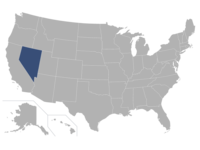
Las Vegas, NV