Washington begins annual invasive pest survey
Jun 08, 2026 | 7:00 am ET
Description
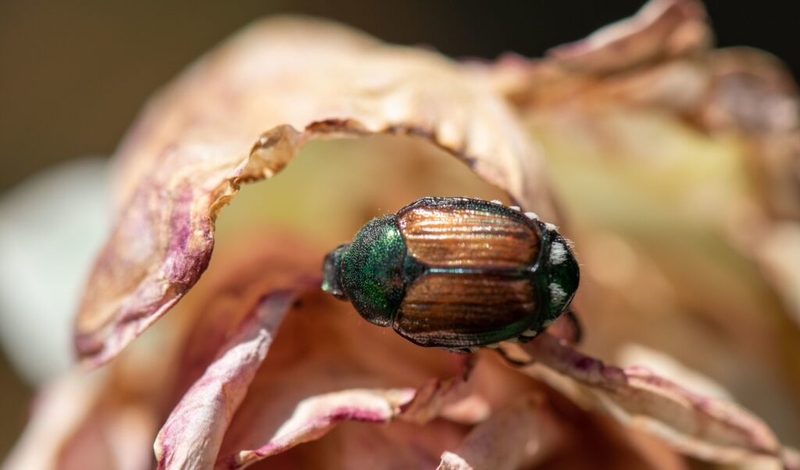
A Japanese beetle in the Grandview area in 2021. (Washington State Department of Agriculture)
Washington state’s annual search for over 130 invasive insects, weeds and plant pathogens has begun.
Employees with the state Department of Agriculture are traveling across Washington to set traps for species such as spongy moths, Japanese beetles and apple maggots.
Of the agency’s top priorities is the eradication of Japanese beetles in south central Washington. The small green and brown beetles skeletonize leaves and damage flowers and fruit. The species established itself in the eastern U.S. and has become a pest for both residents and the agricultural industry.
In 2021, the agency found nearly 24,000 beetles in Grandview and surrounding areas. After a decline in numbers in 2023, the Japanese beetle population jumped up to over 70,000 in 2025. The beetles were found in Sunnyside, Mabton, Wapato, Pasco, Kennewick and near SeaTac.
Residents in those areas can opt-in for a free treatment of reduced-risk insecticide. The pesticide is not considered a health risk for humans, pets and wildlife, according to the agency.
If a population were to establish in Washington, Japanese beetles would pose a serious threat to gardens, parks, and farms.
“Our only hope of eradicating this beetle is for people in treatment areas to give consent and sign up for treatments,” said Sven Spichiger, pest program manager.
Last month, the pest program treated areas around Lake Youngs and in Lakewood for spongy moths. Residents in those areas can expect to see insect traps in their neighborhoods as part of the ongoing detection effort.
“If you see a trap, please don’t disturb it,” Spichiger said.
The department will also set out traps for apple maggots, grape and stone fruit pests, wood-boring insects, spotted lanternfly, and yellow-legged hornets.
The traps are labeled for easy identification. The department encourages residents to email reports of fallen traps to the pest program.
Olympia, WA