Runestad proposes one-year moratorium on data centers, urging caution and scrutiny
Jun 04, 2026 | 2:26 pm ET
Description
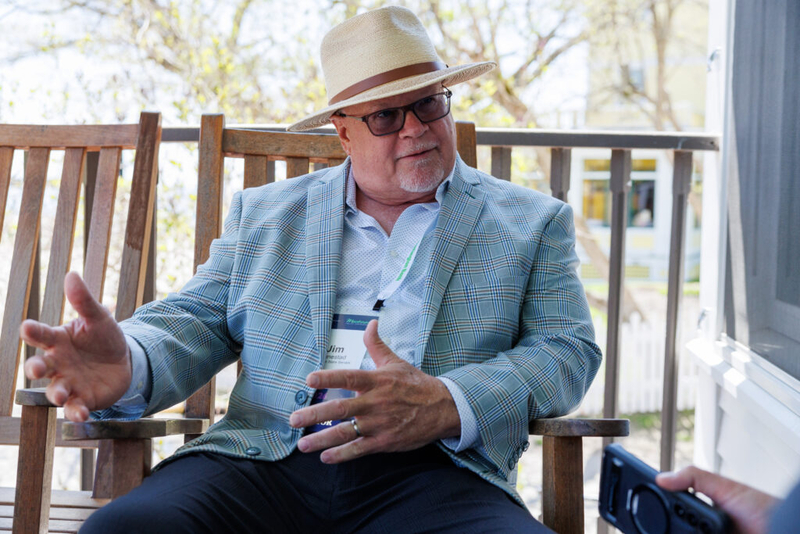
Michigan Republican Party Chair Jim Runestad at the Mackinac Policy Conference on Mackinac Island, Mich., on May 28, 2026. (Photo by Andrew Roth/Michigan Advance)
Citing resident concerns on the impact of data centers in Michigan, state Sen. Jim Runestad has proposed a one-year pause, halting all data center projects as lawmakers and business leaders work to better understand their impacts.
The White Lake Republican and Michigan Republican Party chair introduced Senate Bills 1018–1020 with Sen. Ruth Johnson (R-Holly) as a co-sponsor. The bills state that the legislation would serve as a pause to gather information about any potential rate hikes, environmental harms or other consequences, rather than an outright ban.
“My legislation advises caution,” Runestad said in a statement. “It is foolish for lawmakers to allow untested, potentially dangerous projects in our communities without proper scrutiny and thorough diligence.”
Runestad and Johnson’s bill package comes as the state is seeing a large proliferation of AI data centers, and just days after Gov. Gretchen Whitmer attended a groundbreaking ceremony for a massive, controversial OpenAI-Oracle data center in Saline Township.
Runestad is now raising concerns about the loss of farmland and harm to local communities and cited recent polling commissioned by the Detroit Regional Chamber which found Michigan voters were in broad support of regulations on data centers, including requirements for data centers to bear all the costs for their electrical service, bans on state local governments from offering tax incentives and agreeing to non-disclosure agreements with data center developers, and clean energy requirements.
“This moratorium will provide the necessary timeframe for lawmakers to listen to the public and put sensible regulations in place,” Runestad said.
Runestad’s bills mirror a package introduced by state Reps. Jennifer Wortz (R-Quincy), Joseph Fox (R-Fremont) and Dylan Wegela (D-Garden City) in the Republican-led House.
Although concerns about data centers in the politically divided Legislature have transcended party lines, both packages are facing headwinds early in the legislative process. Runestad’s bills were referred to the Senate Government Operations Committee, where legislation is often sent to die, while the House package was referred to an analogous committee within the lower chamber.
Lansing, MI