Closed primaries are in vogue with Indiana Republicans. But what would they look like?
Jun 08, 2026 | 5:00 am ET
Description
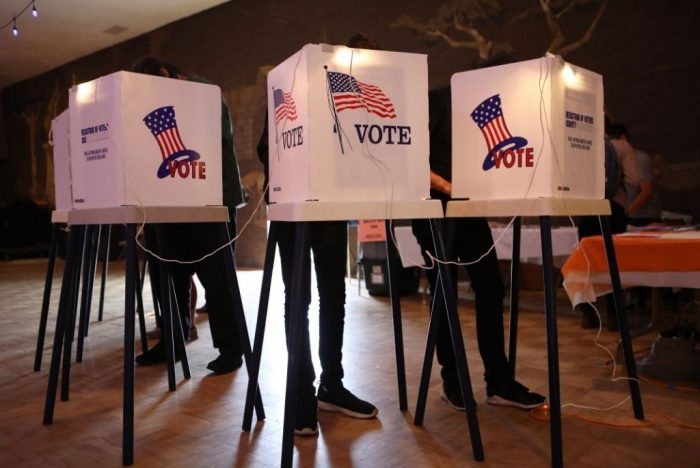
Primary systems in the United States vary. According to the National Conference of State Legislatures, they take six forms. (Getty Images)
Legislation to restrict Indiana’s primary elections to registered members of their respective parties stalled the last two sessions. But a Republican state senate candidate’s push for a recount because of alleged “crossover voting” by Democrats has breathed life into the campaign for closed primaries in Indiana.
A coalition launched weeks ago is said to have nearly 3,000 signatures supporting Indiana closed primaries. Max Engling, a secretary of state candidate with backing from top Hoosier Republicans, listed it as a priority. And at least one state representative already has a bill draft request for the next session to close primaries.
Advocates say closed primaries would prevent opposition influence and strengthen parties’ candidates. Critics contend they’d reduce the opportunity for voters, including independents, to participate.
“It just depends on what you think primary elections are for,” said Marjorie Hershey, a political science professor emeritus at Indiana University.
Primary systems in the United States vary. According to the National Conference of State Legislatures, they take six forms.
Open primaries, the most common, allow voters to choose whichever party’s ballot they’d like, a choice that remains private. Fifteen states have them.
Indiana’s system is considered partially open. While Hoosier voters can choose any party’s ballot, their pick can be considered a form of registration if they choose to run for office. The candidate’s two most-recent primary election ballot selections affiliate them with that party under state law.
Trump-backed candidate seeks recount in Indiana Senate race with 3-vote margin
Indiana Code has another caveat. Party members can challenge a prospective voter based on party affiliation at the ballot box or on election day. Primary voters have to meet one of two categories: voted for a majority of that party’s nominees during the last general election, or will vote for a majority for most of that party’s candidates at the next general election.
This is the provision challenger Paula Copenhaver cited in the GOP Senate District 23 race. In a petition to the Indiana Recount Commission, Copenhaver claimed around a dozen people may have voted in the Republican primary despite not being eligible to, based on social media posts and local media reports indicating they weren’t Republicans. The certified results of the election had Copenhaver behind by three votes to incumbent Sen. Spencer Deery. The recount could continue for weeks.
Other primary systems include multi-party primaries, where the top vote-getters, regardless of party, advance to the general from a single primary; primaries open just to unaffiliated voters, which exclude crossover from those registered with a particular party; and partially closed primaries, which allow parties to choose how open their elections will be.
Recent conversations in Indiana have centered around closed primaries that require party registration for participation.
To Hershey, support for a particular type comes from different views of democracy.
In one, primaries are means to form strong party identities for voters to align with for the myriad elected offices they may not be familiar with. Closed primaries produce candidates selected by the most ardent in that party.
In the other view, the widest possible participation in primaries creates good leadership, even if the nominees aren’t representative of the party’s mainstream.
Regardless, Hershey said, changes in primary rules produce changes in outcomes.
“And in today’s politics, as polarized by party as they are, these rules changes are intended to help the party proposing them win the next election,” she said.
Proposals for Indiana’s closed primaries
House Bill 1029 and Senate Bill 201 in 2025, as well as 2026’s House Bill 1096, sought to close Indiana’s primaries by mandating affiliation either during voter registration or on a dedicated form in order to vote in the primary. The latter two bills would’ve automatically affiliated voters with the party they last voted for in a primary.
Rep. J.D. Prescott, R-Union City, authored the most recent attempt and was a co-author on HB 1029. He claimed there’ve been people in his district’s counties who’ve pulled Republican ballots, despite being Democrats, so they can run and win as a Republican in the general.
It’s “obviously a problem” and “goes against the integrity of the party,” he told the Indiana Capital Chronicle.
His 2026 bill would’ve required voters to register with a party at least 119 days before the primary, with exceptions for people who move or 17 year olds who will turn 18 before the next general. The bill he co-authored in 2025 set a Dec. 31 deadline before the primary. Each would’ve given Hoosiers less time to affiliate than most closed-primary states; the shortest deadline, Connecticut’s, is a day before the primary. Kentucky’s, the longest, is around 139 days in advance.
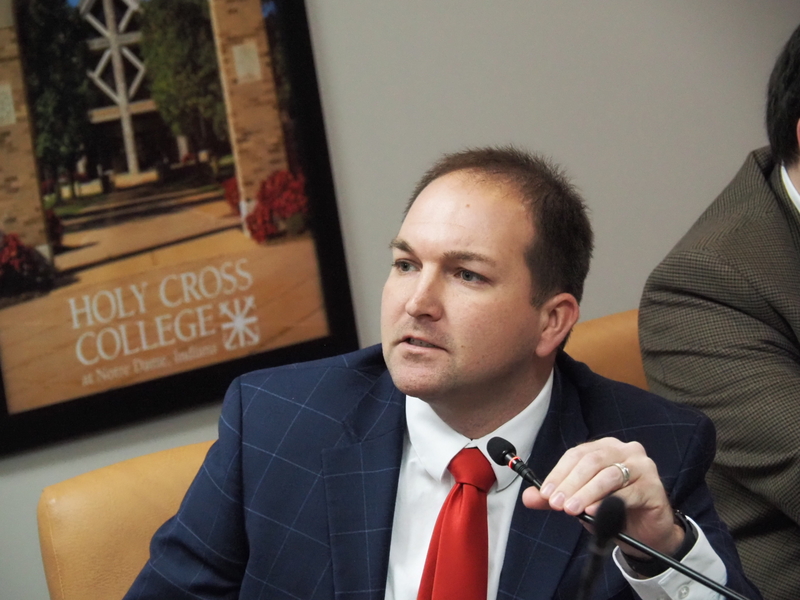
Prescott said he’s already submitted a bill draft request to close primaries in the upcoming session. The previous bill is the baseline, but there will likely be some tweaks, he said.
The specifics should remain up to lawmakers, said Logan Russell, a conservative political consultant based in Indiana, but closed primaries are needed to ensure the parties get to actually pick their nominee. States like Kentucky, Florida and Pennsylvania are great models of what it could look like here, he said.
He’s the executive director of Closed Primary, a coalition launched last month that by June 3 had collected almost 3,000 signatures backing its titular goal. Support has come from Democrats, as well, Russell said.
He thinks the chances are higher now for closed primaries to pass next session because of its recent momentum. Three legislators have told him they have ideas for what closed primary drafts they’d propose would look like, he said.
Indiana’s primary turnout remains low; just 17% of registered voters did so this year. Still, Russell doesn’t see closed primaries as a way to reduce turnout or disenfranchise anyone. Instead, it’s to drive up party participation and get candidates most aligned with parties’ interests.
An open-primary ‘tradition in Indiana’
Strategically leveraging the opposing party’s primary has history in Indiana, even before Copenhaver’s claims in this year’s Republican Senate District 23 election.
Through a billboard and media campaign, a bipartisan group encouraged Democrats to fill out Republican ballots in the May 2024 primary and vote “for a more moderate gubernatorial candidate.”
At the time, Don Knebel, the president of ReCenter Indiana, said that more partisan voters tended to participate in the primaries. As a result, they’d select a more “extreme” candidate who was “all but certain to be Indiana’s next governor” as a Republican.
Adrianne Slash, the group’s vice president, said the effort was to increase participation, particularly among those apathetic toward races that have been historically uncompetitive. In some places, the primary “is the one place where your voice really can make a difference and can matter,” she told the Capital Chronicle.
It’s a line of reasoning Mike Braun, who ended up winning that gubernatorial primary, once followed. Ahead of the 2018 U.S. Senate Republican primary, Republican National Committee voter files showed Braun had been considered a “hard Democrat” by the GOP after he’d repeatedly voted in Democratic primaries.
Hailing from Dubois County, Braun said Democrats held most of its local offices.
“So if you wanted to weigh in on your local and county elections, anybody that was a Republican there mostly voted in the Democratic” primary, Braun said in an interview with CNN at the time.
But Russell, with Closed Primary, said rather than pulling opposite ballots, the emphasis should instead be on parties putting more electable candidates forward.
“The voice of the voter shouldn’t be dependent upon if the quality of the party’s candidate is good or bad,” he said.
In 2008, right-wing radio commentator Rush Limbaugh encouraged Republicans in open-primary states, particularly Indiana, to vote for Hillary Clinton in the Democratic primary. Limbaugh’s effort, christened “Operation Chaos,” was intended to ensure both Clinton and Barack Obama were “so bloodied and brought down to earth” by the competitive primary that either one would lose in November.
Clinton bested Obama by around 14,000 votes in Indiana. Obama’s campaign and supporters decried the move as a major factor at the time, but subsequent research suggested Operation Chaos did not change the outcome
E. Frank Stephenson, an economics professor at Berry College who researched the maneuver, concluded an “absence of a Limbaugh effect suggests that states or parties holding open primaries have little to fear about their elections being mischievously influenced by activists from the opposing party.”
Kip Tew, a senior adviser to the 2008 Obama campaign in Indiana, admitted the team didn’t like the move, even if they didn’t take any action on it. Still, he’s “unequivocally opposed” to closing Indiana’s primaries. Policing which ballots voters pull would be undemocratic, he said.
Crossover is “a tried and true tradition in Indiana,” Tew said.
Indianapolis, IN