SC anglers to get 2-month red snapper season instead of 2 days
May 08, 2026 | 2:40 pm ET
Description
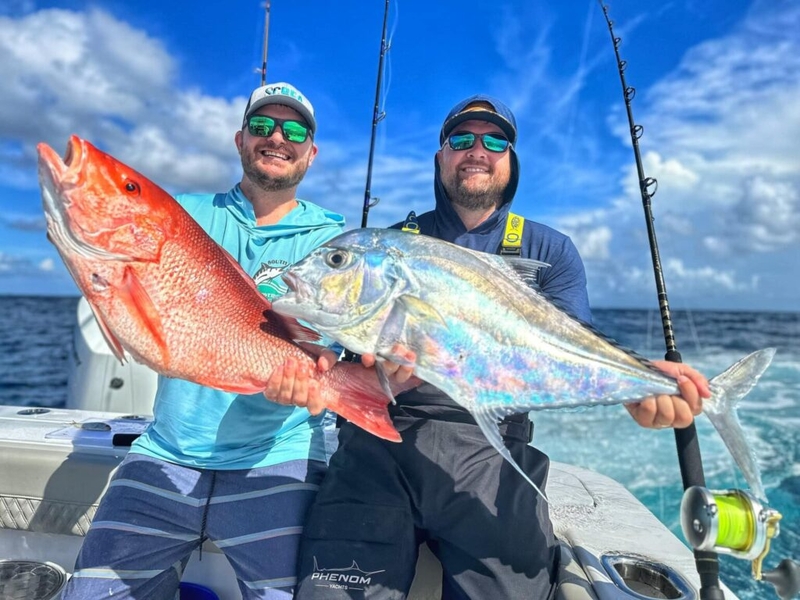
Gettys Brannon, left, holds a red snapper on a fishing trip with Russ Tomlinson, on July 12, 2024, the one day that year they could fish for snapper. Tomlinson, president of Sportsman Boats, is holding an African pompano. (Photo provided by Gettys Brannon)
COLUMBIA — Anglers will have two months to catch red snapper this summer instead of the typical day or two, fulfilling South Carolina officials’ push for a longer season.
The state’s fisheries will stay open from July 1 to Aug. 31, with a limit of one snapper per person per day, the National Oceanic and Atmospheric Administration announced this week. That’s a huge increase over the two days last year anglers could reel in the fish, which are prized for being delicious and fun to catch.
Reeling in red snapper will have a broader purpose than simply fishing this year. Anglers who go out during the two-month recreational fishing season will be required to report their catches to the state Department of Natural Resources, which will use that data to determine how many of the large, red fish are swimming off the state’s coast.
Anglers had 2 days to catch red snapper off SC’s coast this year. They want a much longer season.
“This effort is about building a better long-term future for the red snapper fishery,” the agency said in a news release. “By improving data and testing innovative management tools, South Carolina can help create a more sustainable and accessible fishery for recreational anglers.”
The agency will release more information about how to report catches in the coming weeks, according to the news release. The number of fish caught this season will help determine how long coming seasons stay open, DNR wrote in its application for the pilot program.
Florida, Georgia and North Carolina also received approvals for extended seasons to collect more data, which will help create a broader picture of how well red snapper hatcheries are faring, according to NOAA.
“We’re going to be able to effectively manage the fishery to make sure it’s not overfished and to make sure our recreational anglers have the best access while maintaining a sustainable fishery,” Gettys Brannon, CEO of the South Carolina Boating and Fishing Alliance, told the Daily Gazette.
The Coastal Conservation League, a South Carolina-based conservation nonprofit, supported the proposal in the hopes that it could lead to better data, which in turn could give people a better understanding of what the fish need to survive long-term.
National conservationists aren’t so sure. Ocean Conservancy, a nonprofit based in Washington, D.C., called the approval shortsighted.
“There is no doubt that these exemptions to allow months-long fishing seasons will lead to overfishing, while new, unproven data collection measures mean we likely won’t even realize the fish are declining until the damage is done,” said Meredith Moore, the nonprofit’s director of fish conservation, in a statement.
The federal government started restricting access to red snapper in 2008, when a survey found the number of fish dwindling. In the years since, fishing seasons ranged from zero to six days, with a take-home limit of one snapper per angler per day.
But in recent years, anglers have noticed more red snapper on their lines, suggesting the population is on the rise, according to DNR. At the same time, more anglers have skipped the short seasons completely because of bad weather, choppy waters or scheduling conflicts, Brannon said.
That was the case last year, when the forecast during the two-day July season called for severe winds and large waves. A bipartisan group of coastal legislators unsuccessfully asked for an extension to the season so fishermen didn’t have to risk themselves and their boats to bring in the fish.
“I look forward to actually going” this year, Brannon said.
Not only does that inconvenience recreational fishermen, but it hurts the bottom line for companies that depend on fishing seasons for business, including companies selling boats and tackle.
“This is a huge opportunity for charter captains,” Brannon said. “This is a huge opportunity for those who just like to fish.”
Short seasons create a mad dash for anglers who do decide to go out to reel in as many fish as they can, Brannon said.
“It’s a lot different than actually getting to go out there and have fun and have a whole season to do it,” he said.
When time is limited, anglers are more likely to toss back fish without taking precautions to make sure they safely return to the depths where they thrive, making them easy prey, Brannon said.
A longer season also means fishermen are more likely to keep searching for a larger fish, rather than taking home the first one they catch over the 20-inch minimum, Brannon said. That gives the smaller, younger fish more time to grow and mature before an angler takes them home.
The two-month window will give anglers a chance to slow down, ease the fish they don’t want back into their environment and bring home larger, older fish, leaving the younger ones to continue proliferating in the meantime, Brannon said.
“Now, this actually gives a true opportunity for anglers to go fishing,” Brannon said. “And that’s all we want.”
Columbia