NC lawmakers defend AI earmark, move to require schools to allow off-campus religious instruction
Jun 03, 2026 | 6:34 pm ET
Description
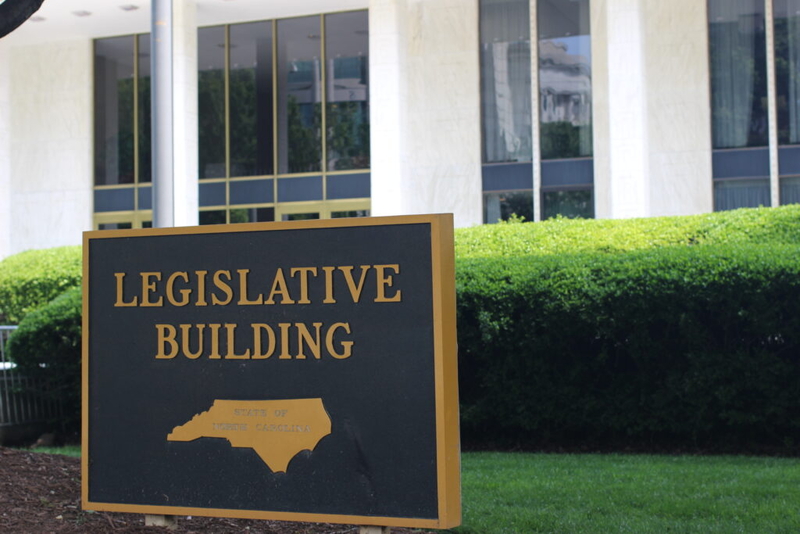
The North Carolina Legislative Building (Photo: Galen Bacharier/NC Newsline)
North Carolina lawmakers on Wednesday revived a proposal to require school districts to allow students to participate in off-campus religious instruction during the school day.
Sen. Brad Overcash (R-Gaston) introduced the language as an amendment to Senate Bill 1006, an omnibus K-12 education bill, during the Senate Education committee meeting on Wednesday.
The move revives a proposal that was originally filed in February 2025 as Senate Bill 92, known as the “Released Time Education Act.” It had languished for more than a year without a hearing.
State Senate bill would okay students attending off-campus Bible classes during school hours
While S92 would have allowed local school boards to decide whether to offer released-time programs, the new version added into S1006 strips that option. It instead requires public schools to adopt policies allowing students to participate.
Released-time programs allow students to leave campus for private religious instruction during the school day. The U.S. Supreme Court upheld the practice in 1952, provided the classes are held off school grounds, use no public funds, and have parental consent.
Overcash told lawmakers that similar programs already operate in dozens of states, including New York. “It really, really runs the gamut of political persuasions,” said Overcash, who is also the co-chair of the committee. “These programs are important to help build the moral and religious character of our students.
The amendment also removes part of S92 that would have allowed students to earn academic credit for the off-campus instruction. That specific proposal had drawn criticism in the past.
Critics argue the program excludes other students, detracts from academics, and allows proselytization in public schools.
Sponsor defends earmark for AI tutoring program
Sen. Michael Lee (R-New Hanover), a key sponsor of Senate Bill 1006, defended the decision to direct more than $10 million in recurring state funding to Khan Academy for a statewide AI tutoring program without a competitive bidding process.
NC bill would steer $10 million to Khan Academy for AI tool of debatable value
Lee said state officials had spent years evaluating the platform and pointed to meetings with Khan Academy founder Sal Khan and North Carolina officials.
Sen. Sophia Chitlik (D-Durham) questioned the evidence behind the earmark, saying, “I’m struggling to find the evidence that shows that this is a better investment than, say, $10 million in instructional assistance.”
In an April interview with Chalkbeat, Khan Academy founder Sal Khan acknowledged the company’s AI tutoring tool, Khanmigo, had not met early expectations for classroom use. “For a lot of students, it was a non-event,” he said. “They just didn’t use it much.”
Under the proposal, participating districts would use state funds to purchase Khanmigo, which is designed to help teachers with lesson planning and answer student questions about coursework. Funding would be distributed based on enrollment in grades 6 through 12. Districts that opt in would review the program each year before deciding whether to renew contracts.
The 25-page bill includes more funding for Advanced Teaching Roles, a teacher apprenticeship program, and increased oversight of school district finances.
It would also require districts to report their chronic absenteeism rates to the North Carolina Department of Public Instruction.
It advanced to the Senate Appropriations committee for further consideration.
Raleigh, NC