NC House advances bill to regulate data centers, require more nuclear power
Jun 03, 2026 | 7:15 pm ET
Description
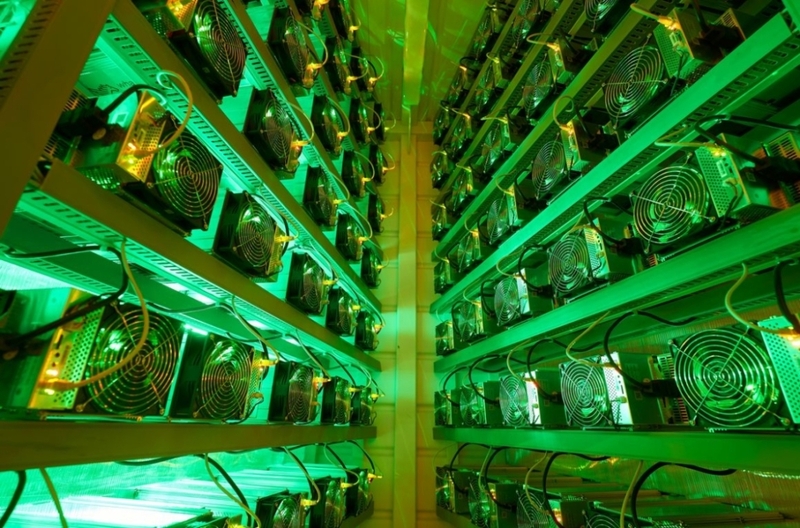
Data centers are energy-intensive, running servers around the clock to power streams of computer computations. (Image: Adobe Stock)
The North Carolina House voted 69-44 Wednesday to approve a bill setting regulations for data centers and encouraging the development of more nuclear power.
Republicans pushed a modified version of Senate Bill 730, now titled the “Ratepayer Protection Act,” through the House this week, quickly sending it to their colleagues in the upper chamber. The bill passed through two committees on Tuesday.
Reps. Matthew Winslow (R-Franklin) and Dean Arp (R-Union) revealed the rewritten bill at the end of last month, shortly before the legislature took their Memorial Day break.
“North Carolinians are seeing higher electricity bills, driven by rapid data growth and aggressive energy mandates,” Winslow said on the floor Wednesday, repeating his comments from a Tuesday committee hearing. “[This bill] puts our families and small businesses first by making data centers pay their fair share and strengthen grid reliability.”
Municipalities across the state have implemented moratoriums on data centers as they seek to learn more and explore necessary regulations.
The chamber unanimously added an amendment from Arp to clarify the definition of data centers, and to allow the N.C. Department of Environmental Quality to set the standards for facilities’ water usage.
In an unusual move, Democrats lauded their colleagues across the aisle for incorporating some of their requests into Arp’s amendment, although the GOP majority defeated several other Democratic attempts to amend the bill.
“It’s vital that we set up guardrails to protect us from this industry, and this bill is a good first step,” Rep. Pricey Harrison (D-Guilford) said.
Harrison withdrew her amendment before the House heard the bill. She said she still had concerns with parts of the legislation, but hoped the Senate would address them.
In particular, existing baseload power plants could not be retired under the measure until they can be replaced with nuclear resources. Sponsors say this would leave enough baseload energy available in the grid, but skeptics point out that developing that much new nuclear capacity in the state could take decades..
In the meantime, this requirement would remove limits on fossil fuels. Harrison advocated instead for the consideration of solar and wind power, which supply 22% of the world’s energy, combined with battery storage for reliability.
“We need a little bit more flexibility to consider other baseload sources,” Harrison said.
Other lawmakers raised issues with the energy sources as well.
Rep. Maria Cervania (D-Wake) said she isn’t opposed to nuclear power, but she’s worried about tying the state to it.
“The fundamental question before us is whether North Carolina families should be asked to pay today for technologies that may not be commercially available, economically viable or deployed at that scale for many years,” she said. “Nuclear projects have a long history of cost overruns, construction delays and ratepayer exposure.”
House Democratic Leader Robert Reives (D-Chatham) criticized Republicans for adding controversial energy policy provisions to a bill cracking down on data centers.
The GOP majority shut down a motion from Cervania to split the legislation into two parts — one on data centers, and one on energy policy.
Reives said he “honest to goodness” doesn’t know how the energy portion became part of the measure. He predicted the measure would end up causing electricity costs to increase, not decrease, by requiring the state to continue to use fossil fuels for power.
“Duke has given us a full report saying, ‘Hey guys, there are less expensive ways to provide energy,’ and we are locking them into the most expensive way,” Reives said. “I wish we would have a good, clean debate on the data center bill and pass that unanimously, and then I wish we would take this energy portion of the bill and really sit down and review it.”
But Arp insisted the bill would protect consumers from rate increases in the long run.
“Reliable baseload energy generation must stay online,” Arp said. “Critics have offered no other option, only a mandate for an intermediate, intermittent solar and wind, which are not baseload generation.”
Raleigh, NC