2026 legislative session productive, with key work still ahead
Mar 23, 2026 | 7:00 am ET
Description
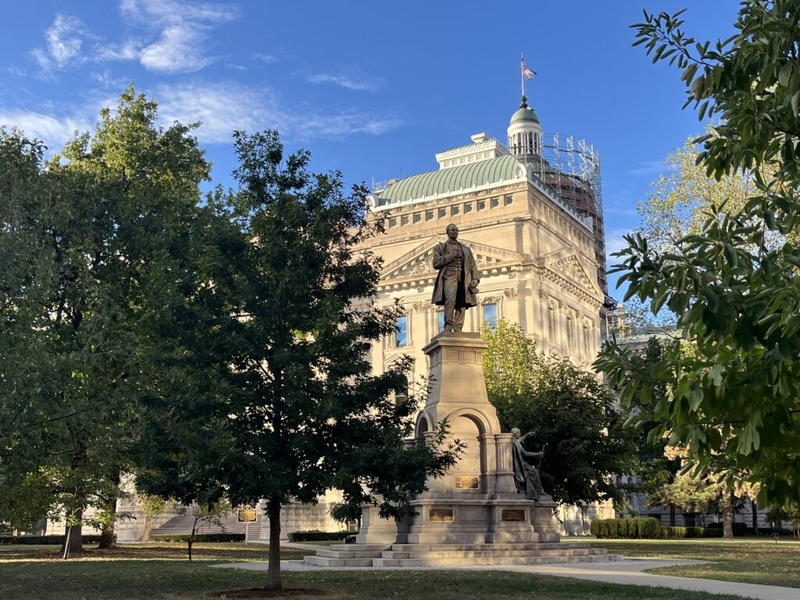
The Indiana Statehouse on Oct. 10, 2025. (Photo by Niki Kelly/Indiana Capital Chronicle)
The 2026 Indiana General Assembly wrapped up with steady progress on several Indiana Chamber of Commerce priorities that reinforce the state’s long-term competitiveness. Lawmakers advanced a series of policy steps to strengthen Indiana’s economic climate, modernize key systems and remove barriers to growth — building on work already underway and keeping the state moving in the right direction.
That effort aligns with our organization’s Indiana Prosperity 2035 vision plan focused on expanding workforce participation, enhancing talent pipelines, modernizing government and infrastructure, and improving quality of place so more Hoosiers and employers can succeed.
Child care access — one of the biggest pressure points for families and employers — moved forward through House Bills 1152 and 1177 and Senate Bill 4. Updating the employer child care tax credit to include operating and contracted expenses expands eligibility and can make the credit more workable, especially for small and mid-sized businesses.
The session also addressed a frustrating barrier. Protections are now in place preventing homeowners associations from blocking licensed child care homes, which may open additional options for families seeking affordable care. And with funding expansions for the state’s Child Care and Development Fund, Indiana made another stride toward strengthening the child care supports that working parents and employers rely on.
Government structure
Lawmakers also took on township government modernization through Senate Bill 270, which requires some townships to merge and enables others to merge with county entities. By improving the efficiency, predictability and accountability of local government operations over time, these changes can help communities better plan, invest and respond to the needs of residents and employers. We appreciate legislators working through a complex issue and ultimately choosing to evolve local governance.
While not a session focused on big workforce development actions, one taken is particularly notable for employers. House Bill 1098 brings greater clarity to work-based learning programs by defining responsibilities and ensuring appropriate workers’ compensation coverage. These changes aim to provide clearer expectations for both students and employers and support the continued expansion of high-quality experiential learning opportunities.
House Bill 1001 hones in on addressing Indiana’s well-documented housing shortage, an issue mirrored across the country. The legislation encourages communities to think proactively about increasing housing access, while still preserving local control through opt-out provisions. It’s not the finish line. But it is a solid start and a signal that Indiana is serious about meeting demand with flexible, workable solutions.
New environmental policy (Senate Bill 277) updates Indiana Department of Environmental Management processes while maintaining appropriate balanced oversight. For businesses, the payoff is clear: more predictable timelines, clearer standards and better alignment with federal requirements – certainty that supports long-term planning and investment.
Taxes and tort
Senate Bills 212 and 243 align Indiana’s tax code with the federal One Big Beautiful Bill Act, helping reduce complexity and confusion for taxpayers. Just as important, there’s now clearer guidance for retailers and consumers as the statewide penny phaseout moves ahead. As always, we’ll stay engaged on tax policy in future sessions to continue improving Indiana’s business climate and competitiveness.
Effective tort reform is about restoring balance and strengthening confidence in the legal system to keep our economy strong. Unfortunately, this short session’s compressed timeline made it difficult to bring all stakeholders into alignment. Even so, legislation aimed at curbing frivolous lawsuits advanced into the final week, and we had many productive conversations about paths forward.
As we continue advancing Indiana Prosperity 2035, we’ll work with policymakers on the next set of competitiveness priorities – led by meaningful tort reform – so Indiana remains a place where employers can invest, families can build their lives and communities can grow.
Indianapolis, IN