Newly available reports show state owed millions by providers, local health agencies
Sep 22, 2026 | 8:51 pm ET
Description
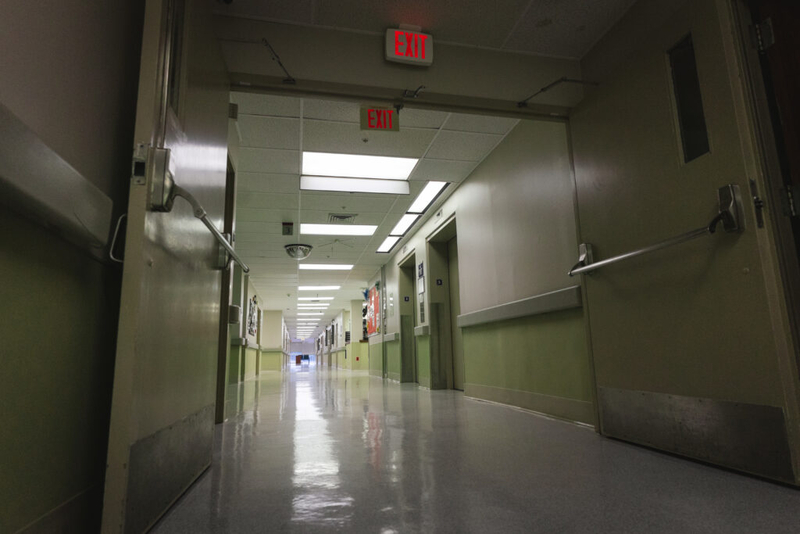
A vacant hallway at Vaughan Regional Medical Center in Selma, Alabama, on Tuesday, Sep. 3, 2024 in Selma, Alabama. (Will McLelland for Alabama Reflector)
The Office of Inspector General for Health conducted almost 1,400 audits and investigations over the last four years that found more than $42 million in improper or unrecovered payments — but those reports have only recently been posted for public review.
Those findings by the Office of Legislative Audits came in its first evaluation of the inspector general’s office since it was made independent from the Department of Health in 2022.
Besides reporting the $42 million in payments due from local health departments or healthcare providers, the audit also noted that while the inspector general made its reports available to audited agencies and health departments, it only made them available to the public on request.
The only recommendation in the OLA audit was that the inspector should “consider publicly disclosing the results of its audits and investigations to the extent possible.” But the inspector general was already moving in that direction, creating a public-facing website in August and posting the first 20 reports there earlier this month. More reports are on the way, officials said.
Inspector General for Health Shelly Marie Martin, who joined agency last summer, said those newly available reports reflect the beginning of greater transparency for the agency tasked with investigating fraud, waste and abuse in healthcare funding.
“We support transparency and accountability. That is our mission,” Martin said Monday.
Health officials, auditors at odds over millions in Medicaid payments to inmates
The 20 newly posted reports outline about $4.3 million owed to the state by healthcare providers and another $1.7 million owed by local health departments.
The local health department discrepancies stemmed from errors in documentation, missing equipment and other fiscal issues. Those recovery findings range from a mere $63 owed by the Frederick County Health Department to more than $1.5 million owed by the Dorchester County Health Department to the Maryland Department of Health.
The posted reports also found $4.3 million owed by 13 healthcare providers, ranging from behavioral health to developmental disability services, due to inadequate documentation of expenditures or not returning duplicate payments, among other issues.
The audit comes as state lawmakers have put new emphasis on the importance of cutting back on repeat audit findings by cleaning up operations within state agencies and ensuring taxpayer dollars are spent appropriately.
The inspector general’s office initially operated within the Department of Health, but legislation in 2021 moved the operations into an independent agency the following year. It is tasked with detecting improper Medicaid payments and monitoring spending at local health departments.
“According to agency records, OIGH conducted 1,369 investigations and 53 audits during fiscal years 2023 through 2025 that collectively identified $41.9 million for recovery,” the Office of Legislative Audits said in its September report. “Our review disclosed that while OIGH reported these results to the applicable entities and MDH (Maryland Department of Health), it did not make the reports publicly available.”
Auditors said some information may still be kept from the public, due to potentially sensitive health and medical information or potential law enforcement involvement.
“OIGH reviews of providers suspected of submitting improper claims for reimbursement to the Medicaid program or persons allegedly improperly receiving benefits are not appropriate for general publication,” the agency said in response to the state auditors. “All these investigations involve protected personal information and/or protected health information that is required to be kept confidential by multiple federal and State laws.
“Some of these investigations are referred to law enforcement agencies to be considered for criminal or civil prosecution,” the agency said. “Publication of these investigations could jeopardize a confidential law enforcement investigation or run afoul of rules regarding pre-trial publicity of pending cases.”
It’s not clear how much of that $42 million identified by the Office of the Inspector General of Health since 2023 was recovered. Once the inspector general identifies potentially mishandled funds, it alerts the Department of Health, which is responsible for what happens to those outstanding funds next.
“The Department of Health, not OIGH, handles recoveries of funds and has historically forgiven portions of the overpayments identified by OIGH,” the inspector general’s office says in a recent report.
Despite increased efforts for transparency, the inspector general’s office may face challenges due to a continued staffing shortage. The agency had nine vacancies among 47 budgeted positions for most of fiscal 2025, a vacancy rate of 19%, according to the inspector general’s annual report.
Those vacancies were due in part to a hiring freeze ordered by the Moore administration, and a mandated midyear budget cut.bStaffing challenges continued into fiscal 2026, and are expected to impact next fiscal year. With a $6 million budget, the inspector general says that ensuring the office is properly staffed would be a wise investment in an agency that generates revenue for the state.
“OIGH is a revenue-generating agency,” the agency notes in the most recent annual report. “Persistent vacancies and position cuts will directly and adversely impact the number of investigations the OIGH can complete and result in lower recoveries in future years.
“But for a forty-seven-person agency, the impact of a nineteen percent vacancy rate and eight and half percent reduction in force is a substantial hurdle to fulfilling its mission and will result in lower recoveries in future years,” the audit says.
Annapolis, MD